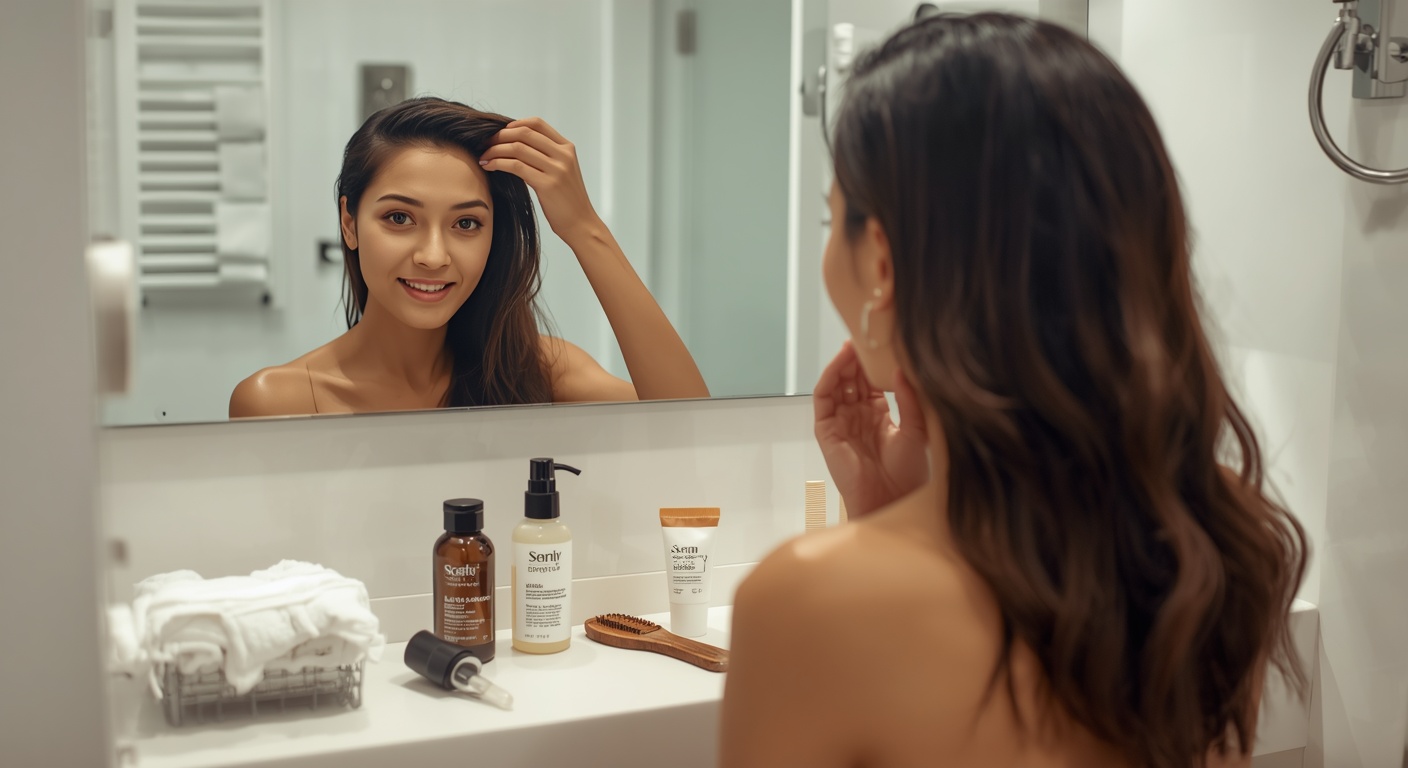

A practical hair care guide in Malaysia starts with one simple idea: your scalp and your hair lengths often need different care. In Malaysia’s humid weather, many people deal with scalp oiliness, sweat, frizz, and flat roots at the same time as dry ends or breakage. A good routine usually focuses on keeping the scalp clean, conditioning the lengths, protecting hair from damage, and adjusting products based on your scalp condition, hair texture, and lifestyle.
Most people do well with a routine built around regular shampooing, conditioner on the mid-lengths and ends, occasional deeper treatment, and heat protection when styling. If you commute outdoors, wear a helmet often, exercise regularly, or spend long hours in air-conditioning, your routine may need small changes to stay comfortable and manageable.
- Cleanse your scalp based on oiliness, sweat level, and lifestyle.
- Use conditioner mainly on mid-lengths and ends.
- Add a weekly treatment if hair feels dry, damaged, or frizzy.
- Protect hair from heat styling and sun exposure.
- Choose products based on scalp needs and hair texture.
- Adjust your routine for concerns like dandruff, shedding, or breakage.
What a good hair care routine in Malaysia should include
A good Malaysian hair care routine does not need to be complicated. For most people, the basics are enough: cleanse, condition, protect, and treat when needed. The challenge is getting the balance right. In humid weather, it is easy to focus only on oil control, but that can leave the hair lengths rough, puffy, or brittle. On the other hand, using very rich products to fight frizz can make the scalp feel heavy or greasy.
The basic steps: cleanse, condition, protect, and treat when needed
Shampoo is mainly for the scalp. Its job is to remove oil, sweat, dirt, and product build-up. Conditioner is mainly for the hair lengths, where dryness, tangling, and friction are more common. Beyond that, some people benefit from a leave-in product, hair mask, or serum, especially if their hair is long, coloured, heat-styled, curly, or prone to frizz.
Protection matters too. Hot tools, rough handling, tight hairstyles, sun exposure, and even daily rubbing against towels or pillowcases can gradually wear hair down. A strong routine is less about doing more and more about using the right steps consistently.
Why scalp care matters as much as hair care
Many routine problems start at the scalp. If the scalp feels greasy, itchy, flaky, uncomfortable, or coated in product residue, the rest of the hair often becomes harder to manage too. Scalp care is not only about appearance. It is also about comfort and making sure your cleansing products suit your skin.
At the same time, a clean scalp does not mean stripping it aggressively. If your shampoo is too harsh for your needs, you may end up with tightness, dryness, or more irritation. A better approach is to choose a cleanser that matches how oily or sensitive your scalp actually is.
How Malaysia’s humid climate can affect your routine
Humidity can make the scalp feel oilier faster and can make frizz more obvious, especially if the hair is dry, damaged, wavy, or curly. Sweat from commuting, exercise, or helmet use can also affect how fresh your scalp feels between washes. Meanwhile, air-conditioned spaces may leave the hair lengths feeling drier than expected.
That is why hair care for humid climate conditions often needs flexibility. You may wash more often during active weeks, use lighter styling products during hotter periods, or add more conditioning care if your ends start to feel rough.
Know your scalp and hair type before choosing products
One of the most useful hair care tips for Malaysians is to stop thinking of your hair as one single type. Your scalp can be oily while your ends are dry. Your roots can lie flat while the rest of your hair feels thick and frizzy. Product choices make more sense once you separate scalp needs from hair-length needs.
Oily, dry, sensitive, or flaky scalp
An oily scalp usually feels greasy quickly, sometimes within a day. Hair may separate at the roots or lose volume fast. A dry or sensitive scalp may feel tight, itchy, or uncomfortable, especially after washing. A flaky scalp can have several causes, so it is best not to assume every flake means the same thing.
If flakes, itching, redness, soreness, or irritation persist, worsen, or do not improve with simple routine changes, it is sensible to speak to a pharmacist, doctor, or dermatologist rather than trying more and more cosmetic products.
Fine, thick, straight, wavy, curly, or chemically treated hair
Fine hair is often easily weighed down, so lighter conditioners and styling products tend to suit it better. Thick or coarse hair may need richer moisture to feel smooth. Straight hair may show oiliness faster at the roots, while wavy and curly hair often needs more help with frizz control and hydration. Chemically treated hair, including coloured, bleached, relaxed, or rebonded hair, often benefits from gentler handling and extra conditioning support.
Texture also affects how products feel. A serum or oil that works well on thick hair may feel too heavy on fine hair. A light conditioner that suits straight hair may not be enough for hair that is dry, porous, or very curly.
Why scalp needs and hair-length needs are often different
The scalp produces oil naturally, but the lengths and ends do not receive that oil evenly, especially if your hair is longer, textured, or damaged. That is why it is common to have oily roots and dry ends at the same time. Once you recognise this, routine-building becomes much easier: cleanse for the scalp, condition for the lengths.
How often should you wash your hair?
There is no single wash schedule that suits everyone. A hair washing routine in Malaysia depends on your scalp oiliness, how much you sweat, your daily environment, hair texture, and how much product you use.
How oiliness, sweat, exercise, and commuting affect wash frequency
If your scalp gets oily quickly, you exercise often, commute in the heat, or wear a helmet regularly, washing more frequently may feel more comfortable. Some people do well washing every day or every other day, especially if their scalp becomes greasy or itchy fast. Others with drier scalps or more textured hair may prefer less frequent washing.
The goal is not to follow a rigid rule. It is to keep the scalp clean enough to stay comfortable without making the lengths unnecessarily dry.
Signs you may be washing too often or not often enough
You may be washing too often if your scalp feels tight right after cleansing, your hair becomes rougher over time, or your ends feel increasingly dry. You may not be washing often enough if your scalp feels greasy, itchy, heavy, or coated with residue, or if styling products seem to build up quickly.
Under-rinsing can also create problems. Sometimes hair feels greasy not because you wash too little, but because shampoo or conditioner is not rinsed out thoroughly.
Can daily washing be appropriate for some people?
Yes, daily washing can be appropriate for some people, especially those with oily scalps, frequent sweating, or active routines. The main consideration is whether your shampoo suits that frequency and whether your lengths stay comfortable. If daily washing leaves your hair rough or puffy, you may need a gentler cleanser, better conditioning, or a different technique rather than forcing a less frequent schedule that leaves your scalp unhappy.
How to build a simple hair care routine step by step
Step 1: Shampoo the scalp properly
Focus shampoo on the scalp, not the ends. Work it in gently with your fingertips rather than scratching with your nails. If you use a lot of styling product, have heavy sweating, or feel significant build-up, you may find a second cleanse useful on some wash days. Rinse thoroughly, especially around the crown, nape, and behind the ears.
Water that is too hot can make some scalps feel drier or more irritated, so lukewarm water is usually a safer choice.
Step 2: Condition the mid-lengths and ends
Apply conditioner mainly from the mid-lengths to the ends, where the hair is older and more prone to dryness. Leave it on briefly, then rinse well. If your hair tangles easily, a conditioner with good slip can help reduce breakage during detangling.
If your roots get flat or greasy easily, avoid placing rich conditioner directly on the scalp unless a specific product is designed for that purpose and suits your needs.
Step 3: Use leave-in products only if they suit your hair type
Leave-in conditioners, creams, serums, and lightweight oils can help with frizz, dryness, and easier styling, but they are not essential for everyone. Fine hair often needs lighter formulas and smaller amounts. Thicker, curlier, or more damaged hair may tolerate more moisture and sealing products.
Start with a small amount and build up only if needed. Too much product can make hair limp, sticky, or dull.
Step 4: Add weekly treatments when needed
A weekly mask or deeper conditioning treatment can be helpful if your hair feels dry, rough, over-processed, or especially frizzy. Not everyone needs one every week, though. If your hair already feels soft and manageable with shampoo and conditioner alone, extra treatments may not add much.
Think of treatments as support, not mandatory steps.
Step 5: Protect hair from heat and friction
If you blow-dry, curl, straighten, or use hot brushes, a heat protectant can help reduce styling stress. It is also worth being gentler in small daily ways: blotting instead of rough towel-drying, detangling carefully, and avoiding hairstyles that pull too tightly at the roots.
Friction matters more than many people realise. Repeated rubbing from towels, tight helmet straps, rough brushing, or snagging elastic bands can gradually contribute to breakage.
How to choose hair care products without overcomplicating your routine
You do not need a crowded shelf to build a good routine. In most cases, a suitable shampoo, conditioner, and one or two optional support products are enough.
What to look for in shampoo
Choose shampoo based on scalp needs first. If your scalp is oily or you sweat heavily, you may prefer something that feels more cleansing. If your scalp is dry or easily irritated, a gentler formula may be more comfortable. If you use a lot of styling products, occasional clarifying may help remove build-up, but very frequent deep cleansing is not necessary for everyone.
Some people prefer sulfate-free shampoo because it feels milder on their hair, but sulfate-free is not automatically better for all scalps, and stronger cleansing is not automatically worse. The best choice is the one that keeps your scalp clean and comfortable without leaving your hair overly dry.
When to use conditioner, masks, serums, or oils
Conditioner is the standard follow-up after shampoo for most hair types. Masks are better thought of as occasional extra care for dryness or damage. Serums are often used for smoothing, shine, or frizz control. Oils can help some hair types feel softer and look less puffy, but they can also feel heavy if overused or if they do not suit your texture.
If you are not sure where to start, add products one at a time. That makes it easier to tell what is helping and what is simply adding weight or residue.
How to avoid heavy products that can weigh hair down
If your hair goes limp easily, use smaller amounts, apply richer products only to the ends, and choose lighter textures where possible. Heavy layering is a common reason hair feels greasy even after a good wash. This is especially common in hot, humid weather, where product build-up and sweat can make the scalp feel coated faster.
Common hair and scalp concerns in Malaysia
Oily scalp and product build-up
Oily scalp is one of the most common hair concerns in Malaysia, partly because humidity and sweating can make oiliness more noticeable. If your scalp feels heavy or your roots collapse quickly, check whether you are using products that are too rich, not rinsing thoroughly, or stretching wash days beyond what feels comfortable.
A cleaner-feeling shampoo, more thorough rinsing, or reducing styling product near the roots may help.
Dry ends and frizz
Frizz does not always mean your hair is unhealthy, but it often becomes more obvious when hair is dry, porous, damaged, or naturally textured. Humidity can cause the hair fibre to swell unevenly, making the surface look puffier or less smooth. Conditioning the lengths properly, using suitable leave-in products, and reducing heat or friction can help hair feel easier to manage.
If you have oily roots and dry ends, resist the urge to treat the entire head with strong oil-control products. Your routine may need a cleaner scalp approach paired with better hydration only where the hair is dry.
Dandruff and scalp irritation
Flaking, itching, and irritation can have different causes, and not every flaky scalp responds to the same products. Mild changes such as reducing heavy styling products, rinsing better, or switching to a more suitable shampoo may help some people. But if flakes are persistent, the scalp is very itchy or inflamed, or the skin feels sore, it is best to seek advice from a pharmacist, doctor, or dermatologist.
It is better to get the scalp assessed than to keep rotating products without knowing what is driving the problem.
Hair fall, shedding, and breakage
It is useful to separate shedding from breakage. Shedding means hairs are coming out from the root as part of the hair cycle. Breakage means the hair snaps along the length, often from dryness, friction, chemical processing, or heat damage. Both can make hair seem thinner, but they are not the same issue.
If you notice sudden shedding, patchy hair loss, scalp pain, or ongoing thinning, a professional assessment is a better next step than relying only on cosmetic products. If the issue seems more like breakage, look closely at handling, heat use, and whether your lengths are getting enough conditioning support.
Habits that can damage hair over time
Excessive heat styling
Frequent use of straighteners, curling tools, or very hot blow-drying can leave hair drier, rougher, and easier to break. If you style often, using lower heat where possible and applying heat protection can help reduce stress on the hair fibre.
Rough towel-drying and tight hairstyles
Twisting hair hard in a towel or rubbing it aggressively may create tangling and breakage, especially when wet hair is at its most vulnerable. Tight ponytails, buns, braids, or extensions can also place repeated tension on the roots and hairline.
Gentler drying and looser styling choices can make a noticeable difference over time.
Over-washing, under-rinsing, and product overload
Over-washing can dry some hair types out, but under-rinsing and product overload are just as common. If your hair feels dull, sticky, heavy, or never quite fresh, the issue may not be your wash frequency alone. It may be the combination of too many leave-ins, not enough rinsing, or products that are simply too rich for your needs.
Chemical processing and when extra care is needed
Coloured, bleached, rebonded, or otherwise chemically treated hair often needs more careful handling. That usually means gentler detangling, more focus on conditioning, and extra caution with hot tools. If your hair starts feeling stretchy, rough, or fragile after chemical services, trim expectations of what home care can do and speak to a trusted hairdresser about maintenance.
When to adjust your routine or seek professional advice
Signs your routine is not working
If your scalp stays uncomfortable, your roots are consistently greasy shortly after washing, your lengths remain brittle despite conditioning, or your products leave build-up instead of improving manageability, it may be time to simplify and reassess.
Often, the fix is not buying more products. It is choosing lighter or more suitable ones, washing at a better frequency, or applying products to the right part of the hair.
When scalp symptoms may need medical assessment
Persistent itching, marked flaking, pain, redness, soreness, swelling, sudden hair shedding, or patchy hair loss should not be brushed off as normal routine issues. These symptoms may need assessment by a doctor or dermatologist, especially if they continue despite basic routine changes.
What a hairdresser, pharmacist, or dermatologist may help with
A hairdresser may help you assess damage, haircut shape, and care for coloured or chemically treated hair. A pharmacist may help with basic scalp-care product guidance. A dermatologist or doctor is more appropriate for ongoing scalp symptoms, significant hair loss, or situations where you are not sure whether the issue is cosmetic or medical.
A practical weekly hair care checklist
You do not need to follow every step every day. Use this as a simple guide, then adjust based on your scalp, hair texture, and routine.
Daily habits
- Pay attention to how your scalp feels rather than forcing a fixed wash rule.
- Protect hair from unnecessary heat and rough handling.
- Use leave-in products lightly if your hair benefits from them.
- Keep tight hairstyles to a minimum if your scalp feels sore or your hairline is under tension.
Wash-day habits
- Shampoo the scalp thoroughly and rinse well.
- Condition the mid-lengths and ends.
- Detangle gently, especially when hair is wet.
- Use heat protectant if you plan to style with heat.
- Dry gently instead of rubbing the hair harshly.
Weekly reset habits
- Use a deeper conditioning treatment if your hair feels dry or stressed.
- Check whether your products are leaving residue or weighing hair down.
- Adjust your routine for exercise, travel, helmet use, or unusually hot weeks.
- Review whether your scalp and your lengths still seem to need the same products.
Frequently Asked Questions
What is the best hair care routine for Malaysia’s humid weather?
For most people, the best routine is one that keeps the scalp clean, conditions the lengths, and manages frizz without overloading the hair. That usually means shampooing based on oiliness and sweat level, using conditioner on the mid-lengths and ends, adding a weekly treatment if needed, and using light styling or leave-in products that suit your texture.
Should I wash my hair every day in Malaysia?
Daily washing can suit some people, especially if they have oily scalps, sweat a lot, exercise often, or spend time outdoors. Others may prefer washing less often. The best guide is how your scalp feels, whether your hair stays comfortable, and whether your products match your wash frequency.
How do I know if I have an oily scalp or dry hair?
If your roots get greasy quickly but your ends feel rough, tangled, or frizzy, you may have an oily scalp and dry lengths at the same time. This is common, especially with longer hair. In that case, use cleansing products with the scalp in mind and conditioning products mainly on the lengths.
What causes frizzy hair in humid weather?
Humidity can make frizz more noticeable, especially if the hair is dry, damaged, porous, or naturally wavy or curly. Hair texture, heat damage, and lack of conditioning can all play a role. Frizz usually needs a mix of moisture, gentle handling, and suitable styling support rather than one single fix.
When should I see a doctor for hair loss or scalp problems?
It is sensible to seek professional advice if you have sudden shedding, patchy hair loss, persistent itching, pain, redness, marked flaking, or scalp symptoms that do not improve with simple routine changes. A doctor or dermatologist can help assess whether the issue goes beyond basic cosmetic care.