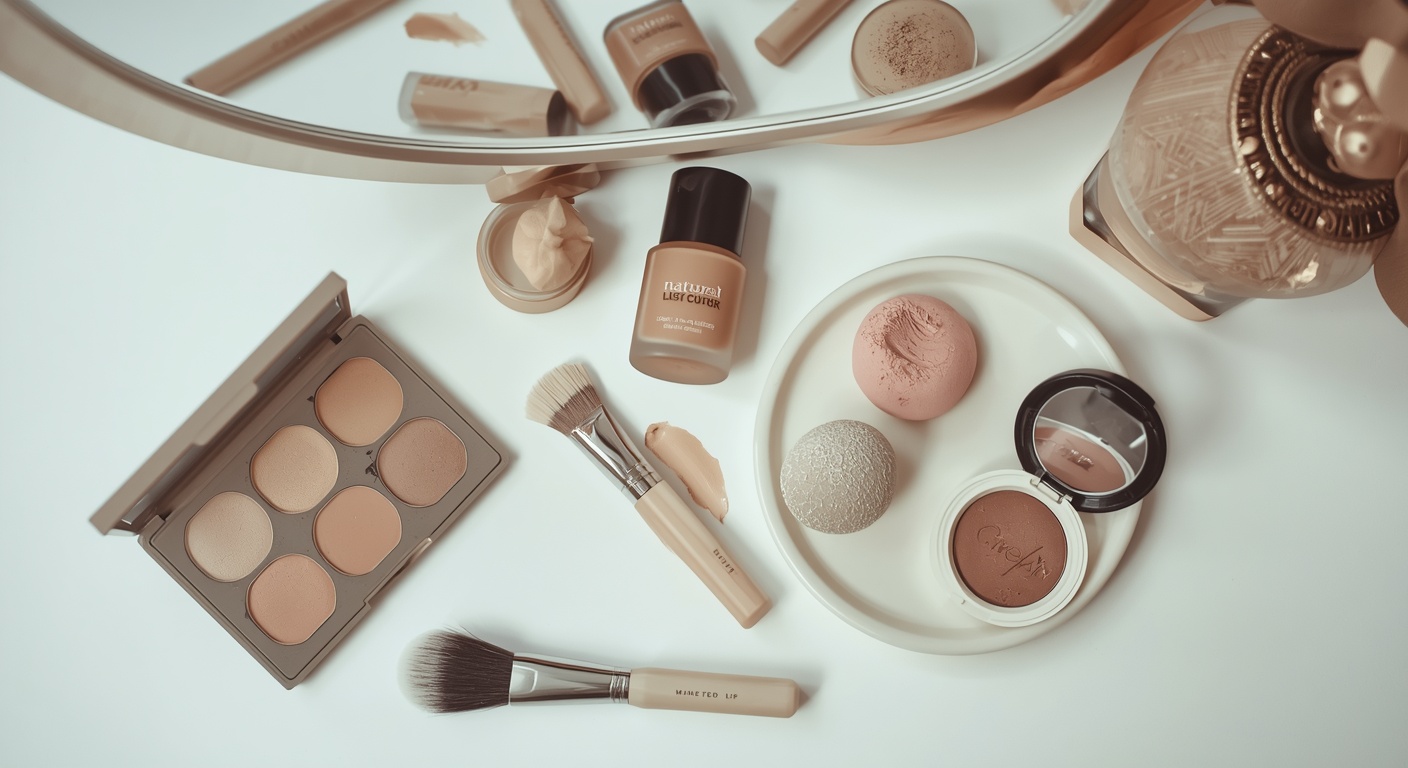
If you are looking for a makeup guide for beginners in Malaysia, the good news is that you do not need a huge kit or complicated techniques to get started. A simple routine usually works best: protect your skin, even out the complexion lightly, add a bit of colour, and define one or two features. In Malaysia’s heat and humidity, lighter layers are often easier to wear and maintain than a heavy full-face look.
A beginner makeup routine in Malaysia usually starts with sunscreen and optional primer, followed by a light base such as skin tint or foundation, concealer where needed, powder for shine control, brows, mascara, blush, and a lip product. In hot and humid weather, lightweight, long-wear formulas and simple layering are usually easier to manage than heavier makeup.
What beginners really need to know before buying makeup
You do not need a full makeup collection to start
Many beginners assume they need every category at once: primer, foundation, concealer, contour, bronzer, highlighter, eyeliner, lip liner, setting spray and several brushes. In reality, most people can begin with a much smaller set. If your goal is everyday makeup, a few well-chosen basics are usually more useful than a large collection of products you are not yet sure how to use.
A practical starter kit often includes:
- sunscreen
- a skin tint or foundation
- concealer if you want extra coverage in certain areas
- powder, especially if you get shiny easily
- blush
- a brow product
- mascara
- a lip product
That is enough for a polished daily look without making the routine feel overwhelming.
Choose products based on your skin type, finish and comfort level
Do not start by chasing the fullest coverage or the most dramatic result. It is usually easier to learn with products that blend quickly and give you some flexibility. A skin tint, sheer foundation or light concealer can be less intimidating than a very full-coverage matte base.
Think about how you want your makeup to feel on the skin. Some people prefer a natural finish that still lets their skin show through. Others want more coverage around redness or uneven tone. Neither approach is wrong. The best beginner choices are often the ones you are comfortable applying and wearing regularly.
How Malaysia’s heat and humidity can affect makeup wear
Local climate makes a difference. In hot and humid weather, makeup may break down faster, separate around oily areas or feel heavy by midday. Sweating, frequent outdoor exposure and strong air-conditioning can also affect how your base sits on the skin.
That is why many beginners in Malaysia do better with:
- lightweight layers instead of thick coverage
- strategic powder only where needed
- comfortable, long-wear textures
- simple routines that are easy to touch up
You do not need makeup that feels stiff or overly dry. The goal is balance: enough staying power to get through the day, but still comfortable on your skin.
The basic makeup products beginners should start with
Base products: sunscreen, primer, skin tint or foundation, and concealer
Sunscreen is not makeup, but it matters because it sits underneath your base. Give it a moment to settle before applying the next step.
Primer is optional. Some people find it helpful for smoothing texture, reducing the look of pores or helping makeup grip better. Others do not need it at all. If your makeup already applies well over skincare and sunscreen, you can skip primer.
For your main base, choose one of these:
- Skin tint: usually lighter in coverage and often easier for beginners to blend.
- Foundation: usually offers more coverage or a more perfected finish.
Concealer is best used where needed rather than all over the face. Many beginners find that a light base plus a little concealer under the eyes or around the nose looks more natural than applying a heavy foundation everywhere.
Set and add colour: powder, blush and optional bronzer or highlighter
Powder helps reduce excess shine and can make cream or liquid products stay in place better. You do not always need to powder the whole face. In humid weather, focusing on the T-zone is often enough.
Blush is one of the easiest ways to make makeup look fresh and less flat. A small amount on the cheeks can add life back to the face after base makeup evens everything out.
Bronzer and highlighter are optional. Bronzer adds warmth, while highlighter adds light and glow to high points of the face. They can be beautiful, but they are not essential for a beginner routine. If you are still learning, blush usually gives more immediate impact with less effort.
Eye and lip basics: brows, mascara, eyeliner and lip products
Brows frame the face, so even a little definition can make a noticeable difference. A brow pencil is often the most beginner-friendly option because it allows controlled, small strokes.
Mascara can open up the eyes quickly without requiring much technique. If eyeliner feels difficult at first, it is fine to skip it until you feel more confident. Eyeliner can add definition, but it is not mandatory for everyday makeup.
For lips, pick a product that suits your comfort level:
- Lip balm or tinted balm: easy, low-maintenance and forgiving.
- Lip tint: often lighter and more casual-looking.
- Lipstick: gives stronger colour and a more finished result.
Tools you actually need: fingers, sponge and a few simple brushes
You do not need a large brush set to apply makeup well. Many beginners can do most of their routine with:
- clean fingers for products like concealer, cream blush or lip products
- a makeup sponge for blending base products
- a powder brush
- a blush brush
- an optional small brow or eye brush depending on what products you use
Good technique matters more than having lots of tools. Start simple, then add more only if your routine expands.
How to choose the right makeup for your skin type and undertone
Oily, combination, dry and sensitive skin considerations
Your skin type can affect both how makeup looks and how long it lasts.
- Oily skin: lightweight, comfortable base products and targeted powdering may help manage shine.
- Combination skin: you may need different approaches for different areas, such as powder on the T-zone but less on the cheeks.
- Dry skin: base products with a natural or more radiant finish may sit better than very matte textures.
- Sensitive skin: simpler routines and fewer layers may be easier to manage, especially if your skin reacts easily.
There is no single finish that suits everyone. A product that looks smooth on one person may look heavy or patchy on another, so texture and wear are just as important as colour.
How to think about undertones when choosing base products
Shade matching is not only about whether a product looks light or dark enough. Undertone matters too. In simple terms, undertone refers to the subtle tone underneath your skin colour, often described as warm, cool or neutral.
If a base product is the wrong undertone, it may look slightly too yellow, too pink, too orange or a little ashy, even if the depth seems close. When possible, check the shade in natural light and see how it looks on your jawline or lower cheek area rather than only on your hand.
Beginners do not need to become experts in undertones immediately. The main thing is to notice whether a shade blends into your skin naturally once applied.
Why lightweight and long-wear textures may suit beginners in Malaysia
In Malaysia, light layers are often easier to apply neatly and less likely to feel uncomfortable through the day. A breathable base can also be simpler to touch up than a thick one that starts to separate in humid conditions.
Long-wear does not have to mean flat or heavy. For many beginners, the most practical option is a natural-looking base with enough hold for daily life, rather than a full-glam finish designed to look intense in photos.
Beginner makeup routine step by step
If you are unsure about makeup order for beginners, use this simple sequence as a starting point:
- Start with skincare and sunscreen.
- Apply primer only if it helps with a specific concern.
- Use a light base such as skin tint or foundation.
- Add concealer only where needed.
- Set strategically with powder.
- Add blush.
- Define brows and lashes.
- Finish with lip colour and optional setting spray.
Step 1: Start with skincare and sunscreen
Makeup usually sits better on skin that has been cleansed and moisturised appropriately for your skin type. After that, apply sunscreen in the daytime and let it settle. If you rush straight into makeup while your skincare still feels very wet or slippery, the base can move around more easily.
Step 2: Apply primer only if it helps your skin or makeup concerns
Primer can be useful, but it is not essential for everyone. If makeup fades quickly around oily areas, or if you want some smoothing in specific parts of the face, primer may be worth trying. If your skin already feels comfortable and your base applies evenly, you may not need this step.
Step 3: Even out the skin with a light base
Apply a small amount first. You can use fingers, a sponge or a brush depending on the formula and your preference. Start in the centre of the face if that is where you want the most evening-out, then blend outward. This usually prevents too much product from building up around the edges of the face.
A beginner routine does not need full coverage. A light, natural finish is often easier to blend and easier to wear in warm weather.
Step 4: Use concealer only where needed
Dot concealer on areas that need a bit more help, such as under the eyes, around the nose or over marks you want to soften. Blend gently so it merges with the base rather than sitting as a separate patch of product.
If you apply too much concealer at once, it can be harder to blend and may look obvious. Start small and build only if needed.
Step 5: Set strategically with powder
Powder is most useful where makeup tends to move or where shine builds up, often the forehead, nose and chin. You do not always need a full face of powder, especially if you prefer a more natural finish. Too much powder can make the skin look heavy or dry, and in humid weather it may not always give the most comfortable result.
Step 6: Add natural colour with blush
Apply blush lightly and build if needed. You can place it on the apples of the cheeks for a fresh look or slightly higher for a more lifted effect. The key for beginners is blending well rather than applying a strong stripe of colour.
Step 7: Define brows and lashes
Use a brow pencil with light strokes to fill sparse areas rather than drawing one solid shape. For mascara, start at the base of the lashes and sweep upward. One coat may be enough for a soft everyday look.
If you also want eyeliner, keep it simple. A thin line close to the lashes is usually easier to manage than a bold wing.
Step 8: Finish with lip colour and optional setting spray
Add a lip product that suits the rest of your look. For everyday wear, a tinted balm, soft lipstick or lip tint is often easy to maintain.
Setting spray is optional, like primer. Some people like it for helping the different layers melt together or for improving wear. Others prefer to keep the routine simpler. You do not need both primer and setting spray unless they genuinely improve your results.
A simple everyday makeup look for beginners
5-minute minimal routine
On busy mornings, keep it very simple. A minimal routine can look fresh and put-together without taking much time:
- sunscreen
- skin tint or concealer where needed
- powder on the T-zone if you get shiny
- blush
- brow pencil or mascara
- lip balm, tint or lipstick
This works well if you prefer a natural finish or are still getting used to applying makeup consistently.
Natural office or college makeup approach
For work, classes or daily errands, most beginners do not need strong coverage or dramatic definition. A light base, tidy brows, a bit of mascara and a soft lip colour often look polished enough for everyday settings. If you want slightly more structure, add a little more concealer and a touch of eyeliner.
How to build from light day makeup to a slightly more polished look
Once you are comfortable with the basics, you can build gradually. Add bronzer for warmth, a more defined lip colour, a second coat of mascara or a small amount of highlighter. It is easier to add one extra element at a time than to jump from no-makeup makeup straight into a full routine.
Common beginner makeup mistakes and how to avoid them
- Using too much product too quickly: Start with small amounts. It is easier to build than to remove heavy layers.
- Choosing the wrong shade or undertone: Check base products in natural light when possible.
- Skipping blend checks: Look at the jawline, around the nose and near the hairline before leaving the house.
- Applying too much powder in humid weather: Focus on areas that actually get oily instead of mattifying everything.
- Trying to copy advanced techniques too early: Learn a basic routine first, then experiment later.
- Ignoring makeup removal at the end of the day: Even light makeup should be removed properly.
Tips to make makeup last longer in Malaysia’s humid weather
- Layer lightly: Thin layers usually wear more comfortably than one thick layer of product.
- Let each step settle: Give skincare, sunscreen and base products a little time before adding the next layer.
- Powder strategically: Concentrate on high-shine areas rather than the whole face.
- Choose textures you enjoy wearing: If a product feels too heavy, you are less likely to use it well or consistently.
- Blot before reapplying more product: This can help prevent buildup during touch-ups.
- Carry simple essentials: Powder, blotting sheets, lip product or concealer are often enough for a quick refresh.
The aim is not to make makeup look untouched forever. In a humid climate, a little fading or shine through the day is normal. A routine that wears gracefully is usually more realistic than one that feels overly stiff.
How to build a beginner makeup kit without overspending
Start with multi-use essentials
If you want to keep your first kit practical, focus on products that give you the most use. A concealer that works for both under-eyes and small areas of extra coverage, or a lip and cheek product that simplifies your routine, can help reduce clutter.
Add products gradually based on your routine
Buy according to what you actually use, not what looks impressive in someone else’s routine. If you wear makeup mainly for work or college, you may get more value from a good base and brow product than from contour or bold eye makeup.
After a few weeks, you will probably notice what feels missing. That is the best time to add more.
What can wait until later
Many beginners can postpone these until they feel more confident:
- bronzer
- highlighter
- multiple eyeshadow palettes
- several lip shades in similar colours
- specialised brushes for advanced techniques
- both primer and setting spray at the same time
Starting small makes it easier to learn what you genuinely enjoy wearing.
How to remove makeup properly
Why removal matters even with light makeup
Even a light layer of base, mascara and lip product should be removed at the end of the day. Leaving makeup on overnight can make the skin feel congested and can leave residue around the eyes and lashes.
Gentle removal basics
Use a makeup remover, cleansing balm, cleansing oil or another gentle first step that helps break down makeup, especially if you are wearing base products, mascara or long-wear formulas. Follow with your usual cleanser if needed. Be gentle around the eyes rather than rubbing harshly.
When to double cleanse and when a simple routine may be enough
If you are wearing several layers of makeup, water-resistant products or sunscreen plus long-wear base, a two-step cleanse may remove everything more effectively. If your makeup is very light, your usual cleansing routine may be enough, depending on the products used. The main point is to make sure the skin and lash line are properly clean without being rough.
Frequently Asked Questions
What makeup products should a beginner buy first?
Start with the basics you are most likely to use: sunscreen, a skin tint or foundation, concealer if needed, powder, blush, a brow product, mascara and a lip product. You do not need a full collection at the beginning.
What is the correct order to apply makeup for beginners?
A simple order is skincare, sunscreen, optional primer, base product, concealer, powder, blush, brows, mascara, lip product and optional setting spray. You can adjust this slightly depending on the products you use.
Which makeup products are better for Malaysia’s hot and humid weather?
Many beginners prefer lightweight base products, comfortable long-wear formulas and powder used mainly on oily areas. Simple layering is often easier to maintain than heavy coverage in humid conditions.
Do beginners need primer and setting spray?
No. Both are optional. Primer may help with specific concerns like smoothing or oil control, while setting spray may help bring makeup together or improve wear. If your makeup already sits well and lasts reasonably, you may not need either one.
How can I make my makeup look natural as a beginner?
Use small amounts, choose lighter base textures, blend carefully and focus on a few features rather than everything at once. A little concealer, blush, brows, mascara and lip colour often looks more natural than heavy full-face coverage.
Start simple and build from there
The best beginner makeup routine is the one you can apply comfortably, wear confidently and adjust for your daily life. In Malaysia, that usually means lighter layers, practical products and a routine that can handle heat, humidity and a bit of midday shine. You do not need to get everything right at once. Learn the basics, notice what suits your skin and habits, and build your kit gradually from there.