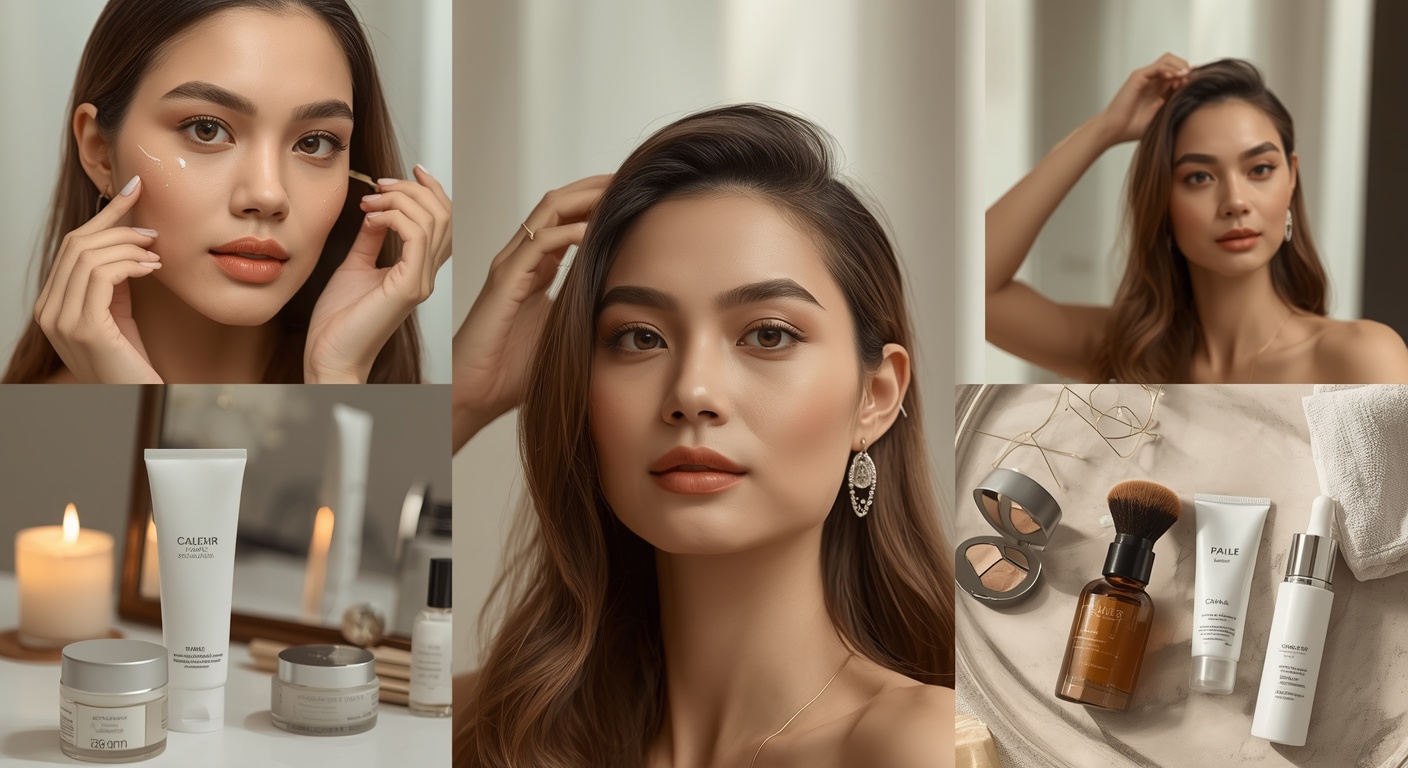
A practical beauty guide in Malaysia should help you build routines that suit a hot, humid climate while covering the essentials of skincare, hair care, makeup, body care and beauty treatments. The most useful approach is usually simple: understand your skin and scalp, protect your skin from daily UV exposure, choose textures you will actually use, and be realistic about what products or treatments can do.
If you are looking for a complete beauty guide for Malaysia, these are the main areas to focus on:
- Skincare basics: cleanser, moisturiser and daily sunscreen
- Hair care based on scalp type, hair texture and climate
- Makeup choices for long wear in heat and humidity
- Body care including cleansing, moisturising and sun protection
- Beauty treatment guidance covering benefits, limits and risks
- Simple routine-building tips that match lifestyle and budget
You do not need a complicated routine to take good care of your skin, hair or body. In many cases, a few well-chosen basics used consistently are more helpful than chasing every new trend.
What this beauty guide covers
This Malaysian beauty guide is designed as a broad starting point for readers who want clear, practical advice without hype. It covers the main beauty categories most people think about day to day: skincare, hair care, makeup, body care, supportive habits and beauty treatments.
It is especially useful for beginners, but it can also help anyone who feels their routine has become too complicated or too trend-driven. Rather than assuming you need more products, the goal is to help you work out what actually matters and what can wait.
Who this guide is for
This guide is for readers who want a sensible beauty routine, whether that means a very basic daily setup or a more polished routine built on good fundamentals. It may be helpful if you are:
- starting from scratch
- trying to simplify a cluttered routine
- dealing with heat, sweat or midday oiliness
- unsure how to choose products for your skin or hair type
- curious about facials, peels or laser treatments but not sure where to begin
How Malaysia’s climate can affect beauty routines
Malaysia’s weather often shapes beauty preferences more than people realise. Heat and humidity can make heavy creams, full-coverage makeup or rich styling products feel uncomfortable. Sweat and oil production may also affect how skincare layers, sunscreen and makeup wear through the day.
That does not mean everyone in Malaysia needs the same routine. Some people still have dry or dehydrated skin, sensitive skin, dry hair lengths or a reactive scalp. Air-conditioned environments can also leave skin feeling tight even when the weather outside is humid. The most helpful mindset is to consider climate as one factor, not the only factor.
How to build a simple beauty routine that works
A good beauty routine in Malaysia does not start with a shopping list. It starts with your actual needs. Before buying more products, look at what you want your routine to do. You may need help with excess shine, dehydration, frizz, uneven makeup wear, rough body skin or sunscreen consistency. Those are different goals, and not every product trend will be relevant to them.
Start with your skin, scalp and lifestyle needs
Your routine should suit how you live. If you commute, work outdoors or spend time driving, sunscreen and comfortable reapplication matter more. If you exercise often, scalp care and gentle cleansing may matter more. If you usually have ten minutes in the morning, a long multi-step routine is unlikely to last.
Think in terms of these basics:
- Skin needs: oiliness, dryness, sensitivity, occasional congestion, uneven texture
- Scalp needs: oily scalp, sweat, buildup, dryness, styling residue
- Hair needs: frizz control, softness, breakage awareness, curl definition, smoother lengths
- Lifestyle needs: speed, budget, travel convenience, ease of reapplication, low-maintenance options
Focus on consistency before adding more products
Many routines fail not because the products are bad, but because the routine is too ambitious. It is usually better to use a cleanser, moisturiser and sunscreen regularly than to own many serums you barely touch. The same idea applies to hair care and body care. A basic routine done well is often more useful than a complicated routine done occasionally.
If you want to add treatments or active skincare later, it helps to first make sure your basics are steady. That gives you a clearer sense of what is working and what is causing irritation or inconvenience.
Why sunscreen matters year-round
In a beauty routine guide for Malaysia, sunscreen is not an optional extra for most people. Daily UV exposure can affect skin comfort and long-term skin appearance, and it is relevant even on ordinary days rather than only during outdoor activities.
The best sunscreen for your routine is generally the one you are willing to use consistently. Many people in hot weather prefer lighter textures, but comfort still depends on your skin type and finish preference. If your sunscreen feels too greasy, too drying or difficult under makeup, you may be less likely to use enough of it.
Skincare basics for Malaysian readers
For most people, skincare starts with three essentials: cleanse, moisturise and protect. Everything else sits on top of that foundation.
The core routine: cleanse, moisturise and protect
Cleanser: Use a cleanser that removes sweat, sunscreen, excess oil and daily grime without leaving your skin uncomfortably tight. If you wear makeup or heavier sunscreen, you may prefer a first cleanse followed by a gentle water-based cleanser at night.
Moisturiser: Moisturiser is not only for dry skin. It helps support skin comfort and can reduce the temptation to over-strip the skin with harsh products. In humid conditions, many people prefer lighter gel-cream or lotion textures, but richer creams may still suit drier skin.
Sunscreen: Apply sunscreen in the daytime as the final skincare step before makeup, if you wear makeup. Consistency matters more than choosing the most elaborate formula.
How to choose products for oily, dry, combination or sensitive skin
Oily skin: Lightweight moisturisers, comfortable sunscreen textures and cleansers that remove oil without making skin feel squeaky may be more suitable. Over-cleansing can make routines feel harsher rather than cleaner.
Dry skin: Look for moisturising products that reduce tightness and support comfort. Even in humid weather, some people need richer textures, especially if they spend a lot of time in air-conditioned spaces.
Combination skin: You may need balance rather than extremes. A lightweight overall routine can work, with optional extra hydration on drier areas.
Sensitive skin: Simpler formulas and slower product changes are often easier to manage. Fragrance preference is personal, but if your skin reacts easily, it may help to be more cautious about strongly scented or highly active routines.
Skin type is not always fixed. It can shift with weather, stress, routine changes and product use. It is normal to adjust rather than follow one rigid routine forever.
When active ingredients may help and when to go slowly
Active ingredients such as exfoliating acids, retinoid products or targeted brightening ingredients are commonly used for texture, congestion or uneven-looking skin. They may be useful additions, but they are not always the best starting point for beginners.
If your routine is already causing stinging, peeling or dryness, adding more actives is unlikely to solve the problem immediately. A better first step may be simplifying your routine and making sure your cleanser, moisturiser and sunscreen are working for you.
When you do add an active, introduce it gradually rather than changing everything at once. Patch testing can also help reduce the chance of a full-face reaction. If you have persistent irritation, significant sensitivity or a skin concern you are unsure about, a dermatologist or appropriately qualified healthcare professional may be the better next step.
Hair care essentials in a hot and humid climate
Hair care often becomes easier once you separate scalp needs from hair-length needs. An oily scalp can exist alongside dry ends. Sweat near the scalp does not necessarily mean your lengths need stronger cleansing. Treating everything the same way can leave one part of your hair overworked and another part under-supported.
Scalp care versus hair-length care
Your scalp is where cleansing and buildup management matter most. Shampoo choice often depends on how quickly your scalp becomes oily, sweaty or heavy with styling products. Your mid-lengths and ends usually benefit more from conditioning, softness and frizz control.
This is why some people do well with a balancing shampoo near the scalp and a more smoothing conditioner only through the lengths. It is also why applying heavy conditioners too close to the roots may weigh hair down for some hair types.
Managing oiliness, sweat, frizz and buildup
Humidity can add frizz and make styling less predictable. Sweat can also make some people feel the need to wash more often. There is no universal washing schedule that suits everyone. Frequency depends on scalp comfort, activity level, styling habits and hair texture.
Helpful habits may include:
- cleansing often enough to manage discomfort and buildup
- using conditioner mainly on the lengths if your roots get oily quickly
- choosing styling products based on finish and weight, not only trend claims
- being cautious with very heavy layers if your hair flattens easily in humidity
If you experience ongoing scalp irritation, sudden or substantial hair shedding, or symptoms you cannot explain, it is worth seeking professional advice rather than self-diagnosing through product changes alone.
Choosing shampoo, conditioner and styling products sensibly
Start with function. A shampoo should clean adequately for your scalp needs. A conditioner should improve manageability for your hair lengths. A styling product should serve a clear purpose, such as smoothing, hold, curl definition or humidity control.
Price alone does not tell you whether a hair product will suit you. Texture, residue level, scent preference, ease of rinsing and how your scalp feels after use often matter more in practice.
Makeup tips for daily wear in Malaysia
Makeup in hot, humid weather usually works best when it feels comfortable on the skin. Daily wear does not have to mean a full face. Many people prefer a lighter approach that holds up better through sweat and oil than thick layering.
Prepping skin before makeup
Good makeup wear often starts with skincare that has properly settled. If your moisturiser or sunscreen feels overly slippery, makeup may move more easily. If your skin is too dry, makeup may catch on rough patches or look uneven.
A practical order is simple: skincare, sunscreen, then makeup. Give products a little time to settle if needed. You do not always need many prep products. Sometimes using fewer layers improves wear.
Lightweight and long-wear makeup considerations
For humid weather, many people prefer lighter base products, strategic concealer, setting powder in oil-prone areas and formulas described as long-wear or transfer-resistant. That does not mean matte everything is automatically best. Comfort, finish and skin condition still matter.
Useful questions to ask when choosing makeup include:
- Will this feel heavy by midday?
- Does it sit well over sunscreen?
- Will it break apart with oil or sweat?
- Is the finish suitable for my skin type and daily setting?
If you are new to makeup, start with the products you are most likely to use regularly, such as concealer, brow product, mascara, blush or powder. You do not need a full kit at once.
How to remove makeup thoroughly without over-stripping skin
Makeup removal should be thorough but not aggressive. If you wear base makeup, water-resistant products or multiple layers of sunscreen, a first cleanse can help loosen residue before your regular cleanser.
Scrubbing hard, using very hot water or relying on harsh cleansers can leave skin feeling overly stripped. A cleaner feeling is not always a healthier one. The goal is to remove product without creating unnecessary irritation.
Body care that is easy to maintain
Body care is often neglected because people assume it requires many extra steps. In reality, a simple body routine is usually enough for everyday maintenance.
Cleansing and moisturising without overcomplicating it
A comfortable body cleanser and a moisturiser or body lotion that you will actually use regularly can cover most needs. If your skin feels dry after showering, applying moisturiser while skin is still slightly damp may help with comfort.
You do not need to use rich body products everywhere if you dislike the feeling. Some people prefer lighter lotions in humid weather and keep richer products only for drier zones such as elbows, knees or shins.
Sun care beyond the face
It is common to focus on facial sunscreen and forget the rest of the body. Areas such as the neck, chest, arms and hands may also get regular sun exposure depending on your routine, commute and clothing.
If you spend meaningful time outdoors, body sun protection may be worth treating as part of your regular routine rather than something reserved for holidays.
Common body concerns such as dryness, roughness and body acne
Dryness and rough texture are often managed with consistent moisturising and sensible cleansing. If you are exploring body products with active ingredients, introduce them gradually and avoid layering too many strong products at once.
Body breakouts can have different triggers, including sweat, friction or product residue, but they are not all the same. If breakouts are severe, persistent or inflamed, a doctor or dermatologist may be better placed to advise than trial-and-error product switching.
Beauty treatments: what to know before booking
Beauty treatments can be useful for some people, but they are not shortcuts without trade-offs. A good treatment decision starts with clear expectations. You should know what the treatment is meant to do, what it cannot do, what recovery or aftercare may involve, and who is performing it.
Facials, peels, lasers and other common treatment categories
Facials are usually chosen for cleansing, maintenance or short-term skin refreshment, though the exact approach varies a lot.
Chemical peels generally use exfoliating agents to target concerns such as texture or uneven tone, but suitability, strength and downtime vary.
Laser-based treatments are used for a range of cosmetic goals, depending on the device and treatment plan, and they require especially careful provider assessment and aftercare.
Other in-clinic treatments may also exist, but no treatment is automatically suitable for everyone. Skin tone, skin sensitivity, current routine, recent sun exposure and your broader skin history may all matter.
Questions to ask before choosing a provider
- What is the treatment designed to address?
- Who will actually perform the procedure?
- What side effects or downtime are possible?
- What should I stop using before the appointment, if anything?
- What aftercare will be needed?
- How many sessions might be discussed, and why?
- What would make me a poor candidate for this treatment?
If the explanations are vague, overly sales-driven or dismissive of risk, it may be worth slowing down before booking.
Benefits, limitations, downtime and possible side effects
Even lower-intensity cosmetic treatments can involve irritation, redness, peeling, sensitivity or temporary discomfort. Some treatments may also require stricter sun protection afterwards. Results, if any, can vary depending on the treatment category, provider approach and the individual.
It is sensible to be careful around strong claims. Treatments are not risk-free, and expensive or popular does not automatically mean appropriate. If you have a known skin condition, a history of sensitivity, or you are considering a more intensive procedure, professional assessment matters more than trend appeal.
How to choose beauty products and services wisely
Read labels and claims carefully
Marketing often makes everything sound essential. In practice, the most useful questions are simpler: What is this product or service supposed to do? Does that match my needs? Is the texture, finish or level of upkeep realistic for me?
Be careful with dramatic claims, especially when they suggest instant correction or guaranteed results. Beauty products may support certain goals, but they do not work identically for everyone.
Patch testing and introducing new products gradually
If your skin is reactive or you are trying a new active product, patch testing is a sensible step. It also helps to avoid changing too many things at once. When several new products are introduced together, it becomes much harder to work out what is helping and what is causing problems.
A gradual approach usually gives clearer feedback than a complete routine overhaul.
Why expensive does not always mean better
A higher price may reflect packaging, branding, texture preferences or formula style, but it does not guarantee suitability. A more affordable product that fits your skin, scalp or routine can still be the better choice.
What matters most is whether a product is appropriate for your needs and whether you can use it consistently without discomfort.
Common beauty mistakes to avoid
Using too many actives at once
Layering multiple strong exfoliants, retinoid products and treatment serums together can make routines harder to tolerate. More products do not necessarily mean better outcomes. If your skin becomes irritated, simplifying is often wiser than adding another correcting product immediately.
Skipping sunscreen
Many people invest in targeted skincare while remaining inconsistent with sunscreen. In Malaysia’s climate, daily UV exposure is a practical reason to take sun protection seriously, especially if you are also using active products or getting cosmetic treatments.
Following trends without considering suitability
A trend can be interesting without being relevant to you. Viral products and routines often reflect novelty more than usefulness. Before buying into a trend, ask whether it suits your skin type, hair type, comfort level, budget and daily habits.
A practical beauty checklist for beginners
What to buy first
If you are building a routine from the ground up, start with a few basics:
- a gentle facial cleanser
- a moisturiser that suits your skin comfort level
- a sunscreen you are willing to wear regularly
- a shampoo for your scalp needs
- a conditioner for your hair lengths if needed
- a basic body cleanser and body moisturiser
If you wear makeup, add only the categories you will realistically use.
What can wait until later
You can usually delay buying extra serums, multiple exfoliants, specialist masks, several styling products or booking advanced treatments until you understand your basics better. Once your daily routine is stable, it becomes easier to decide what is actually missing.
The best beauty routine is not the longest one. It is the one that fits your needs, budget and daily life well enough to stay consistent.
Frequently Asked Questions
What is the best basic beauty routine for beginners in Malaysia?
For most beginners, a simple routine is enough: facial cleanser, moisturiser, daily sunscreen, suitable shampoo and conditioner, and basic body cleansing and moisturising. Makeup is optional and can be kept minimal. Starting small usually makes consistency easier.
How does Malaysia’s humid weather affect skincare and makeup?
Heat, humidity and regular UV exposure often make people prefer lighter skincare textures, comfortable sunscreen and makeup that wears well with oil or sweat. Still, personal skin type matters. Some people in humid weather still need richer hydration or gentler formulas.
Do I need different beauty products for oily and sensitive skin?
Possibly. Oily skin and sensitive skin can overlap, so product choice should be based on both texture preference and tolerance. A lightweight product may suit oilier skin, but if your skin is also reactive, simpler and less irritating formulas may matter just as much.
How can I choose a beauty treatment safely?
Understand what the treatment is for, who will perform it, what downtime or side effects are possible, and what aftercare is needed. It is also worth asking whether the provider thinks the treatment is suitable for your skin and why. If the advice feels unclear or overly pushy, slow down before committing.
Is an expensive beauty routine always better?
No. A routine is usually better when the products suit your skin, hair and lifestyle and you can use them consistently. Price may affect packaging or formula feel, but it does not guarantee that a product will work better for you.
Where to start
If this beauty guide Malaysia overview feels broad, start with the essentials: one cleanser, one moisturiser, one sunscreen, sensible hair care and a simple body routine. Once those basics feel manageable, you can decide whether you genuinely need actives, more makeup steps or professional treatments. Clear routines tend to be easier to maintain than complicated ones, especially in a climate where comfort matters every day.