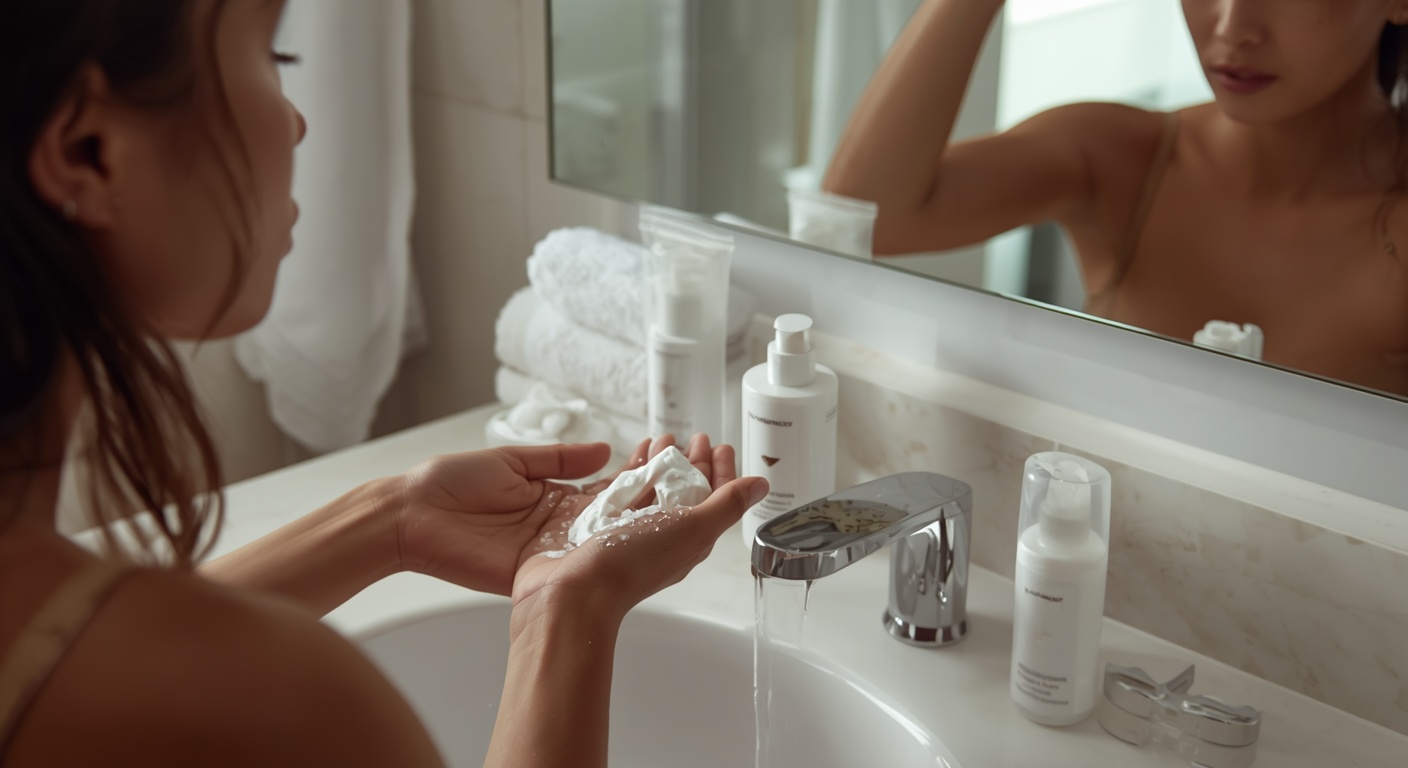

A practical skincare guide in Malaysia starts with three basics: a gentle cleanser, a moisturiser that suits your skin type, and daily sunscreen. From there, the best routine depends on your skin type, your main concerns, and how your skin handles Malaysia’s heat, humidity, sweat and regular sun exposure. Most people do not need a long, complicated routine to take good care of their skin.
In other words, skincare should be simple before it becomes specific. If your basics are consistent, it becomes much easier to decide whether you actually need extras such as a serum, exfoliant or retinoid.
A good skincare routine for Malaysians usually includes gentle cleansing, a suitable moisturiser and broad-spectrum sunscreen every morning. In Malaysia’s hot, humid climate, lightweight textures and steady barrier support are often more useful than layering too many products. Extra steps can be added for concerns like oiliness, breakouts or uneven-looking tone, but only if your skin tolerates them.
- Start with cleanser, moisturiser and sunscreen
- Match texture to your skin type and comfort
- Add treatment products one at a time
- Be careful with strong active ingredients
- Stay consistent before changing products again
What a good skincare routine in Malaysia should include
The basic structure is simple, and for many people it is enough:
- Cleanse
- Moisturise
- Apply sunscreen in the morning
That is the core of a basic skincare routine for Malaysians. At night, sunscreen is replaced by a cleansing-focused routine, and optional treatment products can be used if needed.
The three essentials: cleanser, moisturiser and sunscreen
Cleanser helps remove sweat, excess oil, sunscreen, makeup and daily buildup. A cleanser should leave your skin feeling clean, not tight or stripped.
Moisturiser helps support hydration and the skin barrier. Even oily skin may still need moisturiser, especially if the skin feels dehydrated after washing or after using active ingredients.
Sunscreen is especially important in Malaysia because UV exposure is relevant year-round. Daily sun protection can help reduce the impact of UV on concerns such as uneven-looking tone, post-acne marks and premature signs of ageing.
Why Malaysia’s hot, humid climate changes product preferences
Humidity does not automatically mean skin is hydrated. Many people in Malaysia deal with a mix of oiliness on the surface and dehydration underneath, especially if they spend time in air-conditioned spaces, wash too often, or use harsh anti-acne products.
This is why texture matters. Lightweight gel, lotion or fluid formulas may feel more comfortable in humid weather than rich, heavy creams. That said, comfort and skin type both matter. Someone with dry skin may still prefer a cream, while someone with oily skin may do better with lighter layers.
The climate also makes sunscreen texture especially important. If a sunscreen feels greasy, sticky or heavy, people are less likely to apply enough or reapply when needed. A product that feels wearable is often more realistic than one that seems ideal on paper but never gets used properly.
When to keep your routine simple
Keeping your routine simple is often the best choice if:
- you are new to skincare
- your skin is easily irritated
- you are recovering from over-exfoliation or product overload
- you are not sure which product is causing breakouts or stinging
- you want a routine you can actually maintain
Simple does not mean ineffective. It often means your skin has a better chance of staying comfortable and consistent.
How to identify your skin type
Your skin type affects the kind of cleanser, moisturiser and textures you may prefer. It is different from a skin concern. For example, oily skin is a skin type, while dehydration, breakouts and sensitivity are concerns that can happen across several skin types.
Oily skin
Oily skin often looks shiny fairly quickly, especially around the forehead, nose and chin. Pores may appear more visible, and clogged pores or breakouts may be more common. In humid weather, oily skin can feel even slicker, so lighter textures are usually easier to tolerate.
Dry skin
Dry skin often feels tight, rough or uncomfortable, especially after cleansing. It may look dull or flaky and usually benefits from richer barrier-supporting products. Humid weather does not always solve dryness, particularly if you spend long hours in air conditioning.
Combination skin
Combination skin commonly means an oilier T-zone with drier or more normal cheeks. This skin type may need a balanced approach rather than extreme oil control. Many people with combination skin do well with lightweight moisturisers and targeted treatment only where needed.
Sensitive skin
Sensitive skin may sting, flush, itch or react easily to fragrance, harsh cleansers, strong acids or overuse of active ingredients. Sensitive skin is not a formal diagnosis by itself, but it does mean product selection and routine changes should be more careful and gradual.
Acne-prone skin versus skin type
Acne-prone skin is a concern, not a skin type. You can have oily, dry, combination or even sensitive skin and still be prone to breakouts. That distinction matters because people sometimes over-focus on drying out blemishes and end up making their skin barrier worse. A breakout-prone routine still needs balance, not just aggressive oil control.
A basic morning skincare routine
A morning routine should protect the skin without feeling unnecessarily heavy. For most people, this is enough:
- Cleanser: Use a gentle cleanser if your skin feels oily or sweaty in the morning. Some people with drier skin may prefer simply rinsing with water, depending on comfort and the products used the night before.
- Treatment or serum if needed: This is optional. Use it only if it serves a clear purpose, such as hydration, mild oil control or support for uneven-looking tone.
- Moisturiser: Choose a texture that feels comfortable under sunscreen.
- Sunscreen: Apply broad-spectrum sunscreen as the last step of your morning skincare routine.
Cleanser
A basic cleanser should remove overnight oil without leaving the skin feeling squeaky or tight. If your cleanser makes your face feel stripped, it may be too harsh for daily use.
Treatment or serum if needed
This step is optional, not automatic. A hydrating serum may suit dehydrated skin, while niacinamide is commonly included in routines for oiliness, visible pores or barrier support. Vitamin C is also widely used in morning routines for brightness and uneven-looking tone, but tolerance varies by formulation and by person.
Moisturiser
Moisturiser helps reduce water loss and supports the skin barrier. In Malaysia, many people prefer lotions or gels during the day because they sit more comfortably under sunscreen and makeup. Drier skin may still prefer a cream, especially if the skin feels uncomfortable after cleansing.
Sunscreen as the final step
Sunscreen should be the last step in your morning routine. Look for broad-spectrum protection and a texture you can wear consistently. Daily use matters more than chasing a perfect-feeling formula that you never want to apply.
If you spend a lot of time outdoors, sweat heavily or are in strong daylight for long periods, reapplication becomes relevant. The exact method depends on what you are wearing on the skin and how practical reapplication is during the day.
A basic night skincare routine
Night routines should focus on cleansing away the day and supporting the skin while you sleep. They do not need to be complicated either.
- Remove sunscreen and makeup thoroughly
- Use treatment products only if needed
- Finish with moisturiser
Removing sunscreen and makeup
If you wear makeup, water-resistant sunscreen or heavier layers, you may prefer a first cleanse with a cleansing oil, balm or micellar product, followed by a gentle water-based cleanser. If not, a single gentle cleanse may be enough for some people. The goal is clean skin, not excessive scrubbing.
When to use treatment products
Night is often when people use products like exfoliating acids, retinoids or more treatment-focused serums. This can make sense, but not all actives need to be used every day, and combining too many in one routine may increase irritation.
If you are adding an active product, start with one at a time and keep the rest of your routine simple. That makes it easier to judge whether your skin is tolerating it well.
Moisturising and barrier support
Your night moisturiser does not have to be heavy, but it should feel supportive enough for your skin type. If your skin is dry, irritated or using stronger actives, barrier-supporting ingredients such as ceramides, glycerin and soothing humectants may be useful. Comfort matters here: skin that feels constantly tight or stingy usually needs a gentler approach, not more treatment steps.
Key skincare ingredients and what they generally do
You do not need to memorise long ingredient lists to build a sensible routine. It helps more to recognise a few common ingredients and understand why someone might choose them.
Hydrating and barrier-supporting ingredients
- Hyaluronic acid: Commonly used to attract water to the skin and support hydration.
- Glycerin: A widely used humectant that helps the skin hold onto moisture.
- Ceramides: Often included to support the skin barrier and reduce dryness or discomfort.
- Squalane: Used in many moisturisers to soften and support the skin without necessarily feeling too heavy.
These are often useful for dry, dehydrated or sensitised skin, but they can also be beneficial in oily routines if the formulation is lightweight.
Ingredients for oiliness and blemish-prone skin
- Salicylic acid: Commonly used in products for clogged pores, excess oil and blemish-prone skin.
- Niacinamide: Often used to support barrier function and help manage oiliness or the appearance of enlarged pores.
- Clay and oil-absorbing ingredients: Found in some cleansers and masks for temporary shine control.
These ingredients may be helpful, but stronger or more frequent use is not automatically better. Too much oil control can leave the skin irritated or dehydrated.
Ingredients often used for dullness and uneven tone
- Vitamin C: Commonly used in routines aimed at dullness and uneven-looking skin tone.
- Niacinamide: Also appears in many products for tone support and overall skin balance.
- Gentle exfoliating acids: Sometimes used to improve surface smoothness and brightness, depending on the product and the user’s tolerance.
Post-acne marks and uneven-looking tone usually take time. These concerns are often better managed with consistency and sun protection than with aggressive layering.
Active ingredients that need extra caution
- Retinoids: Commonly used for acne-prone skin, texture concerns and signs of ageing, but they can be irritating, especially when first introduced.
- Exfoliating acids: These may help with texture and clogged pores, but overuse can weaken the skin barrier.
- Strong vitamin C formulas: Some people tolerate them well, while others may find them stingy or irritating.
If you are using active ingredients, start gradually and avoid stacking too many at once. If your skin becomes persistently red, sore, flaky or reactive, it may be a sign to simplify your routine and seek professional advice if needed.
How to choose skincare products without overbuying
Many skincare routines become overwhelming not because the products are bad, but because there are too many of them. A better approach is to choose products based on need, comfort and consistency.
Choose by skin type and concern
Start with two questions:
- What is my skin type?
- What is my main concern right now?
For example, oily skin with breakouts may need a lightweight moisturiser and a pore-focused treatment, while dry skin with sensitivity may need fragrance-aware, barrier-supporting products and fewer active ingredients.
Trying to fix everything at once usually makes selection harder. It is often more realistic to focus on one or two priorities.
Pay attention to texture and tolerance
A product can look suitable on paper but still feel unpleasant in real life. Texture matters because it affects whether you will use the product consistently. In humid weather, many people prefer lighter textures, but that is not a rule for everyone.
Tolerance matters just as much. If a product repeatedly stings, causes obvious irritation or makes your skin feel worse, it may not be the right fit for you even if the ingredients sound promising.
Why more products do not always mean better results
A longer routine creates more opportunities for irritation, layering problems and confusion about what is helping. Many people do better with a short routine they can maintain for months than a ten-step routine they abandon after two weeks.
Extras should have a clear role. If a product does not solve a real need, it may only add expense and uncertainty.
How to patch test new products
Patch testing can help reduce the chance of a full-face reaction. A practical approach is to apply a small amount to a limited area first, then observe how your skin responds before using it more widely. This is especially sensible with active ingredients, fragranced products, or anything your skin is more likely to react to.
Patch testing does not guarantee zero reaction, but it is still a useful habit.
Common skincare concerns in Malaysia
Climate, sweat, air conditioning and product layering all affect how skin behaves. These are some common concerns people try to manage.
Excess oil and shine
Humidity can leave skin looking shinier, especially later in the day. Harsh stripping cleansers may seem like the answer, but they can make the skin feel worse over time. Using a gentler cleanser, a lighter moisturiser and targeted oil-managing ingredients may be more balanced than trying to dry the skin out completely.
Dehydration despite humid weather
Skin can be oily and dehydrated at the same time. Signs may include tightness, roughness, dullness or skin that feels uncomfortable even though it looks shiny. This often happens when routines focus too heavily on foaming cleansers, acne treatments or exfoliation. Hydration-supporting products and a less aggressive routine may help.
Breakouts and clogged pores
Sweat, occlusive textures, inconsistent cleansing and multiple heavy layers can contribute to clogged-feeling skin. That does not mean every breakout is caused by the weather or by one product alone. A steady routine with appropriate cleansing and carefully chosen treatment products is usually more useful than frequently switching products.
Post-acne marks and uneven-looking skin tone
Marks left after breakouts and uneven-looking tone are common frustrations. Daily sunscreen is one of the most practical habits here, because UV exposure can make discolouration look more persistent. Brightening or exfoliating products may also be used depending on tolerance, but patience is important.
Sensitivity and a weakened skin barrier
Sometimes the main issue is not oil or acne, but an irritated barrier caused by too many strong products. Signs may include stinging, redness, tightness, peeling or skin that suddenly reacts to almost everything. In that situation, simplifying the routine and focusing on gentle, supportive products is often more sensible than adding another active.
Common skincare mistakes to avoid
Over-cleansing or over-exfoliating
Washing too often or using strong exfoliants too frequently can leave skin irritated and out of balance. Clean skin should not feel raw or squeaky.
Skipping sunscreen
Many people invest in serums but use sunscreen inconsistently. In Malaysia, that often undermines the routine. Sunscreen is one of the most practical daily steps if you want to support overall skin maintenance and reduce UV-related stress.
Using too many actives at once
Acids, retinoids and strong brightening products may all sound useful, but combining them without a plan can lead to irritation. If several actives are added together, it becomes difficult to tell what is helping and what is causing problems.
Changing products too quickly
Many skincare products need time to show whether they suit your skin. Replacing them after a few days makes it harder to judge anything properly unless the product is clearly causing irritation.
Expecting instant results
Hydration and comfort may improve relatively quickly, but concerns such as texture, tone and post-acne marks usually take longer. Progress is often gradual rather than dramatic.
When to consider professional advice
Skincare can support many common concerns, but it does not replace proper diagnosis or medical treatment when needed.
Persistent acne, irritation or severe sensitivity
If you have persistent breakouts, frequent painful spots, recurring irritation or skin that keeps reacting despite a gentle routine, it may be worth speaking to a dermatologist, doctor or pharmacist. A professional can help you work out whether you are dealing with acne, irritation, allergy or another issue.
When over-the-counter skincare is not enough
Some concerns do not improve much with standard cosmetic products alone. If you have tried a simple, consistent routine and the problem remains significant, professional assessment may save time and reduce trial and error.
Why diagnosis matters for medical skin conditions
Not every rash, redness or breakout pattern is simply “sensitive skin”. Conditions such as eczema, rosacea-like symptoms, persistent dermatitis or scalp and skin disorders need proper assessment. It is safer not to self-diagnose these based on trends or social media advice.
How to build a skincare routine that stays realistic
Start with essentials first
If you are building a beginner skincare guide into a real routine, start with cleanser, moisturiser and sunscreen. Use them consistently before deciding that you need more.
Add one new product at a time
When you add multiple new products together, it becomes difficult to tell which one is useful or irritating. One at a time is slower, but clearer.
Track tolerance and consistency
Pay attention to how your skin feels over time. Useful questions include:
- Does my skin feel more comfortable or more reactive?
- Is this product easy to use daily?
- Am I adding this because I need it, or because it is trending?
A realistic routine is one you can maintain through workdays, hot weather, travel and ordinary fatigue. That usually matters more than having the most elaborate shelf.
Frequently Asked Questions
What is the best basic skincare routine for beginners in Malaysia?
A simple routine is usually best: cleanse, moisturise and apply sunscreen in the morning, then cleanse and moisturise at night. If you have a specific concern such as breakouts or dehydration, you can add one treatment product gradually rather than building a complicated routine immediately.
Do I still need moisturiser if my skin is oily in Malaysia’s humid weather?
Yes, many people with oily skin still benefit from moisturiser. Oily skin can also be dehydrated, especially after cleansing or using active ingredients. The key is choosing a lighter texture, such as a gel or lotion, rather than skipping moisturiser automatically.
Which skincare ingredients are good for acne-prone skin?
Ingredients commonly used in acne-prone routines include salicylic acid and niacinamide. These may help support oil management and blemish-focused routines, depending on the product and your skin’s tolerance. If breakouts are persistent or severe, professional advice may be more appropriate than repeated product switching.
How long should I wait before deciding whether a skincare product is working?
It depends on the product type and your main concern. Hydrating products may feel helpful fairly quickly, while concerns like uneven-looking tone or post-breakout marks often take longer. If a product is causing significant irritation, stop using it rather than waiting it out.
Can I use vitamin C, retinoids and exfoliating acids in the same routine?
Possibly, but caution is important. Combining several active ingredients in one routine may increase the risk of irritation, especially for beginners or sensitive skin. It is usually better to introduce actives gradually and avoid layering too many strong treatment products at once unless you already know your skin tolerates them well.
Keep the routine clear and consistent
The most useful skincare guide Malaysia readers can follow is usually the least complicated one that still meets their needs. Start with cleanser, moisturiser and sunscreen, match textures to your skin type and the local climate, and only add treatment products when there is a clear reason. If your skin stays uncomfortable, persistently breaks out or reacts easily, professional advice may be the more sensible next step.