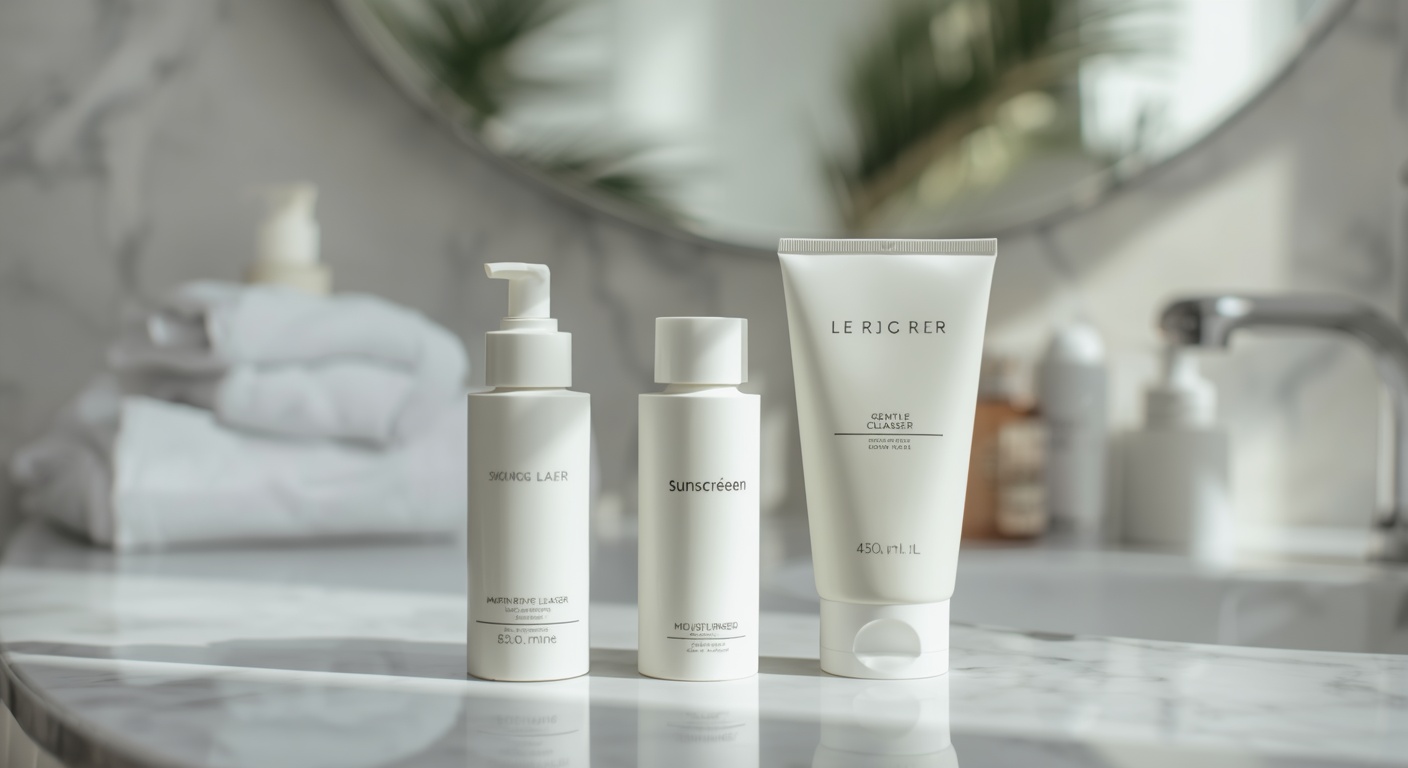
A skincare routine for beginners in Malaysia does not need to be complicated. For most people, the best place to start is a gentle cleanser, a moisturiser and sunscreen in the morning, then cleanser and moisturiser again at night. Once your skin is comfortable with those basics, you can decide if you actually need extras.
If you are completely new to skincare, keep things simple and consistent first. That makes it easier to notice what helps, what feels too heavy in humid weather, and what may be causing irritation. If you want a broader foundation before building your own routine, start with our skincare guide for Malaysians.
A beginner skincare routine in Malaysia should usually include a gentle cleanser, moisturiser and broad-spectrum sunscreen in the morning, then cleanser and moisturiser at night. Start with the basics, patch test new products, and add active ingredients slowly if you later want help with concerns like oiliness, dryness or uneven tone.
What is a simple skincare routine for beginners?
The shortest effective beginner routine is very simple:
- Cleanser
- Moisturiser
- Sunscreen in the morning
- Optional treatment step only after the basics are tolerated
You do not need a 10-step system to start taking care of your skin. A basic routine is often enough to keep skin comfortable, support the skin barrier and give you a clear starting point.
Morning routine: cleanser, moisturiser and sunscreen
Your morning skincare routine should focus on cleansing away overnight oil or sweat, keeping skin comfortable, and protecting it during the day.
- Cleanser: Use a gentle cleanser that does not leave your face feeling stripped or tight.
- Moisturiser: Apply a moisturiser that suits your skin type. This helps reduce dryness and supports the skin barrier.
- Sunscreen: Finish with a broad-spectrum sunscreen as the last step of your morning routine.
If your skin feels comfortable with a rinse of water instead of cleanser in the morning, some people prefer that. The key is to avoid harsh cleansing that leaves the skin irritated.
Night routine: cleanser and moisturiser
At night, the goal is to remove sunscreen, sweat and daily buildup, then moisturise. For many beginners, that is enough.
- Cleanser: Wash your face gently, especially if you have worn sunscreen or makeup.
- Moisturiser: Apply moisturiser while skin is still slightly damp if that feels comfortable.
You can keep this routine for a few weeks before deciding whether you need a serum, exfoliant or spot treatment.
Why beginners should start with the basics first
Why more products are not always better
Using many products at once can make a routine feel impressive, but it often creates confusion. If your skin becomes red, itchy, tight or bumpy, it is much harder to work out which product is causing the problem.
A simple skincare routine for beginners is easier to follow every day, and consistency matters more than having a long shelf of products. It also reduces the chance of over-exfoliating or overwhelming your skin with several active ingredients too quickly.
How a simple routine helps you spot irritation or breakouts
When you only use a few products, your skin’s response is easier to read. If your skin feels comfortable with cleanser, moisturiser and sunscreen, you have a stable base. If you later add one new product and your skin reacts badly, you are more likely to identify the cause.
This is also why patch testing matters. Before applying a new product all over your face, try a small amount on a limited area first and watch for irritation.
The correct order to apply skincare products
One of the most common beginner questions is about skincare routine order. A practical rule is to apply products from lighter textures to heavier ones, then use sunscreen last in the morning.
General rule: thinnest to thickest
If you eventually add more steps, a common order looks like this:
- Cleanser
- Toner if you use one
- Serum
- Spot treatment if needed
- Moisturiser
- Sunscreen in the morning
You do not need every category on that list. It is simply a guide for where products usually fit.
Where toner, serum and spot treatments fit in
Toner: Toner is optional. Some people like it for a light layer of hydration or to remove any leftover residue after cleansing, but many beginner routines work perfectly well without it.
Serum: Serums are more targeted. You might consider one later if you want support for dryness, dullness, oiliness or uneven tone. A serum usually goes on after cleansing and before moisturiser.
Spot treatments: Spot treatments are usually applied before moisturiser unless the product directions say otherwise. If you are using a treatment product for blemishes, introduce it carefully and not at the same time as several other new products.
When sunscreen should be applied
Sunscreen should be the last step of your morning skincare routine. Apply it after moisturiser and before makeup if you wear any. In Malaysia’s climate, sunscreen matters throughout the year because UV exposure is not only a beach-day issue.
How to choose the right products for your skin type
You do not need to identify your skin type perfectly on day one, but it helps to notice how your skin usually feels by midday and after cleansing.
Oily or acne-prone skin
If your skin gets shiny quickly or you are prone to clogged pores, look for lightweight textures that feel comfortable in humidity. Gel or lotion moisturisers may suit you better than very rich creams. Some people also prefer products labelled non-comedogenic, though that label is not a guarantee for everyone.
Avoid assuming that oily skin does not need moisturiser. Skipping moisturiser can leave skin feeling unbalanced, and harsh cleansing can make things worse.
Dry or dehydrated skin
If your skin often feels tight, rough or uncomfortable, choose a gentle cleanser and a moisturiser with a more nourishing texture. Air-conditioned environments can also make skin feel drier even in humid weather, so the right moisturiser can still make a noticeable difference.
If your skin is dehydrated rather than naturally dry, you may also prefer formulas that feel hydrating without being greasy.
Combination skin
Combination skin often feels oily in some areas and drier in others. In that case, a balanced cleanser and a light but comfortable moisturiser are a sensible starting point. You do not necessarily need separate routines for different parts of your face unless your skin clearly behaves very differently by area.
Sensitive skin
If your skin stings easily, reacts to fragrance, or becomes red with new products, keep your routine especially simple. Look for gentle, straightforward formulas and avoid adding multiple actives at once. Fragrance-free options may feel better for some people, though sensitivity varies from person to person.
If you regularly experience burning, swelling, rashes or persistent irritation, it is worth speaking to a pharmacist, dermatologist or another qualified healthcare professional.
How to build a beginner skincare routine for Malaysia’s hot, humid weather
Why lightweight textures may feel more comfortable
A basic skincare routine in Malaysia often feels easier to stick to when the textures are light. In hot, humid weather, very heavy layers can feel sticky, especially if you sweat easily or spend time outdoors. Lightweight cleansers, lotions and gel-creams may be more comfortable for daytime use.
That does not mean richer products are always wrong. If your skin is dry or your indoor environment is heavily air-conditioned, you may still prefer a more cushioning moisturiser, especially at night.
Why sunscreen matters year-round
Daily sunscreen is one of the most important parts of a beginner routine. It helps protect your skin from sun exposure, which can contribute to issues such as tanning, uneven tone and faster visible skin ageing. It is also especially important if you later start using exfoliants or other active ingredients that may make skin more sensitive.
The best sunscreen is one you are willing to apply consistently. For many people in humid weather, this means choosing a texture that does not feel overly greasy or suffocating.
How to avoid routines that feel too heavy in humidity
If your routine feels uncomfortable by noon, simplify before adding more products. You might do better with:
- fewer layers in the morning
- a lighter moisturiser
- fragrance-free formulas if your skin feels irritated by sweat
- one treatment product instead of several
A routine that feels comfortable is more realistic than one that looks ideal on paper but is hard to follow every day.
Which optional products should beginners add later?
Once your skin is handling the basics well, you can decide whether you need anything extra. The important part is to add products slowly and for a reason, not because you feel you should own every category.
When toner is optional
Toner is not an essential step for most beginners. If your cleanser is already gentle and your moisturiser is doing its job, you may not miss toner at all. Some people enjoy it for added hydration or for the feel of an extra light layer, but it is optional.
When to consider a serum
A serum can make sense if you have a specific goal, such as adding hydration or addressing uneven-looking skin. Choose one concern at a time. You do not need multiple serums right away, and using too many together can make your routine harder to troubleshoot.
How to add exfoliants carefully
Exfoliants can help with texture, dullness or clogged pores for some people, but they are easy to overuse. If you decide to try one, start carefully and avoid combining it with several other new actives at once. More frequent exfoliation is not automatically better, and irritation can leave skin feeling worse rather than better.
If your skin already feels sensitive or compromised, focus on a gentle routine first instead of rushing into exfoliation.
Why one new product at a time is safer
Introduce one new product at a time and give your skin a chance to adjust. That approach makes it easier to notice if something is helping, doing nothing, or causing problems. It also reduces the risk of turning a simple beginner skincare routine into an overwhelming experiment.
Common beginner skincare mistakes to avoid
- Using too many actives too quickly: This can lead to irritation, dryness or a damaged skin barrier.
- Skipping sunscreen: A routine without daily sun protection is missing a key daytime step.
- Changing products too often: Constant switching makes it hard to judge what works.
- Over-cleansing: Washing too often or using a harsh cleanser can leave skin tight and uncomfortable.
- Over-exfoliating: This is a common reason beginners end up with stinging, flaky or irritated skin.
If your skin suddenly becomes very red, painful, swollen, or develops a persistent rash, stop the product that seems to be causing the reaction and seek professional advice if needed.
How long should you try a skincare routine before changing it?
What results beginners can realistically expect
A daily skincare routine for beginners usually needs time and consistency. You may notice simple changes such as softer-feeling skin or less tightness fairly quickly, but concerns like uneven tone, congestion or recurring breakouts can take longer to assess. Avoid expecting overnight changes from a basic routine.
What matters most at the start is whether your skin feels comfortable, whether the routine is sustainable, and whether you are avoiding irritation.
When irritation means you should stop
Stop using a product if it causes significant burning, swelling, intense itching or a rash. Mild adjustment periods may happen with some products, but beginners should not push through severe discomfort. If you are unsure whether a reaction is normal, ask a pharmacist, dermatologist or another qualified healthcare professional.
When to see a dermatologist or qualified healthcare professional
Professional advice is worth considering if you have persistent or severe acne, suspected eczema, repeated allergic reactions, worsening pigmentation, or irritation that does not settle after simplifying your routine. A beginner routine can support skin care, but it is not a substitute for medical assessment when symptoms are significant or ongoing.
A simple beginner skincare checklist
Morning checklist
- Cleanser or gentle rinse
- Moisturiser
- Broad-spectrum sunscreen
Night checklist
- Cleanser
- Moisturiser
What to buy first
- A gentle cleanser
- A moisturiser suited to your skin type
- A sunscreen you will actually use daily
That is enough to start. If your skin is doing well after a period of consistent use, you can consider adding one targeted product later.
Frequently Asked Questions
What are the basic skincare steps for beginners?
The basic steps are cleanser, moisturiser and sunscreen in the morning, then cleanser and moisturiser at night. Those three product types are enough for most beginners.
Do beginners need toner or serum?
No. Toner is optional, and serum is only worth adding if you have a specific reason for it. Start with the basics first before deciding whether extra steps are necessary.
How do I know my skin type before starting a routine?
Pay attention to how your skin feels after cleansing and a few hours into the day. Oily skin tends to look shiny quickly, dry skin often feels tight, combination skin has both oily and drier areas, and sensitive skin reacts easily to products. If you are unsure, start with gentle basics and adjust from there.
Can I use the same skincare routine in the morning and at night?
You can keep it almost the same, but sunscreen is the main difference. In the morning, use cleanser, moisturiser and sunscreen. At night, use cleanser and moisturiser.
How long does a beginner skincare routine take to work?
Some people notice comfort and hydration first, while other concerns take longer to assess. The key is consistency. If a routine feels comfortable and suits your skin, give it time before making frequent changes.
What skincare products are most important in Malaysia’s humid weather?
For most people, the priorities are a gentle cleanser, a comfortable moisturiser and a broad-spectrum sunscreen. In humid weather, lightweight textures often feel easier to use consistently.
Start simple and build from there
If you are new to skincare, the most effective first step is usually the simplest one: build a routine you can actually follow every day. Cleanser, moisturiser and sunscreen in the morning, then cleanser and moisturiser at night, is a solid starting point for most beginners. Once that feels stable, you can make careful changes based on what your skin actually needs rather than what a trend tells you to buy.