If you are looking for a moisturiser for oily skin in Malaysia, the first thing to know is that oily skin still needs hydration. The aim is not to strip away every trace of shine. A good moisturiser helps keep skin comfortable, supports the skin barrier and can make the rest of your routine feel more balanced, especially if you use foaming cleansers, exfoliating acids or retinoids.
In Malaysia’s hot and humid weather, the best choice is often a moisturiser that feels light, absorbs quickly and does not leave a heavy film. Gel and gel-cream textures are popular for that reason, but the right formula depends on how your skin behaves, what actives you use and how the product sits under sunscreen. If you need broader routine basics, our skincare guide for Malaysians is a useful place to start.
What should you look for in a moisturiser for oily skin?
- Lightweight texture such as a gel, gel-cream or light lotion
- Humectants like glycerin or hyaluronic acid to add hydration without a heavy feel
- Barrier-supporting ingredients such as ceramides or niacinamide
- Fast absorption with minimal greasy residue
- Good layering under sunscreen and makeup during the day
- Suitable fragrance and richness for your skin’s sensitivity level
Do you need moisturiser if you already have oily skin?
Yes. Oily skin produces more sebum, but sebum and hydration are not the same thing. You can have a shiny T-zone and still feel tight after cleansing, irritated from active ingredients or uncomfortable in air-conditioned spaces. That is often a sign that the skin needs water-binding and barrier support rather than more stripping products.
Why oily skin can still be dehydrated
Dehydrated skin lacks water, not oil. This can happen when you wash too often, use strong cleansers, over-exfoliate or spend long hours moving between humid outdoor weather and dry indoor air-conditioning. Some people then respond by using harsher mattifying products, which can leave skin feeling even less comfortable.
A suitable moisturiser will not necessarily make oily skin oilier. In many routines, it simply helps reduce that tight, over-cleansed feeling and creates a better base for sunscreen.
How over-cleansing and strong actives can affect the skin barrier
If your routine includes salicylic acid, benzoyl peroxide, retinoids or stronger exfoliating acids, a moisturiser becomes more important. These ingredients can be useful in some oily or acne-prone routines, but they can also lead to dryness, flaking or stinging if the rest of the routine is too harsh.
That is where moisturiser earns its place. You are not trying to create a thick, greasy layer. You are trying to support the skin barrier so the rest of your routine is easier to tolerate.
What to look for in a moisturiser for oily skin
Lightweight textures that feel comfortable in humid weather
In a warm, humid climate, texture often matters just as much as ingredients. Many people with oily skin prefer formulas that spread easily, sink in quickly and do not feel sticky after a few minutes.
That is why lightweight moisturiser options for oily skin tend to be popular in Malaysia. A heavy finish may feel fine in a cooler environment but uncomfortable when you are sweating, commuting or layering sunscreen on top.
Hydrating ingredients that do not feel heavy
Look for humectants, which help draw and hold water in the skin. Common examples include glycerin and hyaluronic acid. These are often used in gel moisturiser for oily skin formulas because they can provide hydration without the dense feel people sometimes associate with richer creams.
Plenty of well-formulated moisturisers also include emollients and a smaller amount of occlusive ingredients to reduce water loss. That is normal. A product does not need to be completely free of richer components to suit oily skin; it just needs the overall formula to feel balanced on your face.
Barrier-supporting ingredients that can fit oily or acne-prone routines
Barrier-supporting ingredients such as ceramides and niacinamide can be useful in a moisturiser for acne-prone oily skin or skin that is easily disrupted by strong routines. Niacinamide is commonly included in products aimed at balancing oily skin, while ceramides are often used to support the skin barrier.
Neither ingredient guarantees a particular result for everyone, but both can make sense if your skin feels stressed, dehydrated or reactive.
Which moisturiser textures usually work best?
| Texture | How it usually feels | Who may like it | Possible drawback |
|---|---|---|---|
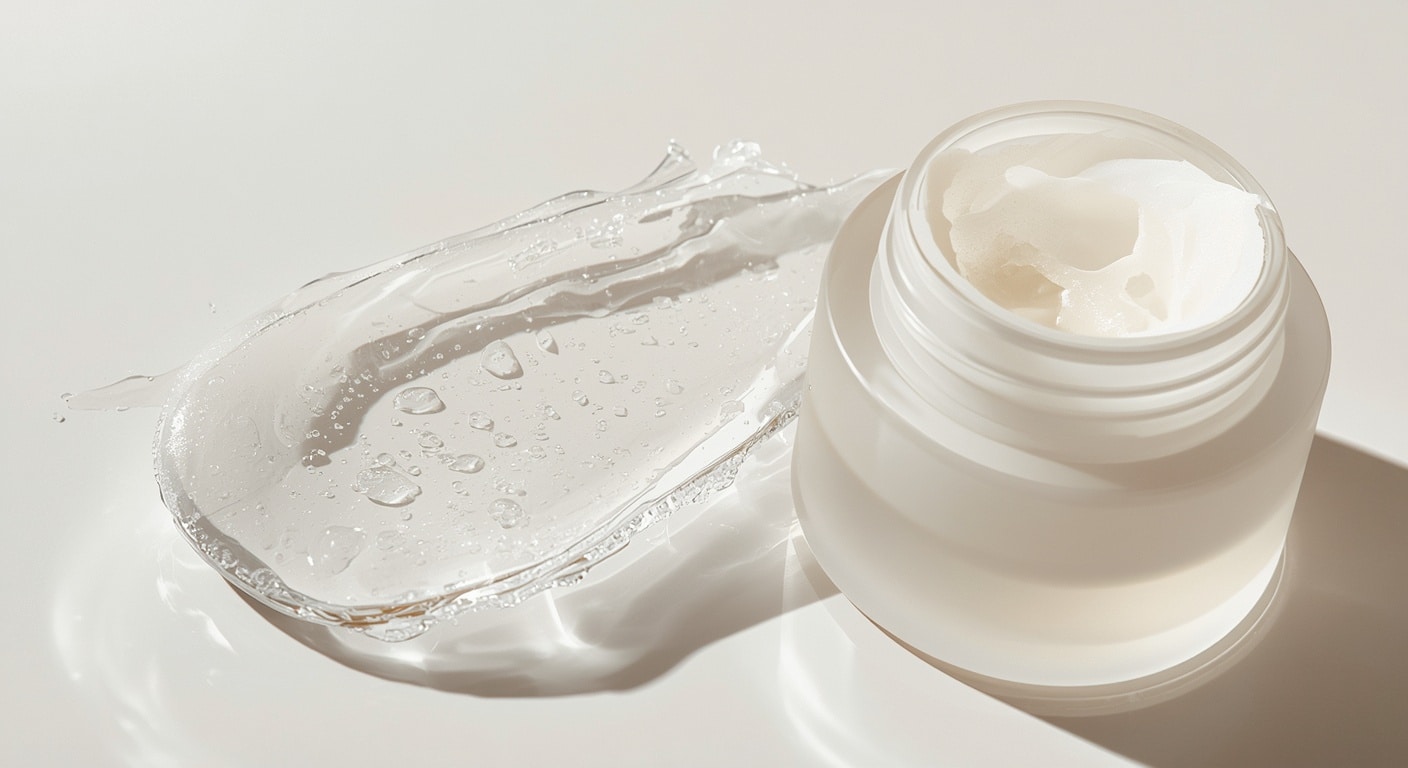
| Gel | Very light, fresh, fast-absorbing | Very oily skin or daytime use in humid weather | May feel insufficient if skin is dehydrated or irritated |
| Gel-cream | Light but slightly more cushioning | Oily skin that still wants a bit more comfort | Some formulas can still feel sticky depending on ingredients |
| Lotion | Fluid, balanced, often easy to layer | Normal-to-oily or combination skin | May feel too light for skin using drying actives |
| Cream | Richer, more occlusive | Oily skin that is dehydrated, sensitive or using stronger actives | Can feel heavy in hot weather if the finish is too rich |
Gel
Gel textures are often the first category people consider when choosing a day moisturiser for oily skin. They usually feel cool, light and quick to absorb, which suits humid weather and sunscreen layering.
If your skin is very oily and you dislike any residue at all, a gel may feel the most comfortable. The trade-off is that some gel formulas may not feel sufficient if your skin is dehydrated or irritated.
Gel-cream
Gel-cream sits between a true gel and a cream. It is still lightweight, but often feels a bit more cushioning. For many people, this is a practical middle ground: less heavy than a classic cream, but more comfortable than a very watery gel.
In a humid climate moisturiser for oily skin often means finding this kind of balance rather than automatically choosing the thinnest formula possible.
Lotion
Lotions can work well if your skin is combination, mildly oily or not especially reactive to richer textures. A good lotion may layer neatly under sunscreen and makeup without making the skin feel overloaded.
When a richer cream may still make sense
Richer creams are not automatically wrong for oily skin. If your skin barrier feels compromised, if you are using retinoids, or if you notice stinging and flaking, a creamier formula may be more comfortable, especially at night.
The key is to judge the finish and how your skin responds, not just the product category on the label.
Ingredients and product traits to prioritise
Humectants such as glycerin and hyaluronic acid
These help with hydration and are common in lightweight moisturiser for oily skin products. Glycerin is especially widely used and often suits many skin types. Hyaluronic acid is also popular for adding water-binding hydration without making a formula feel heavy.
Niacinamide and ceramides for barrier support
Niacinamide appears in many oily-skin moisturisers because it fits easily into routines focused on balancing comfort and shine. Ceramides are useful when your skin barrier feels dry, stressed or overworked by acne-focused products.
You do not need all of these in one product for it to be worth considering, but they are helpful signs that a formula is not only chasing a matte finish.
How to think about oil-free and non-comedogenic claims
Oil-free does not automatically mean better, and non-comedogenic does not guarantee that a product will suit every face. These labels can be useful as rough guidance, but they are not a promise.
Some oil-free moisturisers still feel heavy because of the overall formula. Some products labelled non-comedogenic may still not agree with your skin. It is better to read these claims as part of the picture, alongside texture, finish, ingredient profile and your own experience over time.
What to be cautious about
Very heavy or greasy finishes
If a moisturiser sits on the skin like a thick film, it may feel uncomfortable in daily wear, especially under sunscreen. The issue is often not one single ingredient but the overall finish. If your face feels coated for hours, that formula may simply be too rich for your routine.
Fragrance if your skin is easily irritated
Fragrance is not automatically a problem for everyone, but if your skin is sensitive, easily irritated or already stressed by active ingredients, a heavily fragranced formula may not be the best place to start. Choosing a lower-fragrance or fragrance-free option can make troubleshooting easier.
Why mattifying should not mean drying
Some people with oily skin chase a very matte finish, but a product that leaves skin feeling tight or uncomfortable is not necessarily a better choice. Shine control is one preference; dehydration is another issue altogether. A good moisturiser should feel balanced, not stripping.
How to choose based on your skin concerns
Oily but dehydrated skin
If your skin looks shiny but feels tight after cleansing, consider a gel-cream or light lotion with glycerin, hyaluronic acid and some barrier-supportive ingredients. Very minimal gels may not feel substantial enough for you.
Oily and acne-prone skin
Look for a formula that feels light, layers well and does not leave a suffocating finish. A non-comedogenic moisturiser for oily skin may be worth considering, but pay closer attention to how your skin behaves in real use. If breakouts are persistent, inflamed or difficult to manage, it is worth seeking advice from a dermatologist or other appropriately qualified healthcare professional.
Oily and sensitive skin
Keep things simple. A moisturiser with a shorter, straightforward formula and a comfortable finish may be easier to tolerate than one packed with strong actives and fragrance. If your skin often stings, burns or reacts unpredictably, it may be best to simplify the routine and get professional guidance if irritation continues.
Oily skin using retinoids or exfoliating acids
If you use retinoids or acids, your night moisturiser for oily skin may need to be slightly more cushioning than your daytime one. Some people do well with a light gel in the morning and a gel-cream or light cream at night. That approach can help maintain comfort without making daytime wear feel too heavy.
How to test whether a moisturiser suits your routine
Patch testing and gradual introduction
When trying a new product, patch testing is a sensible first step, especially if your skin is reactive. After that, use the moisturiser consistently for a period long enough to judge comfort, finish and compatibility with the rest of your routine.
If you are also starting a strong active ingredient at the same time, it becomes much harder to tell what is causing irritation or congestion. Introduce products gradually where possible.
How it should sit under sunscreen and makeup
This matters more than many people realise. A day moisturiser for oily skin should not pill easily, roll up under sunscreen or make your face feel overly slick by mid-morning. In Malaysia, where sunscreen use is relevant year-round, routine compatibility is a practical buying criterion.
Signs a moisturiser may be too heavy or not hydrating enough
- Too heavy: your skin feels coated, greasy soon after application, or sunscreen becomes harder to apply evenly
- Not hydrating enough: skin still feels tight, flaky, stings easily or becomes uncomfortable after cleansing or active products
Common mistakes when choosing a moisturiser for oily skin
- Skipping moisturiser completely because your skin already looks shiny
- Choosing a product only because it says oil-free without considering texture and finish
- Using something extremely mattifying that leaves skin tight or dry
- Ignoring sunscreen layering even though daytime comfort matters
- Changing too many products at once and then not knowing what is working
- Assuming gel is always best even when your skin is dehydrated or irritated
A simple checklist before you buy
- Texture: Does it sound like a gel, gel-cream, lotion or cream that matches your comfort level?
- Ingredient profile: Does it include humectants or barrier-supporting ingredients that suit your needs?
- Finish: Will it likely feel light enough for hot, humid days?
- Routine compatibility: Does it layer well under sunscreen and with any actives you use?
- Skin response over time: Does your skin feel comfortable, not just matte, after repeated use?
Frequently Asked Questions
Can oily skin get dehydrated even if it looks shiny?
Yes. Oily skin can still lack water and feel tight, uncomfortable or irritated. Shine does not automatically mean your skin is well hydrated.
Is a gel moisturiser always better than a cream for oily skin?
No. Gel textures often feel more comfortable in humid weather, but a gel-cream, lotion or even a light cream may suit you better if your skin is dehydrated, sensitive or using stronger active ingredients.
What does non-comedogenic mean on a moisturiser label?
It generally means the product is designed to be less likely to clog pores. It is a useful label to note, but it is not a guarantee that every person with oily or acne-prone skin will tolerate it well.
Can I skip moisturiser if I use sunscreen during the day?
Sometimes a moisturising sunscreen may feel sufficient on its own, but not always. If your skin feels tight, dehydrated or uncomfortable, a separate lightweight moisturiser underneath may still help. The best choice depends on the sunscreen texture and your skin’s needs.
How do I know if my moisturiser is too heavy for Malaysia’s humid weather?
If your skin feels greasy soon after application, your sunscreen pills or slides, or your face feels coated rather than comfortable, the formula may be too rich for your daytime routine in humid conditions.
Choosing one that feels right on your skin
The best moisturiser for oily skin is usually the one that keeps your skin comfortable without leaving a heavy finish. For many people in Malaysia, that means starting with a gel or gel-cream, checking for humectants and barrier-supporting ingredients, and paying close attention to how the product layers under sunscreen.
If your skin is persistently irritated, unusually reactive or dealing with ongoing breakouts, it is worth getting professional advice rather than relying on label claims alone. Otherwise, choosing well often comes down to texture, finish and how your skin responds in everyday use.