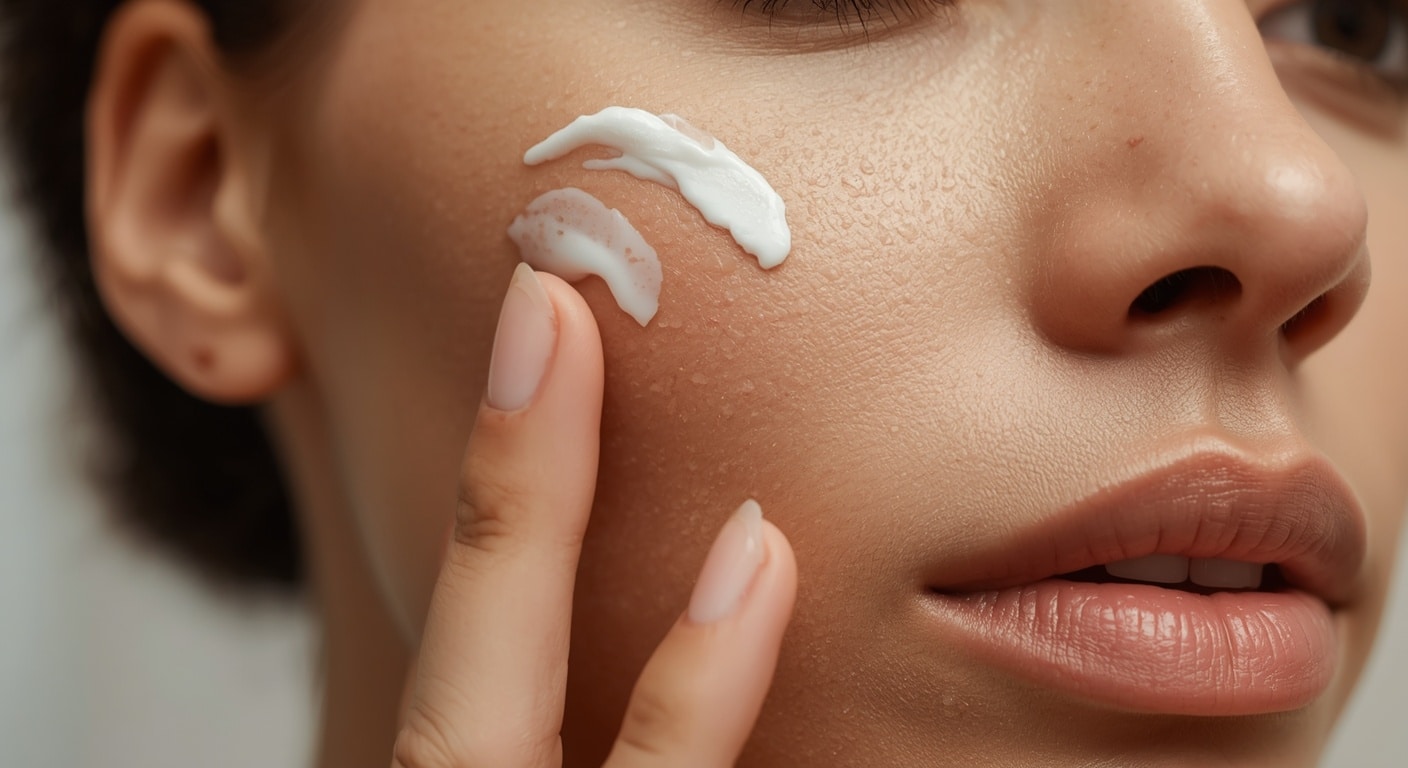
If your skin suddenly feels tight, stingy, red or unusually reactive, the first step in damaged skin barrier repair is usually to stop the products that may be irritating it. That often means pausing exfoliating acids, scrubs and strong retinoids, switching to a gentle cleanser, using a simple moisturiser consistently, and protecting skin from sun exposure while it settles.
A damaged skin barrier can often improve with a stripped-back routine and a bit of patience. Recovery time varies depending on how irritated your skin is and what caused the problem. If you have persistent burning, swelling, rash, broken skin or symptoms that keep getting worse, it is worth getting advice from a doctor, dermatologist or pharmacist.
- Pause harsh or irritating actives for now.
- Cleanse gently and avoid over-washing.
- Use a bland moisturiser with barrier-supportive ingredients.
- Wear sunscreen during the day if your skin can tolerate it.
- Keep the rest of your routine minimal until your skin feels calmer.
- Reintroduce stronger actives slowly only after your skin has stabilised.
If you want to rebuild your routine from the basics, our skincare guide for Malaysians gives a broader overview of daily skincare in Malaysia’s climate.
What is the skin barrier and why does it matter?
The skin barrier usually refers to the outermost part of the skin, often called the stratum corneum. A simple way to think about it is as your skin’s protective outer layer. It helps keep water in and reduces how easily irritants, pollutants and other external stressors get in.
When this barrier is functioning well, skin tends to feel more comfortable and resilient. When it is disrupted, transepidermal water loss can increase, which means the skin loses moisture more easily. That can leave skin feeling dehydrated, tight and more reactive than usual.
The barrier also matters because it affects how your skin tolerates skincare. Products that normally feel fine may suddenly sting or burn when the barrier is compromised. That is one reason barrier repair skincare is usually less about adding more products and more about reducing stress on the skin.
Signs your skin barrier may be damaged
A damaged skin barrier is not a formal self-diagnosis, but there are common signs that suggest your skin may be irritated or over-stressed.
- Tightness, especially after cleansing
- Stinging or burning when applying products
- Redness or flushing
- Dry patches, flaking or rough texture
- Skin that feels both oily and dehydrated
- Increased sensitivity to products you used to tolerate
- A generally uncomfortable, inflamed feeling
Some people also notice that their skin becomes shinier than usual but still feels dry underneath. Others describe an over-exfoliated skin barrier as skin that suddenly cannot tolerate even a basic moisturiser without stinging.
These signs are helpful, but they are not exclusive to barrier damage. Eczema, dermatitis, allergic reactions, rosacea and other skin conditions can overlap with the same symptoms. If the reaction is severe, widespread, persistent or hard to explain, it is better not to assume it is just a skincare issue.
What commonly causes a damaged skin barrier?
There is rarely just one cause. Often, irritation builds up over time from a combination of products, habits and environmental stress.
Over-exfoliation and too many active ingredients
One of the most common triggers is over-exfoliation. This can happen when you use AHAs, BHAs, scrubs, retinoids or multiple exfoliating products too frequently or in combinations your skin cannot tolerate. Even products marketed as gentle can become irritating if layered without a clear need.
Using several active ingredients at once does not necessarily lead to faster results. For some people, it simply creates more inflammation and sensitivity.
Harsh cleansers, hot water and over-washing
Cleansing is essential, but strong surfactants, frequent washing or very hot water can strip the skin more than necessary. Foaming cleansers are not automatically bad, but if your skin already feels irritated, a low-foam or non-stripping cleanser is often more comfortable.
Over-washing is easy to fall into when skin feels greasy, sweaty or congested. The problem is that repeatedly stripping the skin can worsen the cycle of irritation.
Sun exposure, indoor dryness and climate stress
UV exposure can aggravate already sensitive skin, while dry indoor air from air-conditioning may leave skin feeling tighter or more dehydrated. Wind, friction and frequent towel rubbing can also make things worse.
In Malaysia, heat and humidity create their own pattern. Sweat, sunscreen reapplication and frequent cleansing can make people wash their face more than needed. At the same time, strong year-round UV exposure means sun protection still matters, even when skin feels irritated. Lightweight but barrier-supportive textures often feel easier to stick with in this climate.
How to repair a damaged skin barrier: the core steps
For most people, skin barrier repair is about doing less, not more. The aim is to reduce irritation, support hydration and give the skin time to recover.
1. Stop or reduce irritating actives temporarily
If your skin is stinging, burning or suddenly reacting to multiple products, pause exfoliating acids, scrubs, strong retinoids and any product that clearly seems to trigger discomfort. This does not mean you can never use them again. It simply gives your skin a break while it calms down.
If you are using a prescription treatment, do not make long-term changes without professional advice. For non-prescription skincare, keeping the routine simple for a while is often the most practical move.
2. Switch to a gentle cleanser
Choose a mild cleanser that removes sweat, sunscreen and daily buildup without leaving skin squeaky or tight. Wash with lukewarm rather than hot water. If your face is not very oily in the morning, some people prefer just rinsing with water or cleansing very lightly, depending on what their skin tolerates.
After exercise or heavy sweating, cleanse if you need to, but try not to scrub or cleanse repeatedly through the day just because the weather is hot.
3. Use a simple moisturiser consistently
A moisturiser helps by reducing water loss and making the skin feel more comfortable. During damaged skin barrier repair, bland formulas are often easier to tolerate than heavily fragranced or highly active products.
Texture matters. In Malaysia’s humid weather, some people prefer a lighter lotion or gel-cream in the day and a slightly richer cream at night. What matters most is not the trendiest texture but whether your skin can tolerate it and whether it reduces tightness and stinging.
4. Protect skin from sun exposure
Compromised skin can be more reactive to UV exposure, so sunscreen remains useful. The challenge is that irritated skin may sting with some sunscreens. If that happens, look for a simpler formula and stop using any sunscreen that consistently burns or worsens the irritation.
Sun protection is not only about the product itself. Shade, hats and avoiding unnecessary direct midday sun can also help while your skin is recovering.
5. Keep the rest of your routine minimal
You do not need a long routine for sensitive skin barrier repair. In fact, trying five new calming serums at once may make it harder to figure out what is helping and what is irritating. A short routine is usually easier to tolerate and easier to monitor.
What ingredients can support skin barrier repair?
No single ingredient repairs every case, but some categories are commonly used in barrier repair skincare because they support moisture balance and help reduce discomfort.
Ceramides, cholesterol and fatty acids
These are often discussed together because they are associated with the skin’s barrier structure. Moisturisers containing ceramides, cholesterol and fatty acids may help support the skin while it recovers. You do not need to chase perfect ratios or complicated claims. A straightforward moisturiser with these kinds of ingredients can be a sensible option.
Humectants such as glycerin and hyaluronic acid
Humectants draw water into the skin and can help with that dry, tight feeling. Glycerin is widely used and often well tolerated. Hyaluronic acid can also help with hydration, although very irritated skin may still prefer simpler formulas overall.
Humectants often work best as part of a complete moisturiser rather than as a standalone hydrating step if your skin is already reactive.
Emollients and occlusives
Emollients help soften the skin surface, while occlusives reduce moisture loss. Ingredients such as petrolatum are commonly used for this purpose. If rich textures feel too heavy in humid weather, you may prefer to use them more selectively, such as at night or on particularly dry areas.
Soothing ingredients and bland formulas
Some people do well with simple, fragrance-free skincare that includes soothing ingredients. The key point is often the overall formula rather than one star ingredient. A product can sound impressive but still be irritating if it contains too many extras your skin does not like.
Ingredients to be cautious with while skin is irritated
While your skin is unsettled, it is usually wise to be cautious with:
- AHAs and BHAs
- Physical scrubs
- Strong retinoids
- Highly fragranced products
- Alcohol-heavy formulas if they sting on application
- Multiple new actives introduced together
This does not make these ingredients universally bad. They are simply more likely to feel uncomfortable when the barrier is already compromised.
A simple skin barrier repair routine for morning and night
If you are wondering how to repair a damaged skin barrier without overcomplicating things, start here.
Morning routine
- Cleanse lightly if needed, or use a very gentle cleanser.
- Apply a simple moisturiser to slightly damp skin if that feels comfortable.
- Use sunscreen if your skin can tolerate it.
If your sunscreen is moisturising enough, some people prefer fewer layers in the morning, especially in humid weather.
Night routine
- Cleanse gently to remove sunscreen, sweat and daily buildup.
- Apply a moisturiser with barrier-supportive ingredients.
- If needed, use a richer layer on the driest areas.
That may be enough for a week or two, or longer if your skin still feels reactive. You do not need a treatment serum every night while your barrier is trying to settle.
How to adjust textures for humid weather
In Malaysia, heavy textures can feel uncomfortable during the day, especially if you are outdoors or sweating. A lighter lotion, milk or gel-cream may be easier to wear under sunscreen. At night, air-conditioned rooms can make skin feel drier, so a slightly richer cream may feel better.
The best routine is not the richest or most expensive one. It is the one your skin tolerates consistently.
What to avoid while your skin barrier is healing
Recovery is often delayed by the urge to fix everything quickly. A few habits are especially likely to keep irritated skin stuck in the same cycle.
- Exfoliating because skin looks flaky
- Using scrubs to smooth rough patches
- Applying strong actives every night to push through irritation
- Switching products every few days
- Using very hot water
- Cleansing repeatedly after every bit of sweat
- Ignoring sunscreen and direct sun exposure
Flaking does not always mean you need exfoliation. Sometimes it is simply irritated, dehydrated skin that needs less friction and more support.
How long does damaged skin barrier repair take?
There is no fixed timeline. Mild irritation from a short period of over-exfoliation may improve relatively quickly once triggers are removed, while more significant irritation can take longer. The timeline depends on the cause, how disrupted the skin feels, your usual skin type and whether you keep exposing it to the same triggers.
Signs your routine may be helping include:
- Less stinging when you apply basic products
- Reduced tightness after cleansing
- Less redness or irritation
- Fewer flaky or rough patches
- Skin feeling more comfortable overall
Once your skin feels stable for a while, you can think about reintroducing active ingredients slowly. Start with one product, use it less frequently than before, and watch for signs that irritation is returning. If your skin flares again, scale back.
If your main concern is getting skin to repair fast, the most reliable approach is usually patience and consistency rather than adding more targeted products.
When should you see a dermatologist or healthcare professional?
It is sensible to seek professional advice if you have:
- Persistent burning or pain
- Swelling
- A spreading rash
- Cracked or weeping skin
- Symptoms after a possible allergic reaction
- Irritation that does not improve after simplifying your routine
- A history of eczema, dermatitis or other diagnosed skin conditions
If you are not sure whether you are dealing with simple irritation, overuse of actives, dermatitis, eczema or something else, an appropriately qualified healthcare professional can help you work out what is going on. That is especially important if over-the-counter skincare keeps making it worse.
Frequently Asked Questions
Can a damaged skin barrier heal on its own?
It may improve on its own if the trigger is removed and your skin is given a simpler, less irritating routine. Gentle cleansing, moisturising and sun protection often support the process. If symptoms are severe or keep persisting, it is better to get professional advice.
Should I stop using retinol if my skin barrier is damaged?
If retinol is causing stinging, burning or obvious irritation, pausing it is often sensible while your skin recovers. Once your skin feels stable again, you can consider reintroducing it gradually. If it is a prescription product, ask your prescriber before making longer-term changes.
Is a damaged skin barrier the same as dry skin?
Not exactly. Dry skin is a skin type, while barrier damage refers to a compromised protective function. The two can overlap, and both may involve tightness or flaking, but oily skin can also develop barrier irritation.
Can sunscreen sting when the skin barrier is damaged?
Yes, it can. Irritated skin may react to products that normally feel fine. If sunscreen stings, stop using that particular formula and look for one with a simpler feel that your skin tolerates better. Physical sun-protective measures such as shade and hats can also help.
How do I know when to start using exfoliants again?
Wait until your skin feels calm and stable, with much less redness, stinging and tightness. Then reintroduce just one exfoliant slowly rather than restarting several actives at once. If irritation returns, that is a sign to scale back.
Keep it simple while your skin settles
The most effective damaged skin barrier repair routine is often the least exciting one: fewer actives, gentler cleansing, a reliable moisturiser and steady sun protection. If your skin starts feeling calmer, more comfortable and less reactive, that is usually a sign that the basics are doing their job.