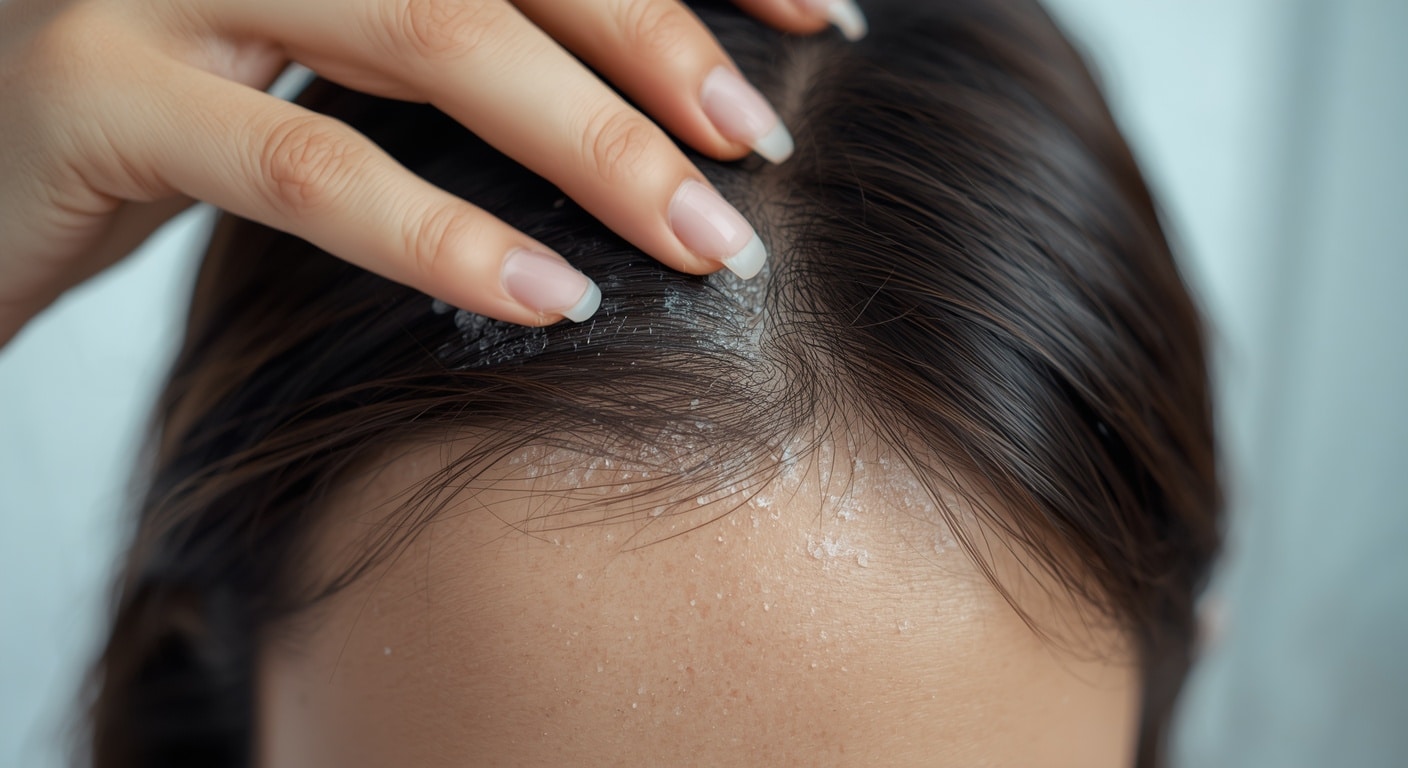
When comparing dandruff vs dry scalp, the main difference is that both can cause flakes and itchiness, but they usually come from different scalp conditions. Dandruff is more often linked to an oilier scalp, irritation and imbalance on the scalp, while dry scalp is more often linked to lack of moisture, a weakened scalp barrier or harsh hair care habits. Knowing which one is more likely can help you choose a more suitable routine.
In practical terms, dandruff often shows up as larger or greasier flakes, while dry scalp tends to cause smaller, drier flakes along with tightness or roughness. The signs can overlap, though, so persistent, severe or inflamed symptoms should be checked by a qualified dermatologist or healthcare professional. If you want broader scalp and hair basics first, see our hair care guide for Malaysians.
Dandruff vs dry scalp: what is the difference?
Dandruff and dry scalp are commonly confused because the most obvious symptom is the same: flakes. Many people also notice itching, some irritation and the urge to change shampoo immediately. The problem is that flakes alone do not tell the full story.
In general, dandruff is associated with scalp oil, irritation and faster flaking of scalp skin. Dry scalp, on the other hand, is more often a moisture and barrier issue. A scalp that feels stripped, tight or sensitive can start shedding small dry flakes, especially after harsh cleansing or long periods in air-conditioning.
The quickest way to tell them apart is to look at the overall scalp condition, not just the flakes. Ask yourself:
- Does your scalp feel oily, or does it feel tight and dry?
- Are the flakes larger and a bit greasy, or fine and powdery?
- Did the issue start after changing products, washing more often or using hotter water?
- Is there visible redness, thick scaling or irritation that seems more than simple dryness?
These clues are helpful, but they are not a perfect self-diagnosis tool. Some people have an oily scalp and irritation at the same time, and scalp conditions can overlap.
A quick comparison: dandruff vs dry scalp
| Feature | Dandruff | Dry scalp |
|---|---|---|
| Cause | Often linked to excess oil, scalp irritation and imbalance on the scalp | Often linked to lack of moisture, barrier disruption or harsh routines |
| Flake type | May be larger, more noticeable and slightly greasy | Usually smaller, finer and drier |
| Scalp feel | Itchy, sometimes oily or irritated | Tight, dry, rough or mildly itchy |
| Oiliness | More commonly associated with an oilier scalp | Less commonly oily; often feels stripped instead |
| Common triggers | Oil buildup, sweat, infrequent cleansing for some people, product buildup, scalp sensitivity | Overwashing, hot showers, harsh shampoos, dry indoor air, strong fragranced products |
| General care approach | Use an appropriate dandruff-focused shampoo and keep buildup under control without harsh scrubbing | Use gentler cleansing and support scalp comfort with less stripping routines |
The difference between dandruff and dry scalp usually comes down to oil and irritation versus dryness and barrier stress. Dandruff flakes are often larger and linked to a scalp that is not simply dry, while dry scalp flakes are usually finer and come with tightness or sensitivity.
What dandruff usually looks and feels like
Typical dandruff signs include visible flakes on the scalp or shoulders, itchiness and a scalp that may feel oily rather than dry. Some people notice it gets worse when there is sweat, product buildup or longer gaps between washes. Others may find that certain styling products seem to make the scalp feel heavier or more irritated.
Dandruff flakes vs dry scalp flakes is one of the most common comparisons people make. In many cases, dandruff flakes look larger, clump together more easily and may appear slightly yellowish or greasy rather than light and powdery. That said, appearance can vary from person to person.
Common dandruff triggers may include:
- Oilier scalp conditions
- Sweat and buildup sitting on the scalp
- Not washing often enough for your scalp type
- Reactions to certain hair products
- Underlying scalp conditions that need medical assessment
Sometimes dandruff may be more than simple flaking. If the scalp is very red, sore, thickly scaled or not improving with sensible routine changes, there may be another reason behind it. Seborrheic dermatitis is one example often mentioned in relation to more persistent dandruff-like symptoms, but that is not something to diagnose on your own.
What dry scalp usually looks and feels like
Dry scalp usually causes smaller, lighter flakes and a clear sense of dryness. People often describe the scalp as tight after washing, uncomfortable in air-conditioned rooms or slightly stingy after using strong products. The hair itself may not necessarily be dry, but the scalp feels stripped.
If you are wondering how to tell if you have dandruff or dry scalp, the feeling of the scalp matters a lot. Dry scalp often comes with:
- Fine, dry flakes
- Tightness after shampooing
- Mild itchiness linked to dryness
- Sensitivity to hot water or fragranced products
- Worsening after frequent cleansing or aggressive scrubbing
What causes dry scalp is often more straightforward than people expect. In many cases, it is a routine issue rather than a scalp that is too oily. Overwashing, using a very strong shampoo, washing with hot water, rough exfoliation and repeatedly switching products can all disrupt scalp comfort.
Harsh routines can make dryness worse. If you shampoo multiple times a day, use very hot showers or scrub your scalp hard to remove flakes, you may increase irritation instead of solving it. That is one reason itchy scalp dandruff or dry scalp can be hard to figure out: the wrong fix can blur the signs.
How Malaysia’s climate and routines can affect your scalp
Malaysia’s weather can make scalp care less straightforward. Hot and humid conditions often mean more sweat, more frequent washing and more opportunities for product buildup around the scalp. For some people, that can make dandruff-type symptoms more noticeable, especially if the scalp already gets oily easily.
Humidity, sweat and oiliness can create a heavier scalp environment. If you exercise often, wear helmets or head coverings for long hours, or use leave-in styling products near the roots, buildup may accumulate faster. That does not automatically mean dandruff, but it can contribute to the kind of scalp environment where flaking becomes more obvious.
At the same time, air-conditioning can pull things in the opposite direction. Many people move between outdoor heat and strongly cooled indoor spaces throughout the day. Add frequent shampooing and hot showers, and some scalps start feeling dry, tight or reactive. So in a humid climate, dry scalp is still possible.
Hair products and styling habits also matter. Heavy oils, dry shampoo residue, strong hold stylers and fragranced scalp products can all complicate the picture. Sometimes the issue is not only dandruff or dryness, but a mix of buildup and irritation from what is sitting on the scalp.
How to care for dandruff
If your signs point more towards dandruff, the goal is usually to manage scalp buildup and use a shampoo designed for dandruff rather than trying to moisturise the scalp heavily. Look for a dandruff shampoo that is clearly positioned for flaking and scalp irritation, and follow the product directions instead of assuming more frequent use is always better.
What causes dandruff can vary, so not every shampoo works the same way for every scalp. In general, a dandruff shampoo should help cleanse the scalp well and support control of visible flakes without encouraging aggressive scratching or over-cleansing.
How often to wash without overdoing it
If your scalp is oily, sweaty or buildup-prone, washing too rarely may leave the scalp more uncomfortable. On the other hand, washing too aggressively or using very harsh formulas can leave the scalp irritated. A balanced routine matters more than chasing a fixed schedule.
You might do better with:
- Regular cleansing that matches how oily or sweaty your scalp gets
- Focusing shampoo on the scalp rather than roughing up the hair lengths
- Massaging gently instead of using nails to scrub off flakes
- Allowing enough time for the shampoo to cleanse properly before rinsing
Habits that may help reduce flare-ups
- Wash after heavy sweating if your scalp becomes uncomfortable or greasy
- Rinse styling products thoroughly
- Avoid piling leave-in products onto the scalp unless they are meant for that area
- Be patient before switching between multiple dandruff shampoos
If dandruff is not improving, or if the scalp is very inflamed, painful or extending beyond simple flaking, professional advice is sensible.
How to care for a dry scalp
If your scalp seems dry rather than oily, a gentler approach usually makes more sense. Dry scalp vs dandruff management often differs because a dry scalp may react badly to harsh cleansing. The aim is to reduce stripping and support a more comfortable scalp environment.
Gentler cleansing and scalp-friendly routines
Choose a mild shampoo that cleans without leaving the scalp feeling squeaky or tight. If you wash often because of weather, commuting or exercise, it may help to pay attention to how your scalp feels after each wash. Clean is good; stripped is not.
Useful adjustments may include:
- Using lukewarm rather than hot water
- Reducing aggressive scalp scrubs
- Limiting strongly fragranced or alcohol-heavy products if they seem irritating
- Washing often enough for comfort, but not automatically more than needed
Ingredients and product types that may help
For a dry scalp, products marketed as soothing, gentle or supportive of the skin barrier may be worth considering. Lightweight, non-irritating formulas are often easier to tolerate than heavily fragranced treatments. If you use any scalp serum or treatment, introduce it carefully and stop if it stings or worsens discomfort.
What to avoid if your scalp feels tight or irritated
- Very hot showers
- Repeated shampooing in one wash session unless truly needed
- Scratching or picking at flakes
- Trying multiple strong products at once
Small changes can make a difference, but dry scalp that persists despite a gentler routine may need a professional opinion.
Common mistakes when trying to treat flakes
One of the biggest mistakes is using the wrong type of shampoo. If the issue is dryness, a very strong anti-flake product may leave the scalp even more uncomfortable. If the issue is dandruff, a very rich or residue-heavy scalp product may not address the actual problem.
Another common problem is scrubbing too aggressively. People often try to remove flakes by force, but this can increase irritation and make the scalp feel worse. Gentle cleansing tends to be more useful than abrasive cleansing.
Switching products too quickly also causes confusion. If you change shampoo every few days, it becomes harder to tell whether the problem is the original scalp issue, irritation from the new product or a disrupted routine.
Finally, do not ignore ongoing redness, discomfort or thick scaling. Flakes are not always a simple cosmetic issue. Self-assessment is useful up to a point, but it has limits.
When to see a dermatologist or healthcare professional
You should not rely on self-diagnosis alone if your scalp symptoms are persistent, severe or clearly inflamed. Seek professional advice if you notice:
- Redness that does not settle
- Pain, burning or significant tenderness
- Thick scales or crusting
- Bleeding from scratching
- Patchy hair loss
- Symptoms that keep returning despite reasonable routine changes
- Uncertainty about whether the issue is dandruff, dryness or another scalp condition
A dermatologist or other appropriately qualified healthcare professional can help work out whether the flakes are related to dandruff, dryness, sensitivity or another scalp condition entirely. That matters because the right care approach depends on the cause.
Frequently Asked Questions
Can dandruff and dry scalp happen at the same time?
Yes, overlapping symptoms are possible. Someone may have an oily, flaky scalp but also use harsh products or wash too aggressively, which can add dryness and irritation. That is why flakes alone do not always give a clear answer.
Are dandruff flakes bigger than dry scalp flakes?
Often, yes. Dandruff flakes are commonly larger and a bit greasier, while dry scalp flakes are usually finer and drier. Still, this is a general pattern rather than a perfect rule.
Does washing hair more often help dandruff or dry scalp?
It depends on the cause. More frequent washing may help some people with oilier, dandruff-prone scalps, especially in sweaty conditions. But overwashing can worsen scalp dryness, so the best routine depends on how your scalp behaves.
Can weather in Malaysia make dandruff or dry scalp worse?
Yes. Heat, humidity and sweat can make oiliness and buildup more noticeable, while air-conditioning, hot showers and frequent washing may contribute to dryness for some people. Local routines often matter as much as the weather itself.
When should you see a doctor for scalp flakes and itching?
It is a good idea to seek professional help if symptoms are persistent, inflamed, painful, thickly scaled, linked to hair loss or simply not improving with sensible routine changes. If you are unsure what is causing the problem, professional assessment is safer than guessing.
What to do next
If you are deciding between dandruff vs dry scalp, start by looking at the whole picture: flake type, scalp feel, oiliness, recent routine changes and how your scalp responds to washing. Larger, greasier flakes and an oilier scalp may point more towards dandruff, while fine flakes with tightness may point more towards dryness. If the signs are persistent or more severe than simple flaking, get professional advice rather than trying harsher products on your own.