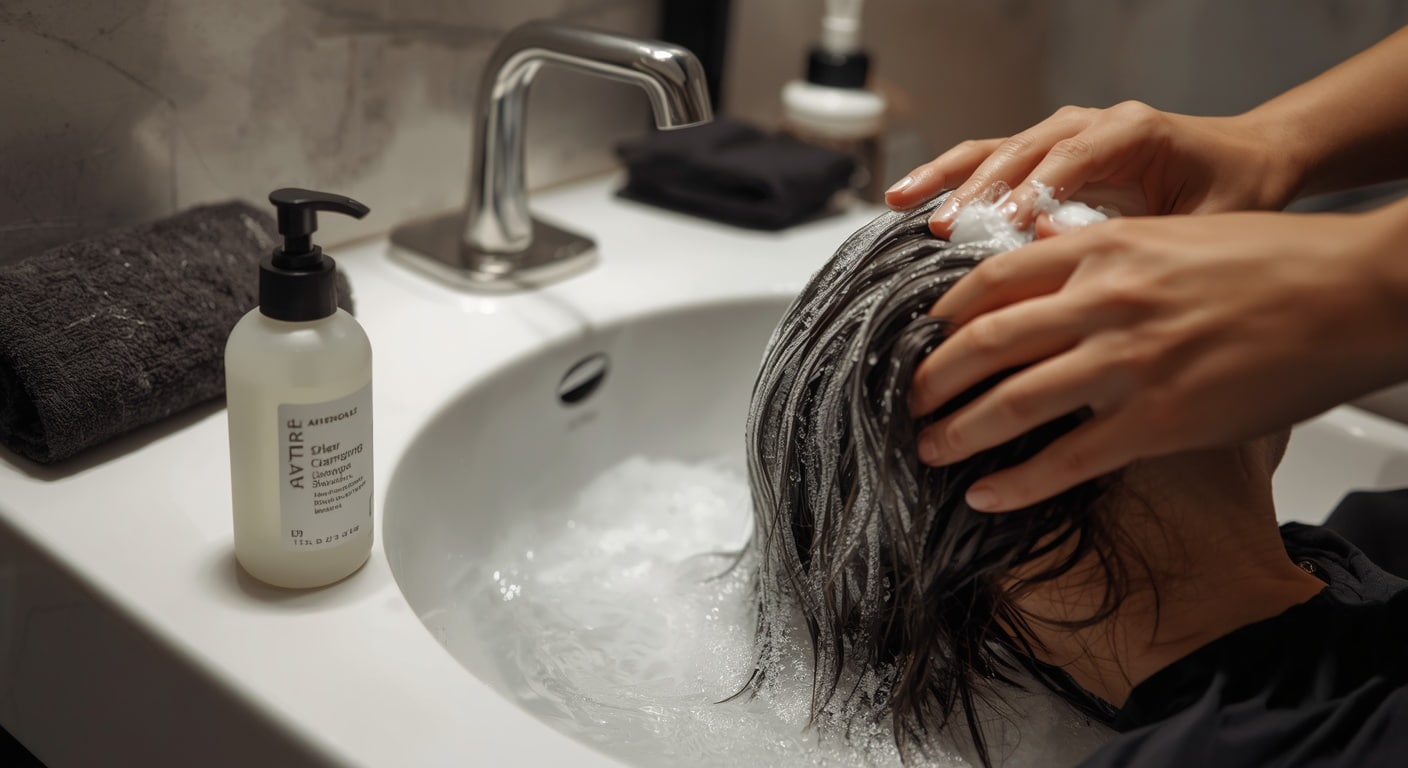
A clarifying shampoo is a deeper-cleansing shampoo designed to remove buildup from oil, styling products, dry shampoo, silicones and, in some cases, mineral residue. For most people, it is not meant for every wash. If you live in a hot, humid climate, sweat frequently, or use heavier hair products, this clarifying shampoo guide can help you work out when it makes sense in your routine.
Used occasionally, clarifying shampoo can help hair feel cleaner, lighter and less coated when regular shampoo no longer seems to do the job. Most people use it now and then rather than daily, then follow with conditioner or a hydrating mask. If your hair is dry, damaged, curly or colour-treated, you may need to be more cautious. For a broader routine, see our hair care guide for Malaysians.
What is clarifying shampoo?
Clarifying shampoo is a shampoo made to cleanse more thoroughly than a typical everyday formula. Its main job is to lift away residue that can build up over time on the scalp and hair lengths.
That buildup can come from several sources, including sebum, leave-in products, dry shampoo, hairspray, gels, waxes and certain conditioning ingredients that leave a coating behind. Some clarifying shampoos are also used when hair feels affected by hard water minerals or exposure to chlorine, although products vary in how they are formulated.
How it differs from regular shampoo
A regular shampoo is usually designed for routine cleansing. It removes everyday dirt, sweat and oil while trying to keep the hair reasonably balanced. A clarifying shampoo generally cleans more strongly, so it is better suited to occasional use when hair feels weighed down or harder to refresh.
That does not automatically make clarifying shampoo better. It simply serves a different purpose. If your hair and scalp already feel comfortable and clean with your usual shampoo, you may not need a clarifying formula often.
What “deep cleansing” usually means in practice
In practice, deep cleansing means removing stubborn residue that an ordinary wash may leave behind. It does not mean a shampoo can “detox” the scalp in a medical sense, and it should not be treated as a cure for scalp problems. Think of it as a reset wash for buildup, not a solution to every hair concern.
What does clarifying shampoo do?
The main benefit of clarifying shampoo is that it can remove films and residue that make hair feel heavy, limp, greasy or dull. When buildup sits on the hair shaft or scalp, your hair may not respond the way it normally does. It may feel less bouncy, look flatter, or seem harder to clean even after washing.
Buildup it may help remove
Clarifying shampoo may help remove:
- excess oil from the scalp
- residue from styling products
- dry shampoo buildup
- films left behind by some silicones or heavier hair products
- environmental residue such as sweat and grime
- some mineral or chlorine-related residue, depending on the formula
This is why people sometimes reach for it after a period of heavy styling, frequent workouts, swimming, or repeated use of richer leave-ins and scalp products.
What it can and cannot do
Clarifying shampoo can improve the feel and cleanliness of buildup-prone hair, but it has limits. It cannot repair damaged hair on its own, and it should not be relied on to diagnose or treat dandruff, eczema, psoriasis, scalp infections or unexplained hair loss.
If your scalp is persistently itchy, inflamed, sore, flaky in an unusual way, or you are shedding much more hair than usual, it is better to speak to a dermatologist, pharmacist or another appropriately qualified healthcare professional than to keep switching shampoos.
Signs you may need a clarifying shampoo
Not everyone needs one regularly. In many cases, the clue is not your hair type but how your hair behaves.
Hair feels heavy, dull or coated
If your hair feels clean for only a short time after washing, or seems to have a film on it, buildup may be part of the issue. Hair can also lose movement and look flatter than usual when residue accumulates.
Scalp gets greasy quickly
An oily scalp does not always mean you need stronger cleansing, but sometimes oil is mixed with product residue, sweat and dry shampoo, making the scalp feel dirtier faster. In Malaysia’s humid weather, people who sweat more or wash frequently may notice this sooner.
Products seem to stop working well
If your usual conditioner, curl cream or styling products suddenly seem less effective, there may be too much residue on the hair. A clarifying wash can sometimes help restore a cleaner base so products sit better again.
Swimmers or frequent styling-product users
People who swim regularly, use strong hold products, or layer several leave-ins may be more likely to experience buildup. The same can apply if you rely often on dry shampoo between washes.
When to use clarifying shampoo
Clarifying shampoo is usually best used as an occasional step rather than the foundation of your routine. The right timing depends on how much buildup you get, how oily your scalp is, and how your hair responds.
Occasional use vs regular use
Most people reach for clarifying shampoo when there is a reason for it: hair feels unusually coated, the scalp seems harder to clean, or styling residue has built up over time. It is not usually necessary at every wash, especially if your everyday shampoo already works well.
How lifestyle and hair type affect frequency
If you use a lot of styling products, exercise often, or have an oilier scalp, you may want it more often than someone with dry hair who uses very little product. On the other hand, if your hair is bleached, fragile, curly or naturally dry, spacing out clarifying washes is usually the safer approach.
Humid-weather considerations for Malaysian readers
Hot, humid conditions can mean more sweat, more frequent washing and greater reliance on products that control frizz or hold a style in place. All of that can contribute to buildup for some people. That does not mean everyone in Malaysia needs clarifying shampoo, but it does explain why some readers find it useful as a periodic reset.
How often should you use clarifying shampoo?
There is no universal schedule. A general rule is to use clarifying shampoo only as often as your hair and scalp seem to need it.
As a rough guide:
- If your scalp is oily or you use many styling products, you might use it occasionally as part of your routine.
- If your hair is fairly balanced and you use minimal product, you may only need it from time to time.
- If your hair is dry, damaged, curly or colour-treated, less frequent use often makes more sense.
Some people do use clarifying shampoo weekly, while others use it much less often. The best frequency depends on how your hair feels after using it. If hair starts feeling rough, overly dry, tangly or stripped, that is a sign to reduce how often you use it or to switch to a gentler formula.
Why overuse can leave hair dry or rough
Because clarifying shampoos cleanse more strongly, frequent use can remove not only buildup but also some of the oils that help hair feel softer and more manageable. This matters even more if your hair is already porous, processed or prone to frizz. Stronger cleansing is not automatically better; it should match the problem you are trying to solve.
How to use clarifying shampoo properly
Using clarifying shampoo well is less about technique and more about restraint and follow-up care.
Step-by-step washing routine
- Wet your hair thoroughly with water.
- Apply a reasonable amount of clarifying shampoo to the scalp first.
- Massage gently with your fingertips to loosen oil and residue.
- Work the lather through the lengths only as needed rather than aggressively scrubbing the hair.
- Rinse thoroughly.
- Repeat only if the product directions suggest it or if there is obvious heavy buildup.
Avoid scratching the scalp with your nails or leaving the shampoo on unnecessarily long unless the product specifically instructs you to do so.
Why conditioner matters afterward
Conditioner helps restore slip, softness and manageability after a stronger cleanse. Even people with oily scalps may want conditioner through the mid-lengths and ends, as those areas are older and usually drier than the scalp.
When to follow with a hair mask
If your hair is very dry, curly, chemically processed or feeling a bit rough after clarifying, following with a hydrating mask may help. This is especially useful if you clarified after a long stretch of heavy product use or swimming. You do not need a mask every time, but it can be a sensible add-on when hair needs extra comfort.
Clarifying shampoo vs regular shampoo
Both have a place in a routine, but they are not interchangeable for every wash.
| Type | Main purpose | Cleansing strength | Typical use | Best for |
|---|---|---|---|---|
| Regular shampoo | Routine cleansing of sweat, oil and everyday dirt | Moderate | Frequent or regular washing | Day-to-day hair care |
| Clarifying shampoo | Removing product buildup, excess residue and heavier coating on the hair | Stronger | Occasional use | Hair that feels heavy, dull, greasy or coated |
Which one belongs in your routine
For most people, regular shampoo does the everyday work while clarifying shampoo sits in the background for occasional use. If you are deciding between them, the question is simple: are you trying to clean normal day-to-day oil and sweat, or are you trying to remove stubborn buildup?
Who should be careful with clarifying shampoo?
Clarifying shampoo is not off-limits for everyone with dry or treated hair, but some people should use it more sparingly and pay closer attention to how their hair responds.
Dry, damaged, curly or colour-treated hair
These hair types often lose moisture more easily. A strong cleansing wash may leave strands feeling rougher or may affect colour longevity for some people. If your hair falls into one of these groups, you may prefer a gentler clarifying product and longer gaps between uses.
Sensitive scalp considerations
If your scalp is easily irritated, be cautious with strongly cleansing formulas. Sensitivity can come from friction, fragrance, harsh cleansing systems or simply washing too often. If a shampoo stings, burns or leaves your scalp feeling persistently uncomfortable, stop using it.
When to ask a dermatologist or qualified professional
See a professional if you have persistent itching, redness, pain, significant flaking, sores, or sudden or substantial hair loss. Those signs may point to something that goes beyond product buildup, and a clarifying shampoo is not the right fix for that.
Common mistakes to avoid
- Using it too often: more frequent use does not necessarily mean cleaner or healthier hair.
- Skipping conditioner: this can leave the hair rough and harder to manage.
- Using it to solve every scalp issue: buildup is only one possible cause of hair and scalp problems.
- Expecting it to treat medical conditions: it may cleanse away residue, but it does not replace proper assessment for dandruff, dermatitis or other scalp concerns.
- Applying too aggressively to fragile lengths: focus mainly on the scalp unless the lengths clearly need residue removal.
How to choose a clarifying shampoo
The best choice depends on why you want one in the first place. Not everyone needs the strongest possible formula.
Look at hair type and scalp needs
If your concern is an oily scalp and frequent product use, a more effective cleanser may be useful. If your hair is dry, curly or colour-treated, a gentler option may be a better fit even if it means clarifying more conservatively.
Check for cleansing intensity and follow-up care
Think about the full routine, not just the shampoo. A clarifying wash works best when you also have a suitable conditioner or mask afterward. If your hair tangles or dries out easily, aftercare matters almost as much as the cleanser itself.
When a gentler formula may make more sense
If you only get mild buildup occasionally, or you are unsure whether your hair is reacting to residue or simply dehydration, a gentler deep-cleansing shampoo may be the more sensible starting point. You can always adjust based on how your hair feels rather than assuming stronger is better.
Frequently Asked Questions
Can I use clarifying shampoo every week?
Some people can, especially if they have an oily scalp or use a lot of styling products, but weekly use is not necessary for everyone. If your hair becomes dry, rough or harder to manage, use it less often.
Is clarifying shampoo good for oily scalp?
It can be helpful for an oily scalp when oil is mixed with sweat and product buildup. It is still best used thoughtfully rather than assuming stronger cleansing is always the answer.
Can clarifying shampoo remove hair colour faster?
It may affect colour longevity for some people because it cleans more strongly than a regular shampoo. If your hair is colour-treated, use clarifying shampoo cautiously and only when you feel you genuinely need it.
Should I use conditioner after clarifying shampoo?
Usually, yes. Conditioner helps bring back softness and reduce dryness after a stronger cleanse. If your hair is especially dry or processed, a hydrating mask may also help.
What is the difference between clarifying shampoo and regular shampoo?
Regular shampoo is for routine washing, while clarifying shampoo is for occasional deeper cleansing when residue and buildup have become a problem. Most people benefit from regular shampoo more often and clarifying shampoo only as needed.
Where clarifying shampoo fits in your routine
Clarifying shampoo is best treated as a useful tool rather than a default step. If your hair feels heavy, coated or harder to clean than usual, it may help reset things. If your hair already feels balanced with your regular shampoo, you probably do not need to force it in.
The simplest approach is to use it occasionally, watch how your hair responds, and follow with enough conditioning to keep moisture in balance.