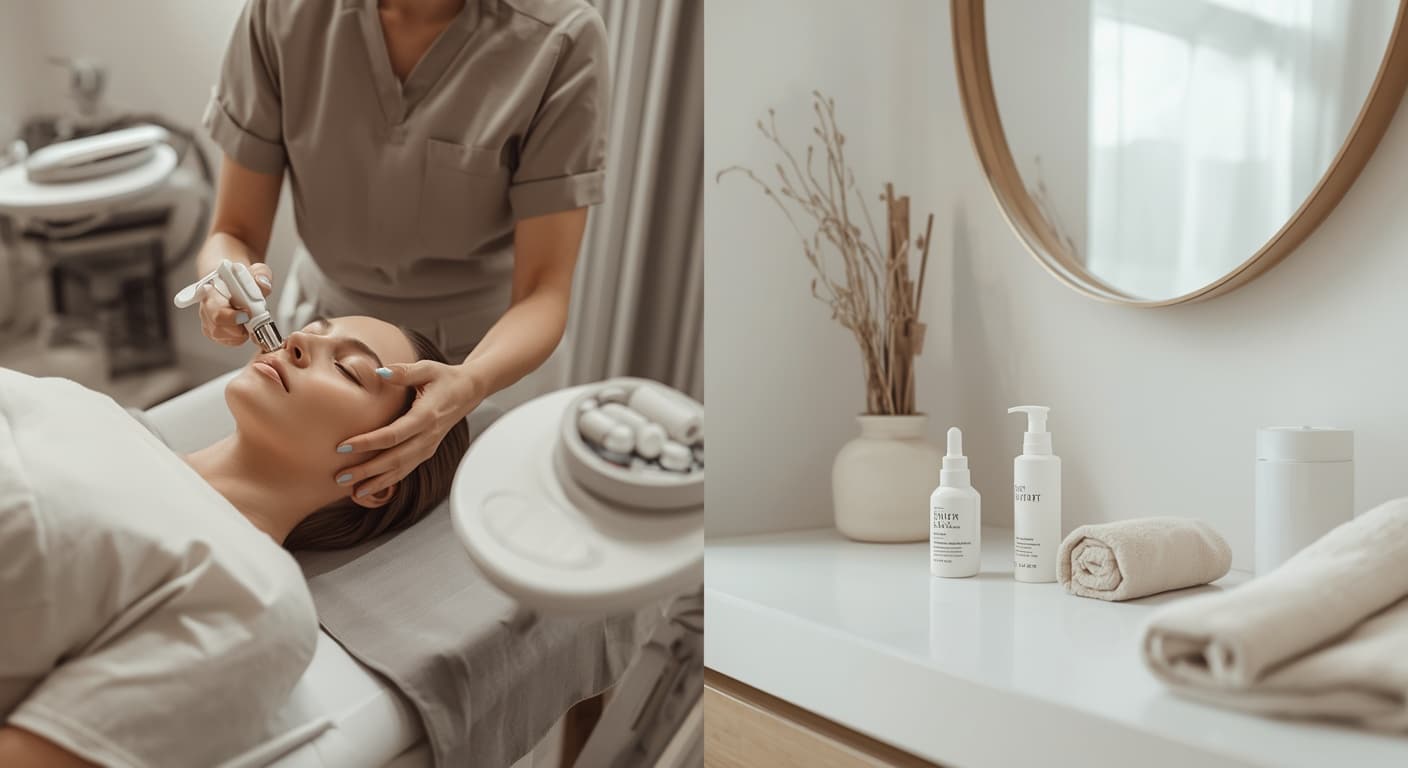
If you are weighing up facial treatment vs home skincare, the main difference is simple: facials can offer targeted professional support in a single session, while home skincare is what keeps your skin maintained every day. One is not automatically better than the other. For many people, the best choice depends on skin goals, budget, sensitivity and how consistent they are with a routine.
Facial treatment vs home skincare: the short answer
Facial treatments and home skincare do different jobs. Professional facials can provide procedures such as extractions, exfoliation or device-based support that are difficult to do safely at home, while home skincare handles the daily basics through cleansing, moisturising, sunscreen and the steady use of suitable active ingredients. For most people, facials work best as support for a good routine rather than a replacement for it.
| Comparison point | Professional facial treatment | Home skincare |
|---|---|---|
| What it does best | Targeted, in-person treatment for specific concerns such as congestion, dehydration or temporary dullness | Daily maintenance, barrier support and gradual improvement through consistency |
| Results timeline | May give quicker visible short-term effects, depending on the treatment | Usually slower, but more sustainable when used consistently |
| Tools and techniques | Professional extraction, controlled exfoliation and treatment customisation | Accessible basics and at-home actives such as moisturisers, sunscreen and selected exfoliants |
| What it cannot do alone | Cannot maintain results if daily skincare and sun protection are poor | May not replicate certain professional procedures or in-person assessment |
| Best role for many people | Occasional support | Foundation of skin maintenance |
What a professional facial treatment can do
A facial in a salon, spa or clinic setting can do more than a basic at-home routine in certain areas, especially when a trained practitioner is assessing your skin in person. That does not mean every facial is advanced or suitable for everyone, but professional treatments can sometimes address immediate concerns more efficiently.
Deep cleansing, exfoliation and extractions in a controlled setting
One of the biggest differences between a professional facial vs home skincare is technique. A trained practitioner may be able to carry out extractions more carefully than someone squeezing clogged pores at home. Professional exfoliation can also be more controlled than randomly combining scrubs, acids and masks on your own.
This can be useful for temporary congestion, rough texture or buildup from sweat, sunscreen and oil, which are common concerns in Malaysia’s humid weather. Skin often feels smoother and looks fresher after this kind of treatment, but the effect still needs maintenance afterwards.
Targeted support for hydration, dullness or temporary congestion
Some facials focus on hydration, soothing care or gentle resurfacing. If your skin is feeling dry from air-conditioned environments, looking tired or dealing with short-term congestion, a facial may provide a visible refresh more quickly than waiting for a routine to catch up.
That said, visible glow immediately after a treatment does not always mean long-term change. In many cases, it reflects temporary hydration, smoother surface texture or reduced buildup.
Professional assessment and customised treatment choices
Another advantage of a facial treatment or home skincare discussion is the assessment factor. A practitioner may notice signs of over-exfoliation, dehydration, barrier stress or product mismatch that you have missed. That can be helpful if you are unsure why your skin is reacting badly or not improving.
If you are exploring broader options beyond facials alone, it helps to understand where they sit within our guide to beauty treatments in Malaysia, especially if your concerns may need something more targeted than a standard salon treatment.
What facials usually cannot do on their own
Facials have limits. They do not replace sunscreen, daily cleansing or moisturising. They also do not automatically resolve persistent acne, long-standing pigmentation, scarring or medically related skin conditions. Some concerns need ongoing skincare, more specialised treatment plans or assessment by a dermatologist.
Even when a facial helps, results are usually easier to maintain if the skin is supported properly at home.
What home skincare can do over time
Home skincare is less dramatic than a professional treatment, but it is where most of the real maintenance happens. A simple routine, followed consistently, often does more for day-to-day skin condition than occasional treatments on their own.
Daily cleansing, moisturising and sun protection
A basic routine usually starts with cleanser, moisturiser and sunscreen. These steps sound simple because they are, but they matter. Cleansing helps remove sweat, oil, sunscreen and daily buildup. Moisturiser supports comfort and the skin barrier. Sunscreen helps reduce ongoing UV exposure, which is especially important in Malaysia because sun exposure is not limited to one season.
If someone spends money on regular facials but skips sunscreen, they may be undermining their own results, especially where uneven tone or post-acne marks are concerned.
Consistent use of actives such as exfoliants, retinoids or antioxidants
Home skincare also allows gradual use of active ingredients such as AHA, BHA, retinoids or vitamin C, depending on the product and individual tolerance. These ingredients are commonly used for texture, clogged pores, uneven tone or general skin maintenance.
The key advantage here is consistency. A suitable product used steadily over time may support better long-term progress than a treatment done once in a while. It also gives you more control over pacing. If your skin is easily irritated, it is often better to introduce one active at a time rather than layering multiple strong products at once.
Barrier support and long-term habit-building
Home skincare is also where barrier care happens. This matters more than many people realise. Over-cleansing, frequent exfoliation and trying every trending active can leave skin feeling tight, stingy or reactive. A stable routine with gentle cleansing, moisturising and sensible active use often helps the skin stay more comfortable and resilient.
For people with sensitive skin, the best progress may come not from doing more, but from doing less more consistently.
What home skincare may struggle to do
At-home skincare cannot easily replicate professional extraction, device-based procedures or the benefit of someone experienced examining your skin in person. It can also be hard to judge whether a product is unsuitable, whether you are overusing actives or whether your concern is even cosmetic rather than medical.
So while home skincare vs facial is often framed as a competition, they serve different levels of care.
Key differences between facial treatments and home skincare
Speed of visible results
Facials usually win on immediacy. Skin may look more hydrated, smoother or clearer straight after treatment, depending on what was done. Home skincare tends to be slower, but often more realistic for long-term upkeep.
Consistency and maintenance
Home routines win here. Skin is affected by what you do every day, not just what you do occasionally. Cleansing properly, moisturising as needed and applying sunscreen regularly often matter more than any single facial session.
Convenience and time commitment
Home skincare is easier to fit into daily life. A facial requires booking, travel time and aftercare considerations. That does not make facials less useful, but it does affect whether someone can maintain them realistically.
Cost-value considerations
Without getting into prices, professional treatments usually involve a higher cost per session than daily skincare products. That does not mean facials are poor value. It means value depends on what you want from them. If your goal is ongoing maintenance, a well-chosen routine may give more practical benefit. If your goal is periodic deep cleansing or professional support before an event, a facial may feel worthwhile.
Risk, sensitivity and room for user error
Both options carry risk if done poorly. At home, people often run into trouble by combining too many acids, using retinoids too aggressively or over-exfoliating. With facials, risk can come from treatments that are too harsh for your skin, extractions on inflamed areas or aftercare that is ignored.
Sensitive skin, recently irritated skin and a damaged skin barrier usually need extra caution whichever route you choose.
Which option is better for common skin goals?
For hydration and glow
A facial may give quicker visible glow through exfoliation and hydration, especially if your skin is temporarily dull or dehydrated. Home skincare is what helps maintain that result, particularly with moisturiser and sunscreen.
For clogged pores and oiliness
If you struggle with congestion, professional extraction may sometimes help more immediately than home care. But for ongoing oil control and pore maintenance, daily cleansing, suitable exfoliation and avoiding overly heavy products usually matter more. In a hot, humid climate, lightweight textures may feel easier to use consistently.
For acne-prone skin
This is where caution matters. Some people with acne-prone skin may benefit from a simple routine and, in selected cases, gentle professional care. But inflamed, persistent or worsening acne is not something to self-manage endlessly with facials or random actives. If breakouts are ongoing, painful or leaving marks, a dermatologist may be the better next step.
For pigmentation and uneven tone
Both facials and home skincare may play a role, but results are rarely quick. Pigmentation usually requires patience, realistic expectations and consistent sun protection. A facial may offer surface brightening or targeted professional support, while home skincare supports the longer process through sunscreen and suitable actives.
Neither approach should be viewed as an instant fix.
For sensitive or easily irritated skin
Home skincare often has the advantage here because you can keep the routine simple and predictable. A gentle cleanser, moisturiser and sunscreen may be more useful than frequent treatment changes. If you do get facials, it makes sense to choose cautious, non-aggressive options and tell the practitioner what products you are already using.
Can home skincare replace facials?
Sometimes, yes. Sometimes, not really. It depends on what you expect.
When a routine may be enough
If your goal is maintenance, basic hydration, barrier support and day-to-day skin comfort, a good home routine may be enough. The same applies if your skin is easily irritated and does better with fewer variables.
When professional help may add value
Facials may add value if you want professional extraction, occasional targeted care, help identifying routine mistakes or treatment support that is difficult to do at home. They can also appeal to people who prefer guided care rather than trial and error.
Why replacement depends on the goal
Can home skincare replace facials for maintenance? Often, yes. Can it replace every professional step, technique or assessment? Not always. The better question is not whether one replaces the other completely, but whether each option matches your actual skin goal.
When combining both makes the most sense
For many people, the most practical answer is a combination: home skincare as the foundation, with facials used occasionally and purposefully.
Using facials as occasional support
A facial can make sense when your skin feels congested, dull or in need of a reset, or when you want support before a special occasion. It can also be useful if you want a professional opinion on whether your current routine seems too harsh or not targeted enough.
Using home skincare to maintain results
Whatever improvement a facial gives is easier to hold onto if your routine at home supports it. That usually means gentle cleansing, barrier-friendly moisturising, sunscreen during the day and sensible use of actives if they suit your skin.
How to avoid overdoing active treatments
One common mistake is stacking everything together: a strong facial, exfoliating toner, scrub, retinoid and brightening serum all in the same week. More is not always better. If you have had a treatment that exfoliates or sensitises the skin, aftercare matters. Keep the rest of your routine calm unless a qualified practitioner has given you clear guidance.
How to choose between a facial and home skincare in Malaysia
Consider your skin goal, budget and schedule
If you want daily maintenance, put more thought into the home routine you can actually stick to. If you want occasional targeted care and the time to book appointments, a facial may be worth considering. Your choice does not need to be permanent. It can change with your skin, routine and priorities.
Think about humidity, sunscreen use and product texture preferences
Malaysia’s climate affects what feels comfortable on the skin. Heavier products may feel unpleasant in humid weather, while strong indoor air-conditioning can still leave skin dehydrated. Sunscreen is especially important because year-round UV exposure can work against goals such as maintaining even tone and limiting post-acne marks.
If products feel sticky or greasy, people are less likely to use them consistently, so texture matters more than many routines admit.
Questions to ask before booking a treatment
- What is the main goal of this facial?
- Is it suitable for sensitive, acne-prone or recently irritated skin?
- What kind of exfoliation or extraction is involved?
- What aftercare is recommended?
- Should any of my usual actives be paused before or after treatment?
Important cautions before trying either approach
Do not expect instant fixes for medical or persistent skin conditions
Facials are cosmetic treatments, not catch-all solutions. Home skincare is supportive, but it also has limits. Persistent acne, significant pigmentation, unexplained rashes, severe sensitivity or worsening irritation may need proper medical assessment rather than more experimentation.
Patch testing, aftercare and irritation risks
At home, patch testing can help reduce the chance of a bad reaction to a new product. With professional treatments, aftercare is part of the process, not an optional extra. Skin that has been exfoliated or otherwise sensitised may react badly if you go straight back to strong acids, retinoids or heavy sun exposure.
When to see a dermatologist or qualified healthcare professional
If you have ongoing inflamed acne, significant pigmentation changes, suspected allergic reactions, a compromised skin barrier that is not settling, or you are unsure whether your issue is cosmetic or medical, it is sensible to see a dermatologist or another appropriately qualified healthcare professional.
Frequently Asked Questions
Are facial treatments better than home skincare?
Not necessarily. They serve different purposes. Facials can provide targeted professional support, while home skincare is essential for daily maintenance and longer-term consistency.
Can a good skincare routine replace regular facials?
For some people, yes, especially if their goals are maintenance, basic hydration and skin comfort. But a routine may not replace professional procedures such as extractions or the value of in-person assessment.
How often should you get a facial if you already use skincare at home?
There is no single schedule that fits everyone. It depends on your skin goals, treatment type, sensitivity, budget and how your skin responds. Some people prefer occasional support, while others focus mostly on home care.
Which is better for acne: facials or home skincare?
It depends on the type and severity of acne. Some acne-prone skin may benefit from a suitable home routine and selective professional care, but persistent or severe acne may need assessment by a dermatologist rather than repeated cosmetic treatments.
Do facials help with pigmentation more than home skincare?
They may help in some cases, but pigmentation usually needs patience and consistent sun protection. A facial may offer short-term brightening or targeted support, while home skincare helps maintain progress over time.
Bottom line: what each can realistically do
Facial treatment vs home skincare is not really a question of which one wins. Facials can offer focused, hands-on support that is difficult to replicate at home, while home skincare does the steady daily work that keeps skin functioning well. If you want maintenance, start with a consistent routine. If you want targeted help or professional input, a facial may add value. Most of the time, the strongest approach is not choosing one side, but understanding what each can realistically do.