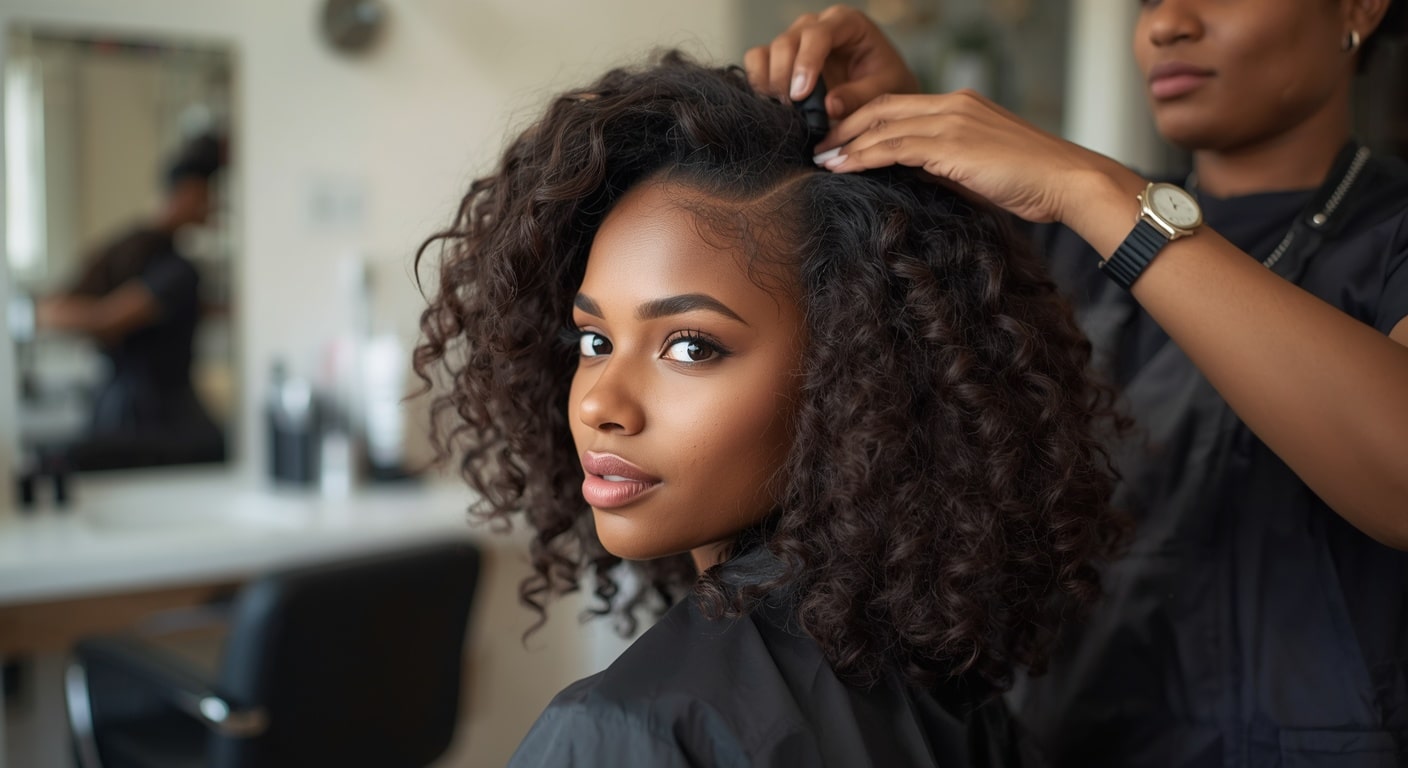
Curly hair in humid weather usually needs a routine that balances moisture, hold and gentle cleansing. In Malaysia’s heat and humidity, curls can absorb excess moisture from the air, which often leads to frizz, puffiness, flat roots or loss of definition. The goal is not to make curls behave perfectly all day, but to help them stay more manageable with lighter hydration, thoughtful styling and less friction.
If you’re building a curly hair care routine in Malaysia, start with the basics first. Our hair care guide for Malaysians covers broader hair care fundamentals, while this article focuses on caring for curls when humidity is the main problem.
For most people, the best approach is a simple one: cleanse often enough to prevent buildup, condition well, apply leave-in products to damp hair, use a styler that gives definition without too much weight, and dry the hair gently. Small technique changes can make as much difference as the products themselves.
Why humid weather affects curly hair so much
How humidity changes the hair shaft and increases frizz
Curly hair is naturally more prone to dryness and frizz because its shape makes it harder for natural oils to travel evenly from scalp to ends. In humid weather, the hair shaft can take in moisture from the air. That extra moisture may swell the cuticle and disrupt the curl pattern, which is why defined curls can suddenly look fluffy, rough or uneven.
This is also why hair may look frizzy even when you have already applied moisturising products. Humidity is not always a sign that your hair needs more richness. Sometimes it means your curls need better hold, less buildup or a different drying method.
Why curls can become puffy, undefined or dry at the same time
Frizz and dryness often show up together. Hair can feel dry because it is not holding balanced moisture well, while the outer layer still reacts to damp air around you. If the cuticle is already raised from heat, rough handling, product buildup or general wear, humidity tends to make that lack of smoothness more visible.
That is why simply adding more oil or cream does not always solve the problem. For some curl types, too much heavy product can leave the hair coated, limp or harder to refresh the next day.
What makes Malaysia’s climate especially challenging for curls
Malaysia’s climate can be difficult for curls because humidity is not just occasional. It is part of everyday life. Outdoor heat, sweat, sudden rain, air-conditioned rooms and frequent washing can all affect how curls behave. Hair may puff up outdoors, then feel dry after spending hours in strong indoor air conditioning. A routine that works in a drier climate may feel too heavy, too light or too inconsistent here.
How to care for curly hair in humid weather: a simple routine
- Cleanse the scalp regularly but gently. Use a cleanser that removes sweat, oil and styling residue without leaving the hair stripped.
- Condition thoroughly. Focus on mid-lengths and ends so the hair has slip and softness before styling.
- Apply leave-in products on damp hair. This helps distribute product more evenly and supports curl clumping.
- Use a styler with hold. A gel or mousse can help curls keep their shape better in humidity than leave-in conditioner alone.
- Dry with as little friction as possible. Use a microfiber towel or cotton T-shirt instead of rough towel drying.
- Do not touch curls too early. Let the hair dry fully before fluffing or separating to reduce frizz.
- Refresh lightly between wash days. Add a small amount of water or leave-in only where needed instead of restarting the whole routine.
Cleanse without stripping the hair
In humid weather, regular cleansing matters because scalp sweat, environmental grime and styling residue can build up faster. That does not mean washing as often as possible with a harsh shampoo. The aim is to keep the scalp comfortable and the hair light enough to form curls properly.
A gentle shampoo may suit many people, especially if you use gels, mousses or leave-in products often. Some people also like co-washing, but it may not be enough if the scalp feels congested or the hair starts looking dull, limp or coated.
Condition for moisture and slip
Conditioner helps reduce friction, improves softness and makes detangling easier. In humid weather, many curls still need proper conditioning even if heavy final styling products do not work well. Focus on getting enough moisture into the hair in the rinse-out step so you do not need to overload it later.
If your hair tangles easily, work conditioner through in sections and detangle gently while the hair is wet and slippery.
Apply leave-in products on damp hair
Leave-in conditioner can help support moisture, but more is not always better. Apply it to damp hair rather than dripping wet or nearly dry hair unless your usual method clearly works for you. Damp hair often gives a good balance between product spread and hold.
If your curls are very fine or easily weighed down, use less leave-in and let your styler do more of the work. If your hair is thicker or drier, you may need a little more moisture before styling.
Use a styler that helps hold curl definition
Humidity often calls for hold. Leave-in conditioner alone may make the hair soft, but it may not keep the curls defined for long. Gels and mousses are commonly used because they can help curls set in place while drying.
Some people prefer a soft gel for definition, while others like mousse for a lighter feel. There is no single best choice for every curl type. What matters is finding enough hold to reduce puffiness without creating too much buildup or stiffness for your preferences.
Dry gently to reduce frizz
How you dry the hair can affect the final result as much as the wash-day products. Rough towel drying can separate curl clumps and raise frizz before the hair has even set. Blot or scrunch gently with a microfiber towel or a soft cotton T-shirt instead.
Once styling products are in, try not to keep reworking the hair. Curls generally hold better when they are left alone to dry into shape.
Choose the right products for humid weather
What to look for in shampoos and cleansers
Look for a cleanser that suits how quickly your scalp gets oily, sweaty or coated with product. If your hair often feels heavy at the roots or your curls stop forming well, you may need a more effective cleanser than the one you are using now. If your hair feels rough after washing, the cleanser may be too stripping for your current routine.
Many people with curls prefer sulfate-free shampoo, but the best choice depends on how your scalp and hair respond rather than the label alone.
When to use leave-in conditioner, cream, gel or mousse
Think of products by job rather than trend. Leave-in conditioner adds light moisture and helps with detangling. Creams may offer more richness and softness. Gels usually help with definition and hold. Mousses often give lighter hold and volume with less weight.
In humid weather, a simpler combination often works well. For example, a small amount of leave-in plus a hold product may perform better than layering several rich stylers.
Why heavy products can backfire in humidity
Heavy products are not automatically bad, especially for thick, coarse or very dry curls. The problem is that in a humid climate, too much richness can make the hair lose bounce, attract buildup more quickly or feel sticky and undefined. Hair that is weighed down may also dry more slowly, which can make frizz worse before the style has set.
If your curls look flat near the roots, greasy before wash day or oddly puffy despite using a lot of product, your routine may be too heavy for the weather.
How to watch for buildup on the scalp and hair
Buildup can make curly hair feel dry, dull or difficult to define. Signs may include roots that feel coated, hair that stops absorbing water well, or curls that fall apart no matter how much leave-in you apply. In humid weather, buildup can happen faster because many people reapply products between washes.
If that sounds familiar, simplify your routine and pay attention to cleansing. Sometimes better curls come from using less, not more.
Styling techniques that help curls last longer
Applying products in sections
Sectioning helps spread product more evenly and can improve curl clumping. This does not need to be complicated. Even dividing the hair into two to four sections can make it easier to coat curls without overloading the top layer and neglecting the underneath.
This is especially useful if you have dense hair or if some parts of your hair frizz more than others.
Scrunching versus smoothing
Scrunching encourages the natural curl pattern and can help products move upward into the hair. Smoothing can help coat the hair and reduce surface frizz. Most routines use some of both. You might smooth a leave-in or gel through the hair first, then scrunch to encourage curl formation.
If your curls separate too much, try less aggressive scrunching. If your waves fall flat, scrunching may help bring the pattern out more clearly.
Using a microfiber towel or cotton T-shirt
A standard bath towel can be rough on curls. A microfiber towel or cotton T-shirt creates less friction, which helps preserve curl clumps and reduce the fuzzy surface that turns into visible frizz once the hair dries.
This is one of the simplest changes you can make if your routine already feels reasonable but the results are inconsistent.
Air drying versus diffusing in humid conditions
Air drying can work well, but in high humidity it sometimes leaves the hair wet for too long. The longer curls stay damp, the more time they have to swell, separate or lose shape. Diffusing can help set the style faster and may improve definition for some people.
That said, diffusing is not automatically better for everyone. If heat tends to make your hair feel rough, use a lower setting and avoid over-handling. Air drying may still suit you if your routine sets well and your hair does not stay wet for hours.
How to refresh curly hair between wash days
When to use water, leave-in or a light refresher
Not every refresh needs a full routine. If only a few sections have gone frizzy, lightly dampening those areas may be enough. Some people prefer a small amount of leave-in or a lightweight refresher to bring the curls back together.
Start small. It is easier to add more than to deal with sticky or overloaded hair halfway through the day.
How to reduce frizz without restarting the whole routine
Focus on the areas that need help rather than soaking the whole head. Smooth or scrunch a little water or product onto the surface and let the hair settle. If you keep layering on rich creams day after day, the hair may become limp and harder to style by the next wash.
A refresh works best when the original wash day was not too heavy to begin with.
How to protect curls overnight
Overnight friction can undo a good wash day quickly. A loose pineapple style, a smooth pillowcase or another low-friction sleep method can help curls stay more intact. The idea is to reduce rubbing and flattening while you sleep, not to create a perfect style by morning.
If your roots flatten overnight, you may need a quick morning shake-out or a light targeted refresh.
Common mistakes that make curly hair worse in humidity
Using too much product
It is easy to assume frizz means your hair needs more product. Sometimes it does not. Too much leave-in, cream or oil can weigh curls down, increase buildup and make the hair harder to refresh.
Touching curls before they are fully dry
This is one of the most common reasons defined curls turn fluffy too soon. Once products are applied, try not to rake through, separate or fluff the hair until it is dry.
Skipping regular cleansing
If your scalp is sweaty and your styling products are building up, curls may stop behaving well no matter what you put on top. A clean scalp and hair often create a better base for definition.
Choosing products that are too rich for the weather
A product that feels nourishing in drier conditions may be too much in year-round humidity. If your routine worked elsewhere but feels heavy in Malaysia, try adjusting textures before assuming your curls are the problem.
How to adapt your routine for different curl types and needs
Fine curls that get weighed down easily
Fine curls usually need lighter layers and careful product amounts. A lightweight leave-in, mousse or gel may be easier to manage than richer creams. Cleansing may also need to happen a bit more regularly if the roots get flat quickly.
Thick or dry curls that need more moisture
Thicker or drier curls may need more conditioner, more leave-in or a richer styling layer before gel. Even so, it is still worth watching how the hair responds in humidity. If the hair stays coated or takes too long to dry, scaling back slightly may help.
Wavy hair versus tighter curl patterns
Wavy hair often loses shape more easily when overloaded, while tighter curls may need more moisture support to stay flexible and manageable. That is why there is no universal humid-weather routine. Use your curl pattern, density, porosity and response to buildup as your guide rather than copying someone else’s exact steps.
When frizz or dryness may need professional advice
Signs of damage versus normal humidity frizz
Some frizz is normal in humid weather, especially with curls. But if your hair feels increasingly rough, snaps easily, tangles far more than usual or no longer forms its normal pattern even after washing and conditioning, damage may be part of the problem.
When scalp irritation, excessive shedding or breakage should be checked
If you have persistent scalp irritation, unusual flaking, significant breakage or more shedding than usual, it is worth speaking to a doctor, dermatologist or pharmacist for proper assessment. Those issues may not just be about humidity or styling technique.
Final tips for curly hair care in Malaysia
The best curly hair care in Malaysia is usually consistent rather than complicated. Cleanse often enough to keep buildup under control, condition properly, use enough hold for the weather and avoid rough drying or constant touching. If your current routine feels heavy, frizzy or unpredictable, simplify it first and adjust one step at a time.
You do not need a perfect routine to make curls easier to manage in humidity. A few practical changes, repeated consistently, can help your hair feel more defined, softer and easier to refresh from one wash day to the next.
Frequently Asked Questions
How often should curly hair be washed in humid weather?
It depends on your scalp oiliness, sweat level, activity, styling product use and how quickly buildup appears. Some people need to wash more often in humid weather, while others do well on a slower schedule. If your scalp feels uncomfortable or your curls look coated and undefined, it may be time to cleanse.
Is air drying or diffusing better for curly hair in humidity?
Both can work. Diffusing may help set curl definition faster, which can be useful in humid weather. Air drying may still suit some routines, but if your hair stays wet for a long time, frizz and puffiness can become more noticeable.
Why does my curly hair feel dry and frizzy at the same time?
Dryness and frizz can happen together when the hair is not holding balanced moisture well and the cuticle is disrupted by humidity, damage or product mismatch. The solution is not always more richness. Sometimes the hair needs better cleansing, a lighter routine or more effective hold.
Can heavy oils help curly hair in humid weather?
They may help some thicker or drier curl types, especially in small amounts, but too much can lead to buildup or weigh the hair down in a humid climate. It usually makes sense to start with less and see how your hair responds before adding richer layers.
What is the best way to sleep with curly hair to reduce frizz?
A loose pineapple style, a smooth pillowcase and reducing rough friction overnight can help preserve curl definition. The best method depends on your hair length and curl pattern, but the general goal is to keep curls from being crushed and rubbed while you sleep.