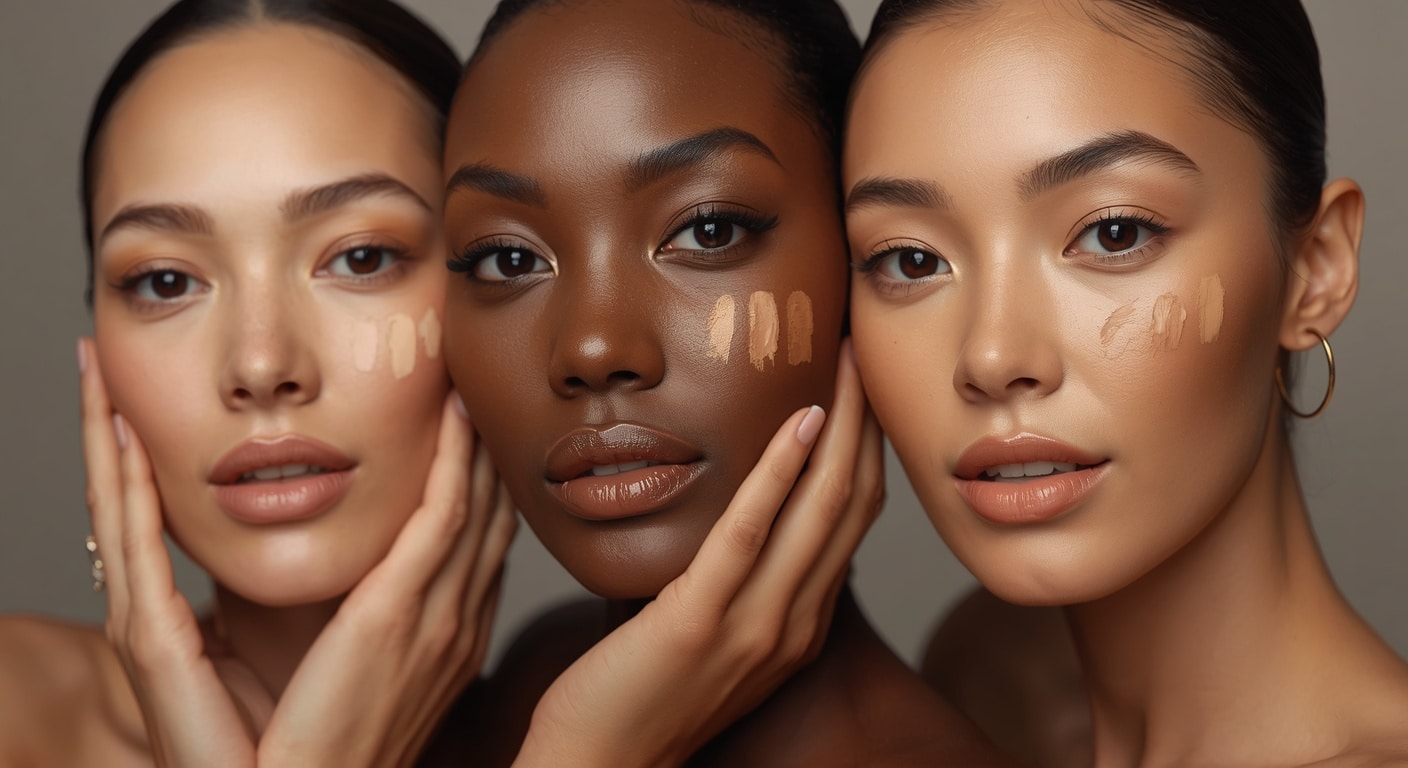
Foundation can look completely different once it is on your skin. A shade may seem fine in the bottle, then turn too pink, too yellow, too ashy or too dark after application. If you are trying to work out how to choose foundation shade correctly, the most reliable approach is to match both your skin depth and your undertone, then test the shade on your jawline rather than your hand.
That matters even more in Malaysia, where heat, humidity and sweat can make oxidation and wear more noticeable. If you are still building the basics of your routine, our beginner makeup guide gives broader context on base makeup and application.
To choose the right foundation shade, start by identifying two things: your skin depth and your undertone. Then swatch two to three close options along your jawline, check them in natural light, and wait a few minutes before deciding. The best match should blend into both your face and neck without leaving a visible line or turning noticeably darker.
- Match both depth and undertone.
- Test two to three shades, not just one.
- Swatch on the jawline, not the wrist.
- Check the result in natural daylight.
- Wait a few minutes to see if the formula oxidises.
- Choose the shade that disappears best between your face and neck.
How to choose foundation shade: the quickest method
- Identify your skin depth: fair, light, medium, tan, deep or rich.
- Work out your undertone: warm, cool, neutral or olive.
- Pick two to three close shades instead of guessing one.
- Swatch them along your jawline, not your hand.
- Check the match in natural light against both your face and neck.
- Wait a few minutes to see if the formula oxidises before deciding.
Why foundation shade matching matters
A good foundation match should even out the skin without looking separate from it. When the shade is wrong, the product often becomes the first thing people notice. That can happen in a few different ways.
A shade that is too light may look chalky, grey or flat, especially if the formula has fuller coverage. A shade that is too dark can make the complexion look muddy or heavy. If the depth seems close but the undertone is wrong, the foundation may pull too pink, too yellow, too peach or too orange.
The goal is not to make your face lighter or more tanned. It is to create a balanced match that sits naturally between your face and your neck. This is especially important because many people have some unevenness across the face from sun exposure, redness, acne marks or general pigmentation. Matching only the centre of the face can leave the foundation looking obvious around the perimeter.
Step 1: Identify your skin depth
Skin depth simply means how light or deep your overall complexion is. Most brands group their shades into broad bands such as fair, light, medium, tan, deep and rich. You do not need to place yourself into one exact category forever, but you do need a rough starting point.
If you often find base products look pale on you, you may need to look in the medium-to-deep range rather than light-to-medium. If many shades disappear into your skin too easily or look dark straight away, you may be in the fair or light range. For many people, the best starting point sits somewhere in the middle rather than at either extreme.
Try to judge your depth from your neck and outer face rather than relying only on the centre of your cheeks. Some areas of the face may be redder, more pigmented or slightly lighter.
Why brand shade names can be inconsistent
One of the most confusing parts of foundation shopping is that shade names are not standard. A “warm beige” in one brand may be lighter or deeper than a “warm beige” in another. Even labels such as light-medium, natural or honey can vary a lot.
That is why shade names should be treated as clues, not facts. Always compare the actual colour, undertone and how it behaves on your skin rather than assuming the name will translate across brands.
Step 2: Understand your undertone
Undertone is the subtle hue underneath your skin. It is different from surface colour, tanning, redness or temporary irritation. In foundation matching, the most common undertone groups are warm, cool, neutral and olive.
Warm, cool, neutral and olive undertones explained simply
- Warm undertone: skin may read more golden, yellow or peach.
- Cool undertone: skin may read more pink, rosy or slightly red-blue.
- Neutral undertone: skin does not lean strongly warm or cool.
- Olive undertone: skin may have a muted green, golden-green or grey-green cast. Olive skin can be light, medium or deep.
This is where many foundation mismatches happen. Someone may pick the right depth but the wrong undertone, so the face ends up looking too yellow, too pink or slightly ashy once blended out.
Common signs that can help, and why no single trick is perfect
You may have seen undertone “tests” based on veins, jewellery or whether you tan easily. These can be helpful, but none of them is perfect on its own.
- If gold jewellery tends to look more natural on you, you may lean warm.
- If silver feels more harmonious, you may lean cool.
- If both work reasonably well, neutral may be likely.
- If many warm shades look too yellow and many cool shades look too pink, olive may be worth considering.
The easiest practical test is still foundation itself. When the undertone is right, the product tends to blend in quietly. When it is wrong, something looks off even if you cannot immediately explain why.
Step 3: Swatch foundation in the right place
If you only remember one application tip, make it this: do not judge foundation on your wrist or hand if your goal is an actual face match. Your hands are often a different depth from your face, and they may have a different amount of sun exposure too.
Why the jawline is better than the wrist or hand
The jawline helps you compare your face and neck at the same time. That makes it the best place to see whether a foundation disappears smoothly or creates a visible border. A good match should not sit obviously lighter or darker than either area.
Apply a short stripe of each shade from the lower cheek down toward the jaw. Leave enough space between each one to compare them clearly.
How many shades to test at once
Testing only one shade makes it much harder to judge whether it is truly right or just “not too bad”. Two to three close options usually works best. That gives your eye a useful comparison without becoming messy or confusing.
If one looks too pink, one looks too yellow and one almost disappears, the answer is usually obvious once you step back.
How to compare your face, jawline and neck
Blend each swatch slightly at the edges, but do not sheer it out so much that every shade starts looking the same. Then look straight ahead and check whether the swatch melts into the area between your face and neck. The best shade often looks almost boring because it does not call attention to itself.
Step 4: Check the shade in natural light
Store lighting can be flattering, bright, dim or oddly yellow, which makes shade matching harder than it should be. A foundation that looks balanced indoors may look orange, pink or grey the moment you step outside.
Natural light gives you a much clearer view of the true colour. If possible, check your swatches near a window or outside briefly in daylight before buying. Look at the match from more than one angle rather than only up close in a mirror.
In Malaysia, daylight and humidity can reveal a mismatch faster. A shade that already looks slightly off indoors may become more obvious once the product settles on warm skin, especially if the formula starts to deepen after application.
Step 5: Wait to see if the foundation oxidises
Oxidation is when foundation changes colour after it has been exposed to air or mixed with your skin’s natural oils and wear conditions. In simple terms, a shade that looked fine at first may turn darker, warmer or more orange over time.
How long to wait before deciding
You do not always need hours to spot a change. Even waiting a few minutes can help. If you have the chance, wear the swatch a little longer and check it again before making a final decision. This is especially useful if you already know that many foundations tend to deepen on your skin.
What to do if the shade turns darker or more orange
If a foundation noticeably darkens or shifts warm after settling, the formula may not be your best match in that shade. In some cases, trying a slightly lighter option within the same undertone family may help, but do not assume lighter automatically means better. If the undertone is wrong, going lighter can still leave the complexion looking unnatural.
The key is to judge the shade after it has had time to settle, not just at the moment you first apply it.
Choose the shade based on your formula and finish
Not every foundation type behaves the same way on the skin. Coverage level, texture and finish can affect how exact your match needs to be.
Coverage changes how obvious a mismatch looks
Sheer foundations are often a little more forgiving because some of your natural skin still shows through. A close match can still work well even if it is not exact. Medium and full-coverage formulas are less flexible. If the depth or undertone is off, it usually shows more clearly.
This is why a shade that looked acceptable in a skin tint may look wrong in a long-wear matte formula with stronger coverage.
Liquid, cushion, stick and powder foundations
- Liquid foundation: usually offers the widest shade flexibility, but finish and oxidation still matter.
- Cushion foundation: often has a more limited shade range, so undertone mismatches can be harder to avoid.
- Stick foundation: tends to apply with more concentration, so depth differences may look stronger on the skin.
- Powder foundation: can shift depending on how heavily it is applied, and may look different over skincare or sunscreen.
If you are between shades, the formula type can help you decide. A slightly off shade may be easier to work with in a sheer liquid than in a dense stick or high-coverage powder.
Common foundation shade mistakes to avoid
- Matching only to the face: if your neck is lighter or deeper than your cheeks, the result can look disconnected.
- Choosing a lighter shade to look brighter: this usually creates a pale cast rather than a fresher look.
- Focusing only on depth: the undertone can be wrong even when the lightness or darkness seems right.
- Judging under artificial lighting only: always check in natural light if possible.
- Buying online from one swatch image: brand images, screen settings and editing can all affect how a shade appears.
Another common mistake is assuming you must match temporary tanning, redness or pigmentation exactly in every area. The aim is overall harmony between the face and neck, not perfect visual sameness across every part of the face.
How to choose foundation shade when shopping online
Buying foundation online is more convenient, but it does involve more guesswork. The safest approach is to use several reference points rather than trusting one brand swatch alone.
How to use brand swatches, model references and existing shade matches
Start with your current best foundation match, if you have one. Compare not just the shade name but the depth and undertone description. Then look at brand swatches and model images, keeping in mind that website photography is not always consistent.
If a brand shows the same model wearing several shades, that can help you judge where yours might sit more accurately than a flat swatch bar alone.
Why online tools can help but are not always exact
Online shade finders and matching tools can be useful starting points, especially if you are cross-checking a known shade from another brand. Still, they are not guarantees. Different formulas within the same brand can run lighter, deeper, warmer or more neutral.
Treat these tools as guides, then verify with real swatches, model references and wear reviews where possible.
When it may be safer to shop in person first
If you are unsure between undertones, struggle with oxidation, or often find your face and neck differ in depth, trying a tester in person may save money and frustration. This could be at a drugstore, beauty chain, department counter or another retailer where testers are available. If you do buy online, it helps to choose sellers with clear shade information and practical return or exchange policies where available.
A simple foundation shade matching checklist
- Know your approximate skin depth.
- Work out whether you lean warm, cool, neutral or olive.
- Test two to three nearby shades.
- Swatch on the jawline, not the hand.
- Compare the shade against both face and neck.
- Check it in natural daylight.
- Wait a few minutes for the formula to settle.
- Notice whether it oxidises or turns orange.
- Adjust your expectations based on coverage and formula type.
- If buying online, cross-check with existing matches and model references.
If one shade blends in quietly and still looks balanced after a bit of wear, that is usually your strongest candidate.
Frequently Asked Questions
Should foundation match my face or my neck?
It should work with both, but the jawline is the best place to judge that balance. If your face is more pigmented or red than your neck, matching only to the face can make the foundation look too obvious.
How do I know if my foundation undertone is warm, cool, or neutral?
Look at how the shade reads on your skin rather than relying on one undertone trick. Warm shades tend to look golden or yellow, cool shades lean pink or rosy, and neutral shades sit somewhere in between. If warm looks too yellow and cool looks too pink, you may need a more neutral or olive option.
Why does my foundation look darker after a few hours?
It may be oxidising. Some formulas deepen or shift warmer after they settle on the skin, especially in heat and humidity. That is why it helps to wait before deciding on a shade.
Can I use a lighter foundation shade to brighten my skin?
A lighter foundation usually does not brighten the complexion in a natural way. More often, it creates a visible cast. If you want a fresher look, a better-matched foundation paired with concealer or strategic brightening products generally looks more balanced.
How can I choose the right foundation shade when buying online?
Use your existing shade matches as a reference, compare undertone descriptions, study model photos and treat online tools as rough guides rather than exact answers. If you are often between shades, checking testers in person first may be the safer option.
What to remember before you buy
The best foundation shade is not the one that looks lightest, darkest or most flattering in the bottle. It is the one that matches your skin depth, suits your undertone, blends across the jawline and still looks balanced after it settles. If you keep those steps in mind, choosing foundation becomes much less guesswork and much more consistent.