Finding the right foundation for oily skin in Malaysia can be frustrating. A base that looks smooth in the morning can turn shiny, patchy or heavy by midday once heat, humidity, sweat and sebum start affecting the formula. The best choice is usually not the fullest coverage or the flattest matte finish. It is the one that stays comfortable, sits well over sunscreen and keeps looking even through the day.
For oily skin in humid weather, a good foundation is usually lightweight, long-wear and oil-controlling, with a soft-matte or natural-matte finish. Instead of shopping by coverage alone, pay close attention to texture, finish, transfer resistance, shade stability and how the formula behaves over your usual primer and sunscreen.
If you are still building your base routine, it helps to start with broader basics in this makeup guide for beginners in Malaysia before narrowing down foundation options.
What kind of foundation works best for oily skin in humid weather?
The foundations that tend to perform best in hot, humid conditions are the ones that feel relatively thin on the skin, dry down evenly and do not rely on a very rich or emollient texture. Oily skin already produces more sebum, so heavy formulas often break apart faster, especially around the T-zone, nose and chin.
In practical terms, look for these characteristics:
- Lightweight or thin-texture formula
- Soft-matte or natural-matte finish
- Long-wear or transfer-resistant claims
- Buildable coverage that does not cake easily
- Compatibility with sunscreen and primer
- Shade match that still looks natural in daylight
That does not mean every oily-skinned person needs the driest matte foundation available. Some very flat matte formulas can cling to texture, look heavy after touch-ups or feel uncomfortable in air-conditioned settings after hours of wear.
Why lightweight, long-wear formulas usually perform better
Humidity does not just make skin shiny. It can also affect how makeup grips, sets and moves. A lighter foundation often has a better chance of staying even because there is simply less product sitting on the skin waiting to shift. Buildable formulas also give you more control. You can apply a thin layer overall, then add coverage only where needed instead of masking the whole face with a thick base.
Why oily skin behaves differently in heat and humidity
Oily skin produces more sebum, and in warm weather that can combine with sweat and surface moisture. Once that happens, foundation may start sliding, separating around pores or collecting in lines and creases. This is why a base that works in cooler environments may feel completely different outdoors or during a long day of commuting.
How sebum, sweat and humidity affect foundation wear
Sebum can break through foundation and make it look shinier over time. Sweat adds moisture and movement, especially around the upper lip, nose and forehead. Humidity slows evaporation, so products may take longer to set fully or stay tacky for longer than expected. If your sunscreen underneath is also rich or glossy, the whole base can become less stable.
Frequent transitions between outdoor heat and strong indoor air-conditioning can add another layer of difficulty. Skin may look oily in one setting, then dehydrated or textured in another, which is why balance matters more than choosing the most aggressive oil-control formula.
Common problems: shine, slipping, patchiness and oxidation
The most common signs that a foundation is not suited to your skin or climate are fairly easy to spot:
- Shine: the finish becomes much glossier than intended within a short time
- Slipping: foundation moves when you touch your face or blot
- Patchiness: some areas hold product while others break apart
- Pore emphasis: the formula gathers around visible pores instead of smoothing over them
- Oxidation: the shade appears darker, warmer or duller after a few hours
Any one of these can happen even with a popular formula. That is why choosing foundation for humid Malaysian weather should be based on performance factors, not just first impressions at the counter.
The most important things to look for before you buy
Finish: matte, soft-matte or natural finish?
For oily skin, matte finishes are often the first category people consider, and with good reason. They can help reduce the appearance of excess shine and often hold up better through the day. But matte is a broad category. A soft-matte or natural-matte finish is often easier to wear than an ultra-flat matte base, especially if you want skin to look more natural up close.
A natural finish can also work for oily skin if the formula is lightweight and sets well. The key question is not whether the label says matte or natural. It is whether the product stays balanced instead of turning greasy or collapsing in humid conditions.
Texture: liquid, serum-like, mousse, stick or cushion
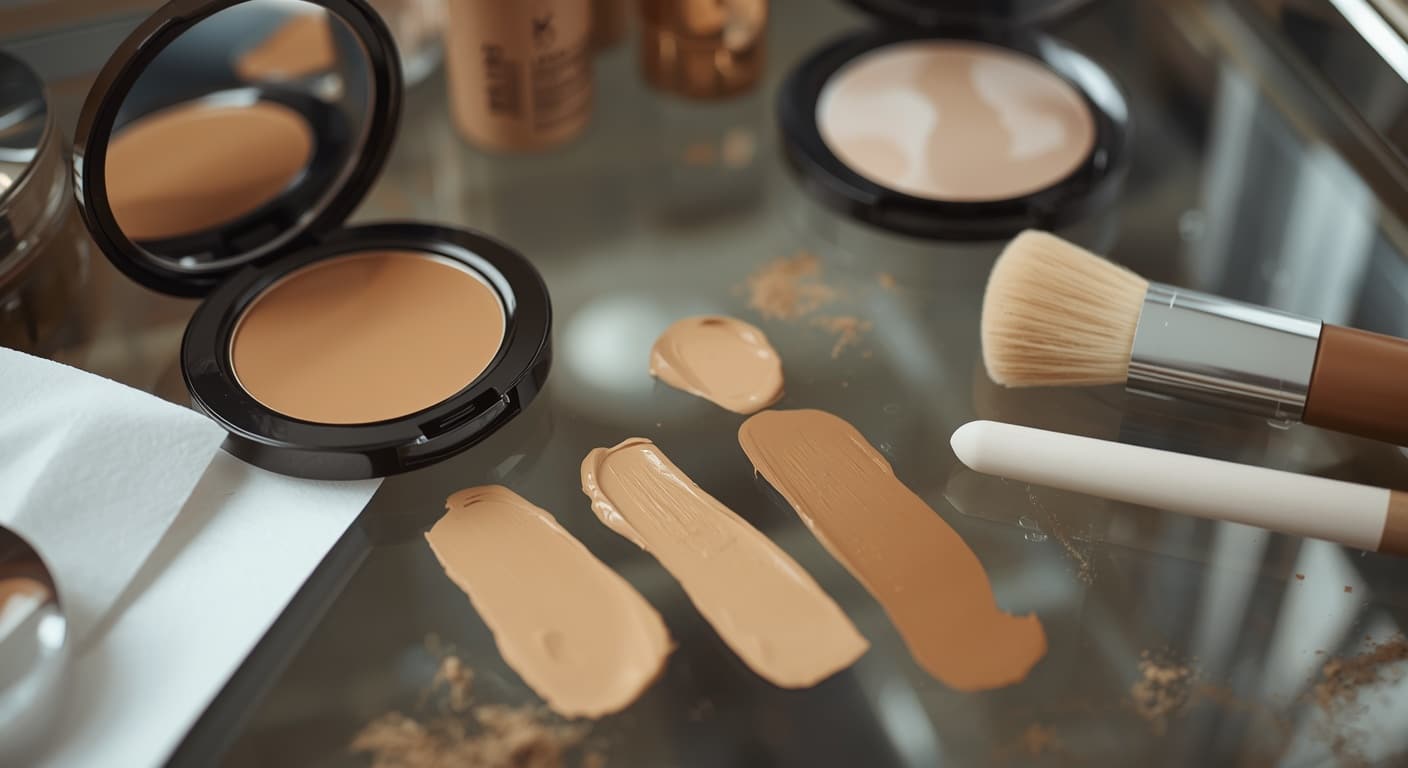
Texture has a big influence on comfort and wear. Many people with oily skin do well with lightweight liquid foundations or serum-like textures because they spread easily and can be applied in thin layers. Mousse textures may offer a smoother, more blurred look, though some can feel heavier depending on the formula.
Stick foundations and denser cream formats can provide more coverage, but they may also feel thicker in hot weather. Cushion foundations can be convenient for quick application and touch-ups, though performance varies a lot depending on how dewy, thin or emollient the formula is.
Coverage: light, medium or full for oily skin
Higher coverage is not automatically better for oily skin. In humid weather, a lighter or medium buildable foundation often wears more naturally because it is easier to keep even. Full-coverage formulas may still suit some people, especially if they prefer more evening-out, but they need to sit well on the skin without turning dense or cakey.
A useful approach is to choose the least amount of coverage that still gives you the finish you want. If you need extra help in certain areas, use targeted concealer instead of relying on a thicker all-over base.
Wear claims: long-wear, transfer-resistant and oil-control
Claims such as long-wear, transfer-resistant and oil-control can be useful starting points, but they are not guarantees. Treat them as clues about the formula rather than promises about how it will perform on your skin. One long-wear base may stay smooth over one person’s sunscreen and primer, while another may separate.
Still, these labels are worth noting because they usually suggest the product was designed with durability in mind. For anyone looking for foundation for humid weather, they are often more relevant than marketing around glow or radiance.
How to choose the right foundation texture for oily skin
When lightweight liquid foundations make sense
Lightweight liquids are often the safest starting point if you are unsure what works best. They tend to blend quickly, allow thin application and are easier to customise. You can use one sheer layer for everyday wear or build slightly in areas where you want more coverage.
They also tend to layer more predictably over sunscreen, which matters in Malaysia where daily sun protection is part of most routines.
Who may prefer cushion or compact formats
Cushion and compact foundations may appeal if you want convenience, portability and faster application. They can be practical for touch-ups, especially if you prefer pressing product into the skin rather than buffing on a fresh layer. The trade-off is that some formulas lean more radiant, which may not suit very oily skin as well in humid conditions.
If you are considering this format, pay closer attention to the finish and how quickly the skin becomes shiny after application.
When thicker formulas can feel heavy in humidity
Dense creams, sticks and heavier full-coverage liquids can sometimes look polished at first but become more obvious through the day. In heat and humidity, thicker product is more likely to feel noticeable, collect around active areas of the face or require more powder to control shine. That does not make them unusable, but they usually need more careful prep and a lighter hand.
How finish affects how your skin looks through the day
Matte vs soft-matte vs dewy on oily skin
A matte finish reduces surface shine most clearly, but it can also look less skin-like if the formula is too dry or flat. Soft-matte usually gives a better middle ground: controlled, smoother-looking skin without removing all dimension from the face. A dewy finish can still appeal aesthetically, but on oily skin in high humidity it may become shiny faster than intended.
If your skin gets oily mainly in the T-zone but not everywhere, a soft-matte foundation can be easier to balance. You can powder selectively where needed instead of mattifying the whole face.
Why very flat matte is not always the best choice
The driest-looking matte finish is not always the most flattering or longest-lasting. If a foundation looks stiff or powdery early on, touching up later can make it look heavier. Very flat formulas may also emphasise texture, especially if your skin becomes dehydrated after hours in air-conditioned spaces.
For many people, the better goal is controlled wear rather than zero shine. Some natural-looking sheen later in the day is easier to manage than a base that starts off too heavy.
How to test foundation before buying
Check shade in natural light
Store lighting can make a shade seem more suitable than it is. Whenever possible, check the colour in natural daylight before deciding. This matters even more if you are concerned about oxidation, because a shade that is already borderline too deep may look noticeably darker after a few hours.
Test along the jawline or side of the face rather than the hand so you can judge how naturally it blends into both face and neck.
Watch for separation, oxidation and pore emphasis
Do not assess a foundation only in the first few minutes. Give it time to settle. A formula may look smooth at first but start separating around the nose or clinging around pores later. If possible, wear it for a few hours before buying, or ask for a sample where available.
Pay attention to whether the shade shifts warmer, deeper or duller over time. Also check whether the surface starts looking uneven once oil begins to come through.
Test wear over sunscreen and primer if possible
Foundation does not sit on bare skin in real life. It usually sits over skincare, sunscreen and sometimes primer. If your sunscreen is rich, slippery or very glowy, that can change how the foundation grips. Likewise, some primers improve wear while others cause pilling or separation.
The most useful test is with the products you already wear. If that is not possible in store, at least compare how the foundation behaves over a similar base texture.
Mistakes that make foundation fail faster in humid weather
Choosing by coverage alone
It is easy to assume more coverage means better performance, but oily skin often needs the opposite approach. A heavy base can become more obvious once it starts breaking down. Prioritise texture and wear first, then decide how much coverage you actually need.
Using too much product
Even a suitable foundation can look worse if too much is applied. Thick layers take longer to set and are more likely to move. Starting with a small amount and building only where necessary usually gives a fresher result.
Ignoring skin prep and sunscreen texture
If the layers underneath are overly rich, the foundation may never sit properly. Oily skin often benefits from lighter moisturiser textures and sunscreen that does not leave too much slip, though the best fit depends on your skin’s needs and comfort.
Picking a formula that clashes with your base products
Sometimes the foundation is not the main problem. A primer that pills, a sunscreen that stays tacky or too many layers overall can make a decent formula perform badly. If your foundation keeps failing, reassess the whole base routine before assuming you need a completely different product type.
A simple foundation selection checklist for oily skin in Malaysia
Use this quick checklist when comparing options:
- Does the texture feel light enough for daily wear in heat and humidity?
- Is the finish soft-matte, natural-matte or otherwise controlled rather than overly greasy-looking?
- Can it be applied in thin layers without turning patchy?
- Does it claim long wear, oil control or transfer resistance?
- Does it sit well over your usual sunscreen?
- Will the shade still look balanced in daylight?
- After a few hours, does it stay even instead of separating around the nose, chin or forehead?
Who should prioritise comfort vs oil control
If your skin gets very oily quickly, stronger oil control may be your main priority. If your skin is oily but also easily looks textured or dehydrated in air-conditioning, comfort and flexibility may matter more than the most matte finish possible. In other words, the best foundation for oily skin is the one that stays balanced on your skin through a normal day.
When a foundation may not be the main issue
Primer, sunscreen and application technique can change wear
Application method can affect the result more than many people expect. A sponge may give a thinner, more skin-like finish, while a brush can sometimes build more coverage faster. Pressing product into the skin instead of dragging it across oily areas may also help it sit more evenly.
Blotting excess oil before touch-ups often works better than layering more powder or foundation onto shine. If you regularly touch up during the day, a lighter foundation can be easier to maintain than one that already feels heavy by noon.
When to reassess your overall base-makeup routine
If several different foundations keep sliding off, oxidising or looking uneven, the issue may be your full base routine rather than one specific product. Check whether your skincare layers are too heavy, whether your sunscreen remains slippery, or whether you are applying more base than your skin comfortably holds in humid weather.
Sometimes a better result comes from simplifying: lighter prep, thinner foundation and more targeted concealing where needed.
Frequently Asked Questions
Is matte foundation always the best choice for oily skin in humid weather?
Not always. Matte and soft-matte finishes often work well, but an overly flat formula can look heavy, dry or cakey through the day. Many people do better with a soft-matte or natural-matte foundation that controls shine without looking stiff.
Should people with oily skin choose full-coverage foundation in hot weather?
Not necessarily. Full coverage can work for some people, but it is not automatically the best option in heat. Lightweight, buildable coverage often looks fresher and may wear more evenly in humidity.
Why does my foundation look darker after a few hours?
This may be oxidation. Oil, formula chemistry and daily conditions can affect how a foundation changes during wear. If this happens often, test the shade for a few hours before buying and observe whether it turns deeper, warmer or duller.
Can foundation for oily skin still look natural in Malaysia’s climate?
Yes. A natural-looking result is possible if you choose a lightweight texture, a balanced finish and a formula that works with your sunscreen and primer. The goal is not to remove every trace of shine, but to keep the base even and comfortable.
What should I test first when buying foundation for oily skin?
Start with finish, texture, shade in daylight and how the formula wears over your usual sunscreen. Then watch for separation, pore emphasis and oxidation after a few hours rather than judging it only at first application.
Choosing well matters more than choosing matte
If you have been searching for foundation for oily skin in Malaysia, focus less on the boldest oil-control claim and more on how the formula actually behaves in humid weather. A lightweight texture, balanced finish and compatible base routine usually matter more than coverage alone. When a foundation feels comfortable, stays even and still looks natural later in the day, you are much closer to the right match.