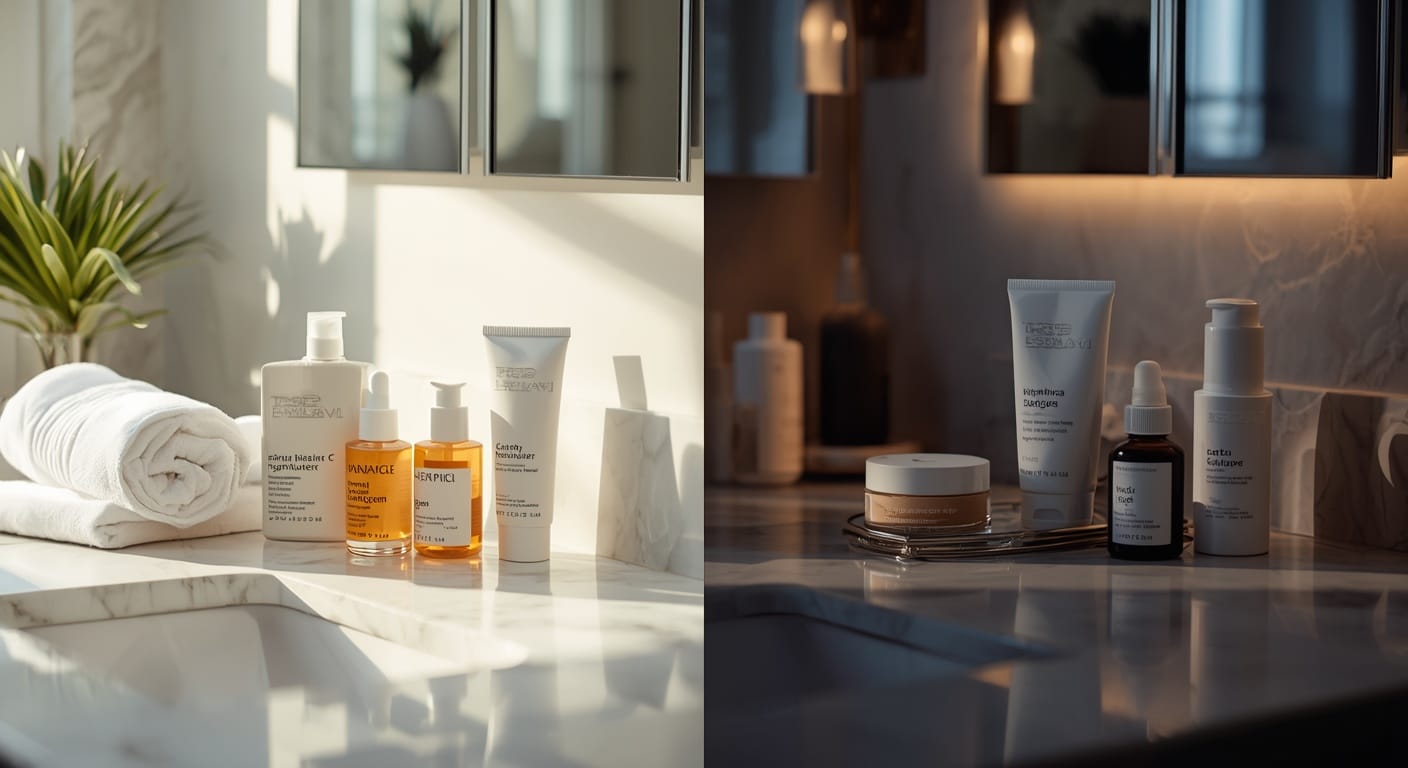
A morning vs night skincare routine is not just the same steps done at different times. Your daytime routine is mainly about protection from UV exposure, heat, sweat and daily buildup, while your evening routine is more focused on removing that buildup and supporting recovery. For many people in Malaysia, that means lighter layers in the morning and more thorough cleansing at night.
A morning skincare routine is mainly about protection, while a night skincare routine is more about cleansing and repair. In the morning, most people need a gentle cleanse, moisturiser and broad-spectrum sunscreen. At night, the routine usually includes more thorough cleansing, optional treatment products such as retinoids or exfoliating acids, and a moisturiser to support the skin barrier.
If you are still building the basics, our skincare guide for Malaysians gives a broader foundation before you personalise your AM and PM steps.
Morning vs night skincare routine: the quick answer
| Routine | Main goal | Typical steps | Best focus | Common mistake |
|---|---|---|---|---|
| Morning | Protect skin during the day | Gentle cleanse, hydrating serum if needed, moisturiser, sunscreen | UV protection, hydration, antioxidant support | Skipping sunscreen or using layers that feel too heavy |
| Night | Remove buildup and support recovery | Cleanse thoroughly, optional treatment product, moisturiser | Retinoids, exfoliating acids, barrier support | Over-cleansing, over-exfoliating or using too many actives together |
Why your skin needs different care in the morning and at night
What your skin faces during the day
During the day, your skin is exposed to sunlight, humidity, air-conditioning, pollution, sweat and oil production. Even if you are mostly indoors, UV exposure can still matter, and air-conditioned spaces can leave skin feeling dehydrated. That is why morning skincare routine vs night skincare routine is not just about convenience. The daytime routine needs to help skin stay comfortable while adding protection.
In Malaysia’s hot, humid climate, heavy skincare can also feel unpleasant quite quickly. A practical morning routine usually works better than a long one. If products feel sticky or suffocating, people are more likely to skip them, especially sunscreen.
What your skin needs after a full day of sunscreen, sweat and buildup
At night, the priorities change. Skin no longer needs sun protection, but it may need help removing sunscreen, makeup, excess oil and grime from the day. This is also when many people choose to use treatment products because they fit more easily into an evening routine and may be less practical under daytime sun exposure.
Night skincare does not need to be elaborate, but it often needs to be more thorough. If your skin still feels coated at bedtime, a simple splash of water is usually not enough.
What a basic morning skincare routine should include
Cleanser: when to wash and when to keep it gentle
Some people prefer a gentle cleanse every morning, while others do well with just rinsing or using a very mild cleanser. This depends on how oily your skin feels when you wake up, whether you used heavier products the night before, and how easily your skin gets irritated.
If you have oily or combination skin, morning cleansing may help remove overnight oil and leave sunscreen sitting better. If your skin is dry or sensitive, a lighter approach may be more comfortable.
Hydrating or antioxidant layers
After cleansing, you may choose a hydrating serum or a lightweight antioxidant product. This step is optional, not mandatory. A hydrating layer can help skin feel more comfortable through the day, especially if you spend hours in strong air-conditioning. Antioxidant products are commonly used in the morning because they fit the protective focus of an AM routine.
Niacinamide is another option many people use during the day, especially if they want something lightweight that may support oil balance or overall skin comfort. As with any active product, tolerance varies.
Moisturiser based on skin type
Morning moisturiser does not have to be rich to be effective. In humid weather, many people prefer a lighter lotion or gel-cream texture. Dry skin may need something more cushioning, while oily skin may be happier with a fast-absorbing formula.
The goal is simple: maintain comfort and support the skin barrier without making sunscreen harder to wear.
Sunscreen as the non-negotiable final step
This is the biggest difference between day vs night skincare steps. Sunscreen belongs in the morning because it protects skin from UV exposure. If you use one skincare product only in the daytime, this should be it.
In Malaysia, sunscreen comfort matters because heat and humidity can make people avoid it. A texture you can tolerate daily is often more useful than a heavier formula you rarely want to apply. If you spend time outdoors, sweat heavily or are exposed to sunlight for long periods, reapplication also becomes relevant.
What a basic night skincare routine should include
Removing sunscreen, makeup and excess oil
At night, cleansing matters more because you are taking off everything that built up through the day. That can include sunscreen, makeup, oil, sweat and environmental residue. If these are left on the skin, treatment products and moisturiser may not sit as well.
A single gentle cleanser may be enough for some people, especially if they wore minimal products. Others may prefer a first cleanse to break down sunscreen or makeup before using a regular water-based cleanser.
When double cleansing makes sense
Double cleansing can be useful if you wear long-wearing sunscreen, makeup or feel quite oily by evening. Usually, this means using an oil-based cleanser or balm first, then following with a gentle cleanser.
It is not something everyone must do every night. If your skin becomes tight, irritated or overly dry, the routine may be too much for your tolerance.
Treatment products used more often at night
This is where what changes in a night skincare routine becomes more noticeable. Evening is when people often place treatment serums or creams, including retinoids and exfoliating acids. These are commonly used at night because they can be more irritating, may increase sensitivity to sun exposure, or simply fit better into a routine that is less rushed.
That does not mean everyone needs them. If you are new to active ingredients, introduce one product at a time and use it gradually rather than layering several strong formulas together. Patch testing is a sensible precaution, especially if your skin is reactive.
Moisturiser to support the skin barrier overnight
Night moisturiser can be similar to your daytime moisturiser, or slightly richer if your skin feels dry. The aim is to support the skin barrier after cleansing and to reduce discomfort from active ingredients when relevant.
You do not need a separate “night cream” unless it genuinely suits your skin better. Many people are perfectly fine using the same basic moisturiser morning and night.
The biggest differences between morning and night skincare steps
Protection vs repair
The most useful way to understand the difference between morning and night skincare routine is this: morning protects, night removes and supports. Daytime products have to work under sunscreen, around sweat and in changing weather. Night-time products can focus more on comfort, recovery and optional treatment.
Why sunscreen belongs in the morning
Sunscreen is specifically a daytime step because it helps protect skin when UV exposure is a factor. It has no practical role as the final step before sleep. That sounds obvious, but it is still the clearest dividing line between a morning and evening routine.
Why stronger actives are often better at night
Retinoids and exfoliating acids are often used at night because they can be more irritating for some people and need thoughtful use. Evening application can make routines easier to manage, especially if you are already wearing sunscreen consistently during the day. Stronger does not automatically mean better, and more frequent use is not always more effective for every skin type.
Which ingredients make more sense in the morning vs at night
Morning-friendly options
Morning-friendly products are usually lighter and more protection-focused. Common examples include:
- Hydrating serums
- Antioxidant products
- Niacinamide
- Lightweight moisturisers
- Broad-spectrum sunscreen
These can work well when the goal is to keep skin comfortable without creating too many layers in humid weather.
Night-friendly options
Evening is often where you will see:
- Retinoids
- Exfoliating acids
- Richer moisturisers or barrier-supporting creams
- More thorough cleansing methods
These are not universal choices. If you are unsure whether an active ingredient suits your skin, keep the routine simple first.
Ingredients that can work in both routines
Some ingredients are flexible and can sit in both routines depending on the product and your tolerance. Gentle cleansers, basic moisturisers, hydrating ingredients and niacinamide are common examples. The product’s texture and how your skin responds often matter more than whether the label says AM or PM.
How to adjust your routine for different skin needs
Oily or combination skin
Keep morning layers light so the routine feels wearable. A gel cleanser, lightweight moisturiser and comfortable sunscreen may be enough. At night, focus on removing buildup properly without trying to strip every trace of oil.
Dry or dehydrated skin
You may prefer a gentler morning cleanse or just a rinse, followed by a more cushioning moisturiser. At night, barrier support becomes especially important. If active ingredients make your skin sting or flake, reduce frequency and simplify.
Sensitive skin
Shorter routines are often easier to tolerate. Choose gentle cleansing, basic hydration and consistent sunscreen in the morning. In the evening, avoid adding several active products at once. Patch testing can help reduce the chance of a bad reaction. If irritation is persistent or severe, seek advice from a dermatologist or another qualified healthcare professional.
Acne-prone skin
Acne-prone skin often benefits from consistency more than complexity. Cleansing at night is especially important if you wear sunscreen daily. Some people may use active ingredients in the evening, but not every breakout needs a stronger routine. If you have severe, painful or persistent acne, professional assessment is a better next step than repeatedly adding more products.
Common mistakes when using the same routine all day
- Skipping sunscreen in the morning: this leaves out the most important daytime protection step.
- Over-cleansing at night: skin that feels squeaky clean may actually be irritated.
- Over-exfoliating: using acids too often can disrupt your skin barrier.
- Using too many actives together: this can make it harder to tell what is helping and what is causing irritation.
- Making routines too long: a routine you can keep up with is more useful than an ideal routine you abandon after a week.
A simple morning and night routine for Malaysia’s hot, humid climate
If heavy layers feel uncomfortable, keep the morning routine straightforward:
- Gentle cleanse if needed
- Optional light hydrating or antioxidant layer
- Lightweight moisturiser
- Broad-spectrum sunscreen
At night, shift the focus to removal and support:
- Cleanse thoroughly, especially if you wore sunscreen or makeup
- Use one treatment product if suitable
- Apply moisturiser
This AM vs PM skincare routine covers the essentials without turning skincare into a long checklist. In humid weather, comfortable textures matter. If a routine feels sticky, greasy or irritating, adjust the product type rather than assuming you need more steps.
How to build a routine you will actually stick to
Start with the basics before adding extras. For most people, that means cleanser, moisturiser and sunscreen in the daytime, then cleanser and moisturiser at night. Once those habits feel consistent, you can decide whether you actually need a hydrating serum, antioxidant product or treatment active.
The best routine is not the one with the most products. It is the one that fits your skin, your schedule and your climate. If your skin becomes persistently irritated, very inflamed or difficult to manage, it is worth checking with a dermatologist or appropriately qualified healthcare professional instead of continuing to experiment on your own.
Frequently Asked Questions
Can I use the same skincare products in the morning and at night?
Yes, some products can work in both routines, especially gentle cleansers and basic moisturisers. The main daytime difference is sunscreen, while some treatment products are more commonly used at night.
Is sunscreen the only essential difference between a morning and night skincare routine?
Sunscreen is the biggest difference, but not the only one. Night-time cleansing is usually more thorough because you are removing sunscreen, makeup, sweat and buildup, and evening is often when treatment products are used.
Should I wash my face twice a day if I have oily skin in Malaysia?
Many people with oily skin do well with cleansing morning and night, especially in a hot, humid climate. Still, over-cleansing can cause irritation, so it is best to adjust based on how your skin actually feels.
Which active ingredients are better to use at night?
Retinoids and exfoliating acids are commonly used at night. They are not suitable for everyone, so introduce them gradually, patch test when appropriate, and keep up consistent sunscreen use during the day.
Do I need a longer night routine than morning routine?
Not necessarily, but night routines are often slightly more involved because they need to remove sunscreen or makeup properly. Even so, a simple evening routine can still be effective.