Makeup for humid weather Malaysia usually works best when you keep the routine light, let skincare settle properly, and build coverage only where you need it. In Malaysia’s heat and humidity, the main problem is often not makeup itself, but too many layers, too much slipping around the T-zone, and touch-ups that make everything look heavier as the day goes on.
If you are still figuring out the basics, this makeup guide for beginners in Malaysia gives a broader routine to build on. For hot weather specifically, the goal is simpler: help makeup stay fresher, feel more comfortable, and break down less obviously.
Makeup tends to last better in humid weather when skin prep is balanced, base products are applied in thin layers, cream and powder are used strategically, and the areas most prone to oil and sweat are set more carefully than the rest of the face. Heavy coverage everywhere often looks worse faster in a tropical climate.
A simple way to make makeup last in hot and humid weather
- Prep skin with lightweight skincare and give it a minute to settle.
- Use a small amount of primer only where you need extra grip or oil control.
- Choose a light base, then add concealer just on areas that need more coverage.
- Apply products in thin layers and press them into the skin rather than piling them on.
- Set the T-zone and other shiny areas first, without over-powdering the whole face.
- Use water-resistant eye and brow products if smudging is a problem.
- Blot during the day before adding any more powder or makeup.
Why makeup breaks down faster in hot and humid weather
Heat, sweat and sebum all affect how makeup sits on the skin. In humid weather, the face can feel damp more quickly, which makes base products more likely to shift, separate or fade unevenly. This is especially noticeable around the nose, upper lip, chin and forehead.
Oilier areas of the face also tend to break makeup apart faster. If foundation is already sitting on top of skincare that has not settled, or if several thick layers are used at once, the product has even less chance of holding up well.
How sweat, oil and humidity affect wear time
Sweat and oil do not always remove makeup in the same way. Sweat can make product move or streak, while excess oil can cause foundation and concealer to separate, especially around the T-zone. Humidity adds to the problem by making it harder for layers to stay dry and stable on the skin.
That is why long wear in a hot climate usually depends on reducing movement between layers. Lighter textures, smaller amounts and more patience between steps often help more than adding extra coverage.
Why heavy layers can look worse in a tropical climate
A very full-coverage base may look polished at first, but in humid weather it can become patchy or cakey faster if the skin gets oily or sweaty underneath. Once thick layers start breaking apart, touch-ups are also harder to do neatly.
For many people, a more breathable approach looks better for longer: even out the skin lightly, then concentrate extra coverage only where it makes a visible difference.
The best way to prep skin before makeup
Good prep does not mean using more skincare. In hot and humid weather, it often means using just enough to keep skin comfortable without leaving a heavy film behind.
Start with lightweight skincare
If your skincare is too rich for the day, makeup can slide more easily on top of it. Lightweight moisturiser, gel-cream textures or a hydrating layer that absorbs well often sit better under makeup in humid conditions. If you use sunscreen, choose one that feels comfortable enough that you do not need to compensate with several extra layers afterward.
Drier skin may still need proper moisture, but the texture matters. The aim is balanced skin, not a greasy surface.
Let each layer settle before applying makeup
One common reason makeup separates is rushing from skincare straight into foundation. Giving sunscreen and moisturiser a little time to settle can help reduce pilling, slipping and uneven wear. You do not need a long wait, but applying base onto fully settled skincare often gives a smoother result.
When primer can help and what type to look for
Primer is not mandatory for everyone, but it can be useful if makeup tends to fade quickly or if certain areas get oilier than the rest of the face. Rather than applying a thick layer everywhere, try using it strategically on the nose, forehead, around pores, or anywhere foundation usually breaks apart first.
Some people prefer a gripping texture, while others do better with something more smoothing or oil-controlling. The best choice depends on your skin type and the finish you want. What matters most is that it works with the rest of your routine and does not feel heavy.
Choose lighter base products that hold up better
Long lasting makeup for humid climate conditions usually starts with choosing a base that feels breathable. The more comfortable the product feels on your skin, the more likely you are to leave it alone instead of constantly touching or adjusting it.
Skin tints, lightweight foundation and spot concealing
Skin tints and lightweight foundations can be easier to maintain in hot weather because they move a bit more naturally with the skin and are less obvious if they fade slightly during the day. If you need more coverage, concealer can be added only where necessary such as around redness, blemishes or under the eyes.
This approach often looks fresher than applying a heavier full-face base, especially in daytime heat.
How to avoid a heavy or cakey finish in humidity
Use less product than you think you need, then build slowly. A thin first layer gives you a chance to see what the skin actually needs. If you start with too much, it becomes harder to blend, harder to set neatly, and more likely to gather around lines or oily areas later.
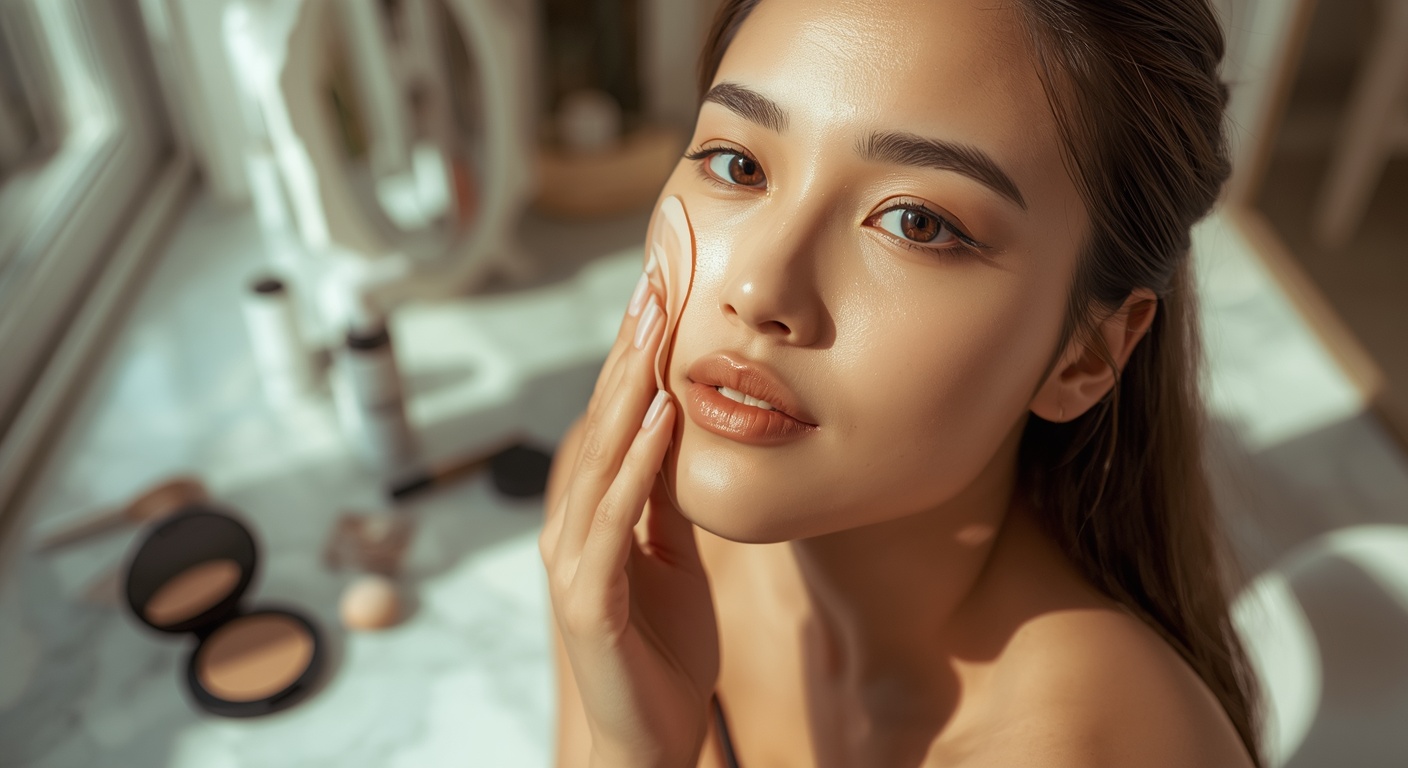
Tools can make a difference too. Pressing product in with a sponge or using light buffing motions with a brush can help create a thinner, more even layer than quickly spreading on a large amount at once.
Where to build coverage instead of applying too much everywhere
Focus extra coverage on the centre of the face, around the nose, over discolouration, or on individual spots. The outer parts of the face often need less product. Leaving some natural skin visible can make the whole look wear more gracefully in humid weather.
How to apply makeup so it lasts longer
Technique matters as much as product choice. If you want makeup that lasts in hot weather, thin layers and controlled application usually work better than trying to lock everything down with as much product as possible.
Use thin layers and press product into the skin
Apply a small amount, blend well, then pause before adding more. Pressing base products into the skin can help them adhere more evenly than wiping or dragging them around. This also reduces the chance of disturbing the skincare layer underneath.
When to use cream products and when to set them
Cream blush, bronzer and highlight can look very natural in a humid climate because they tend to melt into the skin more easily. The trade-off is that some cream products may move more if they are left unset on oilier areas.
A useful middle ground is to apply cream products in light layers, then set only where needed. For example, a touch of powder over the T-zone may be enough, while the cheeks can be left less powdery if you want a fresher finish.
How to layer base, blush and bronzer without disturbing the makeup underneath
Let each step settle briefly before going in with the next. If your base lifts when you apply blush or bronzer, you may be using too much pressure or too much product. Build colour slowly and use tapping or pressing motions when needed. That helps keep the layers underneath in place.
Set the areas that usually fade or get shiny first
Strategic setting makes more sense than trying to mattify the entire face from edge to edge. In humid weather, a selective approach often keeps makeup looking more like skin.
How to powder the T-zone without over-powdering
The forehead, nose and chin usually need the most help. Start with a small amount of powder in those areas first, then assess whether the rest of the face actually needs it. Over-powdering can make touch-ups look obvious later, especially if your skin starts producing oil underneath the surface.
If you have combination skin, you may only need powder in the centre of the face. Drier areas can often be left with minimal setting so they do not look flat.
When setting spray can help
Setting spray can help bring powders and creams together so the final finish looks less layered. Depending on the formula, it may also improve wear slightly or reduce a powdery look. It is usually most useful after the main makeup is done, rather than as a substitute for good prep and careful layering.
How to keep makeup looking skin-like instead of flat
If you want shine control without losing all dimension, set only the places that turn oily fastest. Leave some natural texture on the cheeks or outer face. In a climate where skin can become dewy on its own quite quickly, balanced makeup often ages better than an overly matte finish.
Eye and brow makeup tips for humid weather
Base makeup gets most of the attention, but eye and brow products are often the first parts to smudge in the heat.
Why water-resistant formulas can be useful
If mascara or eyeliner tends to transfer, water-resistant formulas may hold better through sweat and humidity. This can be especially helpful if your eye area gets oily or if your lashes touch the skin around the eyes.
That does not mean every product has to be maximum wear. Choose longer-wearing textures where you personally notice the most fading.
How to reduce smudging around the eyes
Keep eye cream and concealer layers light if creasing is a recurring issue. Too much product around the eyes can break down faster, especially in humid weather. Setting lightly around the lash line or under the eyes may help, depending on how dry or oily that area is for you.
Simple brow steps that hold better in heat
Brow products usually last better when the skin underneath is not too emollient. If you moisturise heavily across the forehead, brows can fade more quickly. A light brow pencil or pen followed by brow gel is often enough for structure without feeling heavy.
Lip products that are easier to wear in hot weather
Lips are usually easier to manage than base makeup in humidity, but very creamy formulas can transfer more easily in heat.
Lightweight lip stains, tints and long-wear options
Lightweight lip tints, stains and some long-wear formulas can be practical when you want colour that does not move around as easily. They also tend to feel less high-maintenance during the day because fading is often less obvious than with a thick, glossy lipstick.
How to reduce transfer and patchiness
Apply a thin layer first rather than a heavy coat. If you want more intensity, build it gradually. On dry lips, patchiness can be more noticeable, so keeping lips smooth before application can help the colour wear more evenly.
Easy touch-up tips during the day
How to stop makeup melting in humidity often comes down to how you touch up. The biggest mistake is adding more product on top of fresh sweat or oil.
Blot first before adding more product
Use blotting paper, tissue or another gentle blotting method first. This removes surface oil and moisture without disturbing the whole face. Once the excess shine is reduced, you can see whether you actually need more powder or coverage.
What to reapply and what to leave alone
Usually, only a few areas need attention: the nose, forehead, chin, or a spot where coverage has faded. You may not need to redo the whole face. A small amount of powder or concealer placed carefully can look much better than adding another full layer everywhere.
How to refresh makeup without making it heavy
If makeup still looks intact but shiny, blotting alone may be enough. If a certain area has broken apart, smooth it gently first, then add minimal product back. Repeated layers of powder over unblotted oil often create the cakey look many people are trying to avoid.
Common mistakes that make makeup melt faster
- Using too much skincare under makeup and leaving the skin overly slippery.
- Applying foundation too heavily from the start instead of building only where needed.
- Rushing between skincare, sunscreen, primer and base.
- Powdering the whole face heavily even when only the T-zone gets oily.
- Touching the face often throughout the day.
- Adding more powder repeatedly without blotting first.
None of these guarantee poor wear on their own, but together they can make makeup break down faster in a hot and humid climate.
A simple humid-weather makeup routine to follow
Quick step-by-step routine for everyday wear
- Apply lightweight moisturiser and sunscreen, then let them settle.
- Add primer only where you need help with oil control or texture.
- Use a light base such as a skin tint or lightweight foundation.
- Spot conceal where extra coverage matters most.
- Apply cream or light powder blush and bronzer in thin layers.
- Set the T-zone and any crease-prone areas lightly with powder.
- Finish with setting spray if you like how it helps everything meld together.
- Use water-resistant eye or brow products if smudging is a frequent problem.
How to adjust the routine for longer days or events
For a longer day, focus on longevity at the points where makeup usually fails first. That may mean a bit more primer around the nose, slightly more careful powdering through the centre of the face, or choosing longer-wear lip and eye products. You do not always need a heavier base. Often, a well-set thin layer wears better than a thick one.
Frequently Asked Questions
What type of foundation works best in hot and humid weather?
Lighter, breathable base products often feel more comfortable and are easier to maintain in humidity. A skin tint or lightweight foundation can work well, especially when you add concealer only where needed. The best finish still depends on your skin type and how you apply it.
Should you use powder or setting spray in humid weather?
Both can help, but in different ways. Powder is useful for controlling shine in targeted areas such as the T-zone, while setting spray can help meld layers together and reduce a dry or overly powdery finish. Many people use both, but selectively.
How do you touch up makeup after sweating without making it cakey?
Blot first before adding anything else. Once sweat or excess oil is removed, reapply only what is actually needed, such as a small amount of powder or concealer in specific areas. Adding product straight on top of moisture usually makes texture more obvious.
Can dewy makeup work in Malaysia’s humid weather?
Yes, but it usually works better when the base is light and the shine is balanced. Selective powdering can help keep the skin looking fresh rather than overly glossy, especially around the nose and forehead.
Why does my makeup separate around the nose and T-zone?
That area often produces more oil, which can break down makeup faster. Separation can also happen if you use too much product, apply layers before skincare has settled, or combine textures that do not sit well together. A lighter hand and more strategic setting often help.
What usually works best in Malaysia’s humidity
If your makeup struggles in the heat, the answer is usually not more product. A lighter base, better timing between layers, targeted powder, and smarter touch-ups often do more than a full matte routine that feels heavy by midday. In a hot, humid climate, makeup tends to last better when it looks a little more flexible and a little less forced.