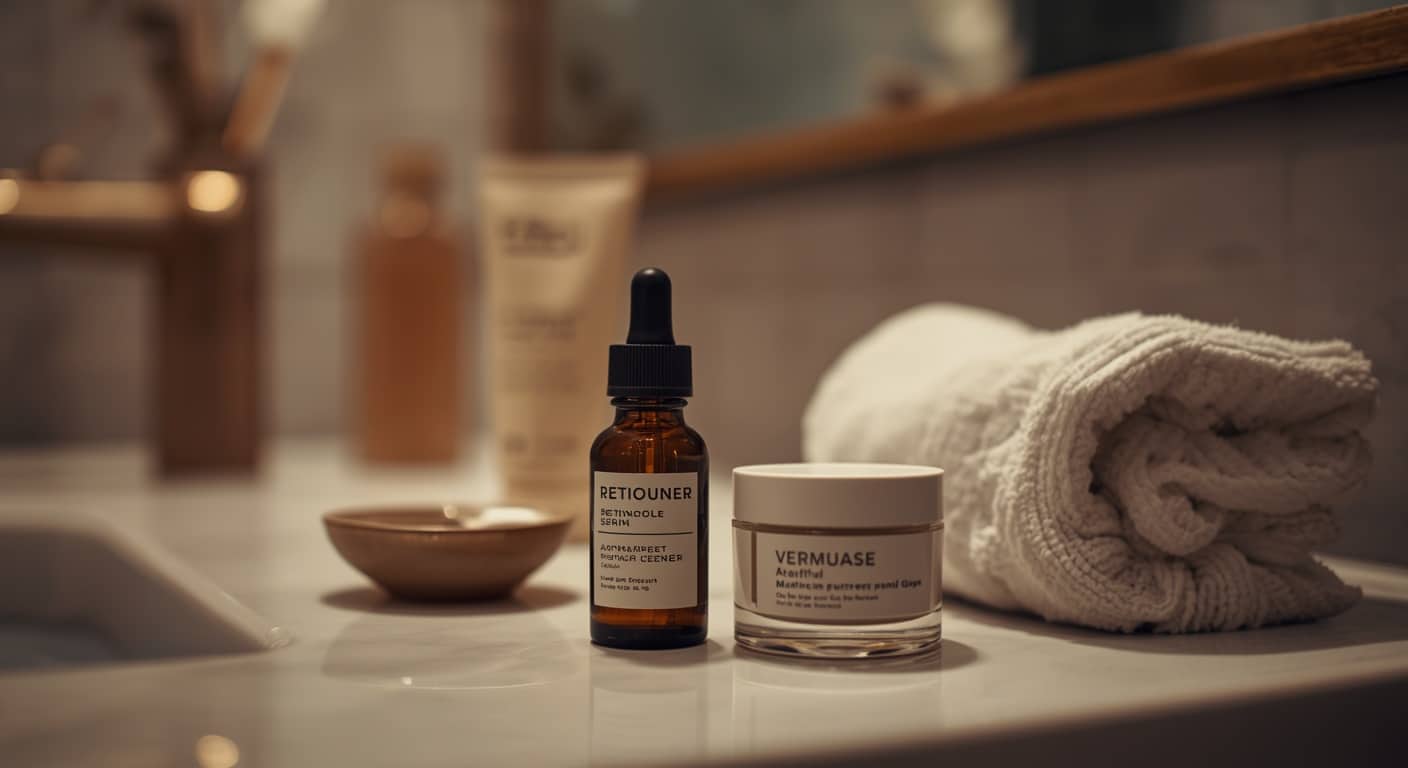
If you are wondering how to start using retinol, the safest approach is usually the simplest: choose a beginner-friendly formula, use it only at night 1 to 2 times a week, apply it on fully dry skin, and follow with moisturiser. Increase frequency only if your skin stays comfortable. Mild dryness or flaking can happen at first, but strong burning, swelling, or ongoing irritation is a sign to stop and get advice.
Retinol can be a useful step in a broader routine, especially if you are thinking about skin texture, fine lines, uneven-looking tone, or acne-prone skin. If you want to build that routine properly, start with our skincare guide for Malaysians and then treat retinol as one carefully introduced step rather than an overnight fix.
For beginners, retinol works best when you introduce it slowly. Use a low-strength or beginner-marketed formula at night, keep the rest of your routine gentle, moisturise well, and wear sunscreen every morning. Do not rush to nightly use. A slower start often gives your skin a better chance to adapt with less irritation.
What retinol does and why beginners should start slowly
Retinol is a vitamin A derivative, which means it belongs to the wider retinoid family. In practical terms, it is an active skincare ingredient often used to support smoother-looking skin, improve the look of uneven texture, and address early visible signs of ageing. Some people also use it in routines for acne-prone skin.
That does not mean everyone should start strong. Retinol is well known for causing dryness, peeling, tightness, and sensitivity if it is introduced too quickly or layered with too many other active ingredients. The goal at the beginning is not to use the most intensive product as often as possible. The goal is to build tolerance.
For many beginners, problems start when they assume more product or more frequent application will lead to faster results. In reality, pushing too hard often just irritates the skin barrier and makes the whole routine harder to continue.
Common reasons people add retinol to a routine
- To support smoother skin texture
- To improve the look of fine lines over time
- To help with skin that feels congested or acne-prone
- To address uneven-looking tone or post-breakout marks
Results vary depending on your skin, the formula, how often you use it, and what else is in your routine. It is better to think of retinol as a long-term routine ingredient than a quick correction.
How to start using retinol: step by step
- Choose a beginner-friendly retinol product. Look for one clearly positioned for new users or sensitive skin rather than a stronger treatment-focused formula.
- Use it only at night. Retinol is usually part of an evening routine, not a morning one.
- Start with 1 to 2 nights a week. This gives your skin time to adjust.
- Apply it to clean, fully dry skin. Damp skin may increase the chance of irritation for some people.
- Follow with moisturiser. This helps support comfort and reduce dryness.
- Increase gradually only if your skin tolerates it well. There is no need to rush to nightly use.
That is the basic retinol beginner routine in its clearest form. If your skin already feels sensitive, keep the rest of your evening routine very simple while you are adjusting.
Choose a beginner-friendly retinol product
You do not need a complicated formula to begin. What matters is that the product feels manageable in your routine and is not obviously aimed at experienced users only. If a label describes the product as gentle, beginner-friendly, or suitable for gradual introduction, that is often a sensible place to start.
Texture also matters. In Malaysia’s hot and humid weather, some people prefer lighter lotions or serums, while others feel more comfortable using a cream formula that gives extra cushioning. The best choice is often the one you can use consistently without making your skin feel overloaded.
Use it only at night and start slowly
If you are learning how to introduce retinol into a skincare routine, frequency matters as much as the product itself. Starting 1 to 2 nights a week is usually more practical than trying every other night straight away. Leave several days between applications if needed.
Retinol does not need to be used daily from the start to be worthwhile. Some people stay at two or three nights a week for quite a while and do perfectly well with that.
Where retinol fits in a nighttime skincare routine
A simple routine is often easiest while your skin is adjusting. On retinol nights, most beginners do well with:
- Gentle cleanser
- Retinol on fully dry skin
- Moisturiser
If you already use a hydrating serum that your skin tolerates well, you may be able to keep it in the routine, but do not feel pressured to build a multi-step system around retinol. Simpler is usually easier at first.
Retinol before or after moisturiser
Many people apply retinol before moisturiser, which is the standard routine order. That said, if your skin is easily irritated, applying moisturiser before and after retinol can sometimes make the step feel gentler. This is often called the retinol sandwich method.
A simple version looks like this:
- Apply a light layer of moisturiser
- Apply retinol once the skin feels dry
- Finish with another layer of moisturiser if needed
There is no rule that everyone must use the sandwich method. It is just one option for beginners, especially those with dry or sensitive skin.
A note on dry skin
Apply retinol to fully dry skin rather than immediately after cleansing. Waiting a little after washing your face can reduce the sting some people feel when using active ingredients. If your cleanser leaves your skin feeling tight, changing to a gentler cleanser may help more than adding extra treatment steps.
How often to use retinol and when to increase
How often to use retinol depends on how your skin responds. There is no single schedule that suits everyone, and increasing too fast is one of the most common reasons beginners run into trouble.
As a general guide, stay at your starting frequency until your skin feels settled. That means no persistent redness, no worsening stinging, and no ongoing peeling that makes the routine uncomfortable. If your skin still feels reactive, hold the same schedule longer rather than pushing forward.
Signs your skin may be tolerating retinol well
- Minimal or manageable dryness
- No burning sensation during routine use
- No lasting redness the next day
- Your skin feels normal again between retinol nights
If those signs are present, you can consider adding one extra retinol night gradually. If not, wait longer. More is not automatically better, especially in the beginning.
Why more is not always better
Using retinol too often does not prove that a routine is more advanced. It may simply mean your barrier gets overwhelmed. Some people benefit from a slower, steadier pattern over time. Consistency matters more than forcing fast progress.
What to expect in the first few weeks
Early retinol use can come with an adjustment phase. Mild dryness, flaking, and a slightly tighter feeling are common reasons people think retinol is not for them, when in fact they may just need a slower schedule or a better moisturiser.
That said, discomfort should not be normalised indefinitely. There is a difference between manageable adjustment and a routine that is clearly not working for your skin.
Mild dryness, flaking, and sensitivity
You may notice:
- dry patches
- light flaking
- a feeling of tightness
- slightly increased sensitivity to other products
If that happens, reduce frequency, simplify the rest of your routine, and focus on moisturising. A lighter moisturiser may feel more comfortable in humid weather, but it should still leave your skin feeling supported rather than stripped.
Retinol purging versus irritation
Some people talk about retinol purging when breakouts seem to surface early after starting. Not everyone experiences this, and it should not be used as a catch-all explanation for every bad reaction. If your skin is breaking out mildly but otherwise feels reasonably comfortable, it may settle with time.
Irritation is different. If you have strong stinging, marked redness, swelling, tenderness, or peeling that keeps getting worse, that is not something to push through casually. Stop using the product and consider speaking to a dermatologist or another qualified healthcare professional, especially if you have very sensitive skin or an underlying skin condition.
When to pause and get professional advice
Pause retinol and seek advice if:
- your skin is burning or stinging significantly
- redness is persistent rather than mild and temporary
- peeling becomes severe
- your skin barrier feels damaged and does not calm down
- you are unsure whether you are dealing with irritation or another skin issue
If you already have eczema, rosacea, or another diagnosed skin condition, it is sensible to check with a qualified professional before continuing.
Ingredients and products to be careful with when starting retinol
One of the easiest ways to make a retinol routine harder than it needs to be is to keep stacking other strong actives around it.
Exfoliating acids and scrubs
If you are using exfoliating acids or harsh facial scrubs, be cautious when adding retinol. Using multiple potentially irritating actives together can increase dryness and sensitivity. You may not need to stop everything forever, but simplifying during the first few weeks often makes it easier to see how your skin is responding.
Benzoyl peroxide and other strong acne actives
If your routine already includes benzoyl peroxide or another strong acne treatment, adding retinol without a plan can be too much for some skin types. It may be better to alternate nights or ask a dermatologist or pharmacist how to use both safely, especially if you are already dealing with dryness.
Can you use retinol with niacinamide or hyaluronic acid?
Many people pair retinol with niacinamide or hyaluronic acid because these ingredients are often used in hydrating or barrier-supportive routines. In general, they are more compatible with beginner retinol use than exfoliating acids are. Still, product formulas vary, so keep an eye on how your skin actually feels rather than assuming every combination will suit you automatically.
When starting, a gentle cleanser, moisturiser, sunscreen, and retinol are often enough.
Why sunscreen is essential when using retinol
Retinol is a night-time ingredient, but its effects still matter the next day. Skin that is adjusting to retinol can become more sensitive, which is why sunscreen is not optional if you want to use retinol responsibly.
This is especially important in Malaysia, where UV exposure is a year-round concern. Even if most of your day is spent indoors, you may still be exposed during commuting, errands, or time near windows. Daily sun protection helps reduce the chance that irritation and visible uneven tone are made worse while you are trying to build a retinol routine.
What to look for in a daytime sunscreen
- a broad-spectrum sunscreen
- a texture you are willing to wear every day
- a finish that sits comfortably in hot, humid conditions
- compatibility with the rest of your morning routine
If sunscreen feels heavy, look for lighter textures rather than skipping it. The best sunscreen is the one you can realistically use every morning.
Mistakes beginners make when introducing retinol
Using too much product
Applying more does not necessarily make retinol work better. It may only raise the chance of irritation. A thin, even layer is generally enough.
Applying retinol too often too soon
Jumping from zero to every night is one of the fastest ways to make your skin unhappy. A slower rhythm usually works better.
Layering too many active ingredients
If your routine already includes acids, acne treatments, scrubs, or other strong actives, retinol can tip the balance from productive to irritating. Keep the routine calm while you are adjusting.
Skipping moisturiser or sunscreen
Retinol without moisturiser can feel unnecessarily harsh for beginners. Retinol without daytime sunscreen is also a poor idea, particularly in a sunny climate.
Who should be extra cautious with retinol
Some people can introduce retinol with a basic slow-start approach. Others should be more careful.
Sensitive or easily irritated skin
If your skin reacts easily to new products, introduce retinol more slowly and consider the sandwich method from the beginning. If irritation keeps happening despite a cautious approach, it may not be the right time to continue without professional guidance.
People using prescription treatments
If you are already using prescription acne or anti-ageing treatments, adding an over-the-counter retinol on top may be too much or may simply be unnecessary. Ask your dermatologist, doctor, or pharmacist before combining them.
Pregnancy and breastfeeding considerations
If you are pregnant or breastfeeding, check with a qualified healthcare professional before using retinoids. Do not rely on general skincare advice alone for this decision.
A simple beginner retinol routine to follow
Example routine for retinol nights
- Gentle cleanser
- Wait until skin is fully dry
- Retinol
- Moisturiser
If your skin is easily irritated, use the sandwich method instead:
- Gentle cleanser
- Light layer of moisturiser
- Retinol
- Another layer of moisturiser if needed
Example routine for non-retinol nights
- Gentle cleanser
- Hydrating or soothing serum if you already tolerate one well
- Moisturiser
Non-retinol nights are often a good time to keep things basic and let your skin settle. You do not need to replace retinol nights with another strong active straight away.
How to adjust if your skin feels dry or tight
If your skin starts to feel uncomfortable, try one change at a time:
- drop back to fewer retinol nights
- use the sandwich method
- switch to a gentler cleanser
- increase moisturiser support
- pause other active ingredients
If those changes do not help, stop the retinol and get advice before restarting.
Frequently Asked Questions
Can I use retinol every night when I first start?
Usually no. Most beginners do better starting with 1 to 2 nights a week and increasing only if their skin is coping well.
Should I apply retinol before or after moisturiser?
Many people apply retinol before moisturiser. If your skin is sensitive, applying moisturiser before and after retinol can be a gentler option.
How long does it take for skin to adjust to retinol?
It varies. Some people adjust fairly smoothly, while others need more time and a slower schedule. If irritation is persistent or getting worse, do not assume your skin just needs to push through.
Can I use retinol with niacinamide or hyaluronic acid?
Often yes, as these are commonly used in gentle or hydrating routines. Still, formula combinations differ, so watch how your skin responds.
What should I do if retinol makes my skin sting or peel?
Reduce how often you use it, simplify the rest of your routine, and moisturise well. If stinging is strong, peeling is severe, or irritation continues, stop using it and seek professional advice.
Do I need sunscreen every day if I use retinol only at night?
Yes. Daily sunscreen is still important because retinol can make skin more sensitive, and this matters even more with Malaysia’s year-round UV exposure.
Keep the start slow
The best retinol routine for beginners is usually a calm one: low frequency, gentle support, and no rush to do more. If your skin stays comfortable, you can build from there. If it does not, stepping back early is far better than trying to force a product that your skin is not handling well.