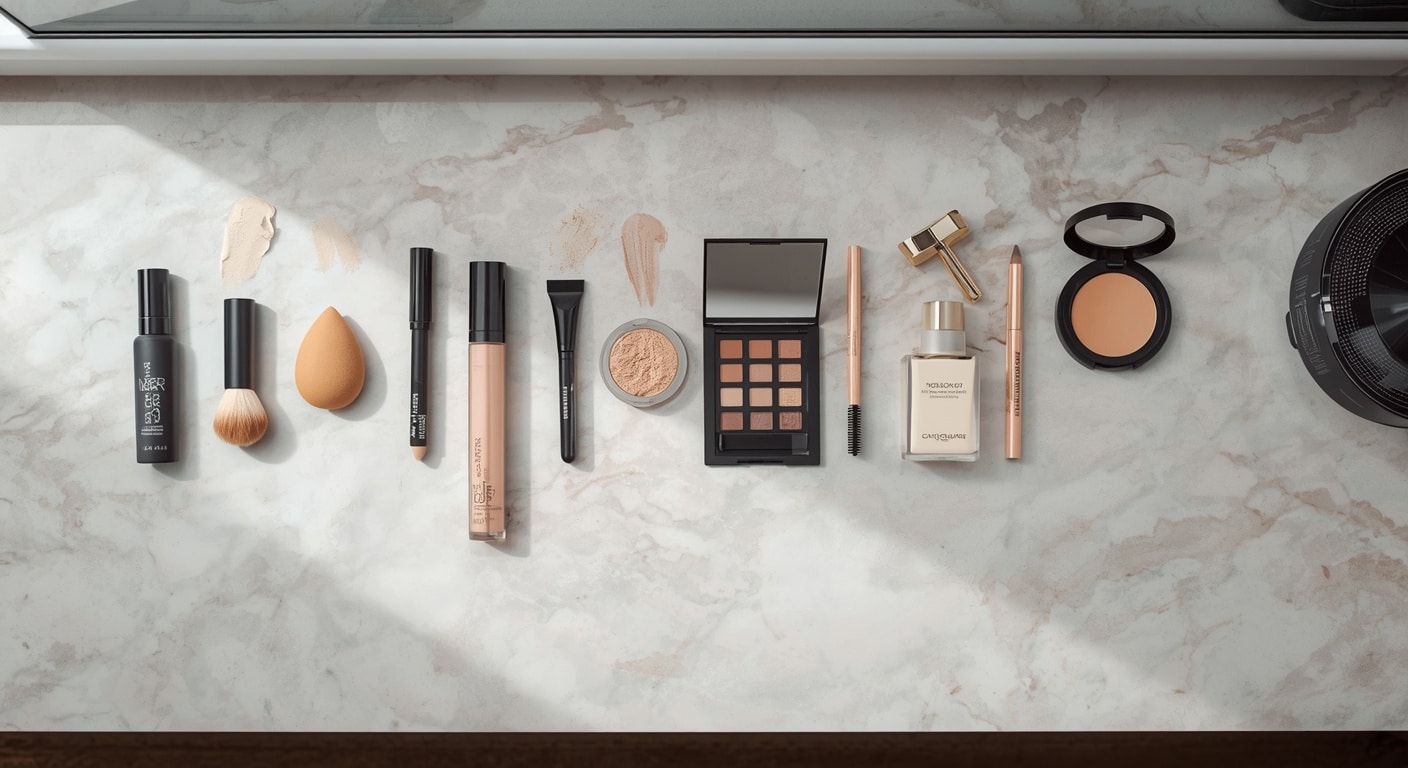
If you are confused about makeup order step by step, the easiest way to think about it is this: prep skin first, apply your base, add eye and face colour, then finish with lips and setting products. That sequence gives cream products a smoother surface, helps powders blend better, and makes it easier to see how much makeup you actually need.
A beginner-friendly makeup routine does not have to include every product either. Some steps are optional, and the exact order can shift slightly depending on whether you use cream or powder formulas, how much coverage you want, and how well your makeup needs to hold up through a hot, humid day. If you want a broader overview beyond order alone, see our beginner makeup guide.
Makeup Order Step by Step: The Simple Answer
A simple makeup order step by step is: skincare and sunscreen, primer, foundation, concealer, powder if needed, brows, eye makeup, bronzer or contour, blush, highlighter, lips, then setting spray. This order helps base makeup sit more evenly, reduces patchiness, and makes it easier to balance the final look.
- Skincare and sunscreen
- Primer (optional)
- Foundation, skin tint, BB cream or cushion base
- Concealer
- Setting powder (if needed)
- Brows
- Eyeshadow, eyeliner and mascara
- Bronzer or contour
- Blush
- Highlighter (optional)
- Lip liner and lip colour
- Setting spray (optional)
You do not need every step for every look. A very simple everyday routine might stop at skin tint, concealer, brows, mascara, blush and lip balm or lipstick. A fuller look may include most of the list.
Start With Skin Prep
Cleanser, moisturiser and sunscreen
Makeup usually sits better on skin that is clean, comfortably hydrated and protected with sunscreen if you are wearing it during the day. For most people, skin prep means using your usual moisturiser and letting it settle before makeup. In daytime, sunscreen should go on after moisturiser and before makeup.
If your skin feels greasy from too many prep layers, makeup can slide around. If your skin is too dry, foundation may cling to uneven areas. The goal is not to use the most products. It is to create a balanced base.
Why skin prep affects how makeup sits
Foundation and concealer usually look better when they are applied over skin that is neither overly dry nor overly slick. Good prep can help makeup spread more evenly, reduce obvious dry patches and stop you from compensating with extra product later.
This matters even more in Malaysia’s humid weather. Heavy creams under makeup may feel uncomfortable for some people, especially if they are already prone to sweat or excess shine. In that case, lighter layers can be easier to wear.
When to wait before applying makeup
If your skincare feels wet or slippery, give it a little time before moving on. You do not need a long wait, but allowing moisturiser and sunscreen to settle can help prevent pilling and patchiness.
Step 1: Apply Primer if You Use One
What primer does
Primer is optional, but it can be useful if you want a smoother surface, a more blurred look, or a bit more grip between skincare and makeup. Some primers are more hydrating, while others are designed to help with shine or texture.
When you can skip primer
You can skip primer if your moisturiser and base products already sit well on your skin. Many beginners do not need an extra layer every day. If your makeup looks fine without it, there is no rule saying primer must be part of your routine.
Choosing a primer based on skin type and finish
If your skin tends to feel dry, you may prefer something that feels more moisturising. If you get shiny quickly, especially around the T-zone, a mattifying or smoothing primer may suit you better. The main thing is not to pile on too much. A thin layer is usually enough.
Step 2: Apply Foundation or Skin Tint
Why base usually comes before the rest of the face
Foundation, skin tint, BB cream and similar base products generally go on before most other makeup because they create an even canvas. Once your base is in place, it is easier to see where you still need extra coverage and where you do not.
For beginners, this is one of the simplest ways to avoid over-applying concealer or piling too many products onto the skin.
How much product to use
Start with less than you think you need. A light layer is often enough to even out the complexion, and you can add more only where necessary. This tends to look fresher and more comfortable, especially in humid weather where thick layers may break apart faster.
When skin tint, BB cream or cushion makeup changes the routine
The order stays mostly the same if you use a lighter base like a skin tint or BB cream. The only real difference is that you may need less concealer and less powder afterwards. Cushion bases also fit into the same place in the routine: after skin prep and primer, before concealer and face colour.
Step 3: Use Concealer Where You Need It
Under-eyes, redness and blemishes
Concealer is usually applied after foundation so you can target only the areas that still need extra coverage, such as under-eyes, around the nose, redness or individual blemishes. This keeps the overall finish lighter and helps makeup look less heavy.
Why concealer often works better after foundation
If you apply concealer first, some of it may get blended away when you add foundation over the top. Applying foundation first lets you assess what still shows through. For many beginners, this makes the routine simpler and more efficient.
When to use colour corrector
Colour corrector is not a standard step for everyone. If you use one, it generally goes before concealer and only on the areas that need correction. It is best used lightly, because too much product underneath can make the final base harder to blend.
Step 4: Set With Powder if Needed
Where to powder
Powder usually comes after foundation and concealer, especially on areas that crease, get shiny or need a bit more staying power. Common areas include the under-eyes, sides of the nose, forehead and chin. You do not have to powder the whole face if only certain areas need it.
When to skip powder
If your skin is dry, your base is already self-setting, or you prefer a fresher finish, you may not need much powder at all. Some people use only a small amount under the eyes or around the nose.
Helpful for humid weather and oily areas
In hot and humid conditions, strategic powder can help reduce excess shine and keep makeup from moving around too quickly. The key word is strategic. Too much powder can make the skin look heavy or dry, even when the weather is humid.
Step 5: Do Brows and Eye Makeup
Brows first or eyes first
Brows and eye makeup can switch places depending on your preference. Many people like doing brows first because it frames the face and gives structure to the rest of the look. Others prefer finishing eyeshadow before brows. Either approach is fine for simple makeup.
Eyeshadow, eyeliner and mascara order
A common order is eyeshadow first, then eyeliner, then mascara. Eyeshadow creates the base shape and colour, eyeliner adds definition, and mascara is usually the final eye step because it can get in the way if applied too early.
When to do eye makeup before foundation instead
If you are doing a heavier eye look, glitter, or shadow with a lot of fallout, it can be easier to do eye makeup before foundation. That way, you can clean up under the eyes without disturbing your base. For quick everyday makeup, doing your base first is often the more straightforward option.
Step 6: Apply Bronzer, Contour, Blush and Highlighter
Suggested order for face colour products
Once your base and eyes are done, face colour usually comes next. A simple order is bronzer or contour first, then blush, then highlighter. Bronzer or contour adds shape or warmth, blush adds fresh colour, and highlighter is the finishing touch if you want extra glow.
Cream products versus powder products
This is one of the most important beginner rules: cream products usually go before powder products. If you apply cream blush or cream bronzer on top of a fully powdered face, it may catch or go patchy. If you want to use cream cheek products, apply them before setting powder, or powder lightly only where needed first.
If all your face colour products are powders, they usually layer best after the base has been lightly set where necessary.
How to avoid patchiness
Use light layers and build gradually. Pressing or tapping products onto the skin can be gentler than dragging them across the face, especially over foundation. Patchiness often happens when there is too much product, too much moisture underneath, or when cream and powder formulas are layered in an awkward order.
Step 7: Finish With Lips and Setting Spray
Lip liner, lipstick or gloss order
Lip products usually come near the end so you can judge what lip colour suits the rest of the face. If you use lip liner, apply it before lipstick or gloss. Some people fill in the whole lip with liner first for more structure, while others use it only around the edges.
When setting spray goes on
Setting spray is typically the final step. It can help take away a powdery look and bring the layers together. If you use one, apply it after the rest of your makeup is done.
How to keep the final look balanced
Before you finish, step back and check the whole face. If the eyes are soft, you may want slightly more blush or a stronger lip. If the lips are bold, you may prefer lighter cheeks. Makeup order is partly about sequence, but it is also about seeing the overall result clearly enough to adjust it.
Common Makeup Order Mistakes Beginners Make
Applying too many layers too quickly
One of the easiest ways to make makeup look heavy is to stack full layers of primer, foundation, concealer, powder and cheek products without pausing to see what the skin actually needs. Applying thin layers makes it easier to blend and correct as you go.
Mixing cream and powder in the wrong order
Putting cream blush or contour over a heavily powdered base is a common cause of patchiness. As a general rule, creams first, powders after. If you remember only one sequencing tip, make it that one.
Using too much powder in humid weather
It can be tempting to use a lot of powder to fight shine, but too much may leave makeup looking flat or obvious. In humid weather, lighter layers plus targeted powder and a finishing spray often feel more comfortable than covering the whole face in powder.
How to Adjust the Order for Different Makeup Styles
Natural everyday makeup
For a simple everyday look, the order can be very streamlined:
- Skincare and sunscreen
- Skin tint or light foundation
- Concealer where needed
- Light powder on oily areas if needed
- Brows
- Mascara
- Blush
- Lip product
This works well if you want your makeup to feel lighter and quicker.
Full-glam makeup
A fuller routine often includes more structure and more deliberate layering. You might use primer, fuller-coverage foundation, concealer, powder, defined brows, full eye makeup, bronzer or contour, blush, highlighter, lip liner and lipstick, then setting spray. Some people also prefer to do dramatic eye makeup before foundation to make cleanup easier.
Long-wear makeup for hot and humid days
For longer wear in hot, humid conditions, keep the order similar but focus on lighter, controlled layers:
- Lightweight moisturiser and sunscreen
- Primer if needed, especially on oily areas
- Thin layer of base makeup
- Concealer only where needed
- Strategic powder
- Brows and eye makeup
- Light layers of cheek products
- Lips
- Setting spray
The aim is not to apply more product. It is to avoid unnecessary buildup so makeup has less chance of separating through the day.
Frequently Asked Questions
Do you apply concealer before or after foundation?
Most beginners will find it easier to apply concealer after foundation. That way, you can see which areas still need extra coverage and usually end up using less product. Some techniques do place concealer first, but foundation-then-concealer is the simpler starting point.
Should you do eye makeup before foundation?
Both methods can work. If you are doing a simple everyday look, eye makeup after foundation is usually straightforward. If you are using heavy eyeshadow, glitter or anything with fallout, doing eyes first can make cleanup easier.
Do you need primer before makeup?
No. Primer is optional. It may help with smoothness, shine control or wear, but plenty of people skip it and still get good results. If your skincare and base products already sit well, you may not need it.
What makeup order works best for oily skin in humid weather?
A practical order is lightweight skincare, sunscreen, primer if needed, a thin layer of foundation or skin tint, concealer where needed, powder on oily areas, then the rest of your makeup, finished with setting spray. Keeping layers light is usually more helpful than applying a lot of product all at once.
Do cream products go before or after powder?
Cream products usually go before powder. Applying cream blush, bronzer or contour over a heavily powdered face can lead to patchiness. Once your cream products are blended, you can set with powder where needed or use powder versions on top carefully.
Final Takeaway: The Best Makeup Order for Most Beginners
If you want one reliable beginner makeup routine order, use this: skin prep, primer if needed, base, concealer, powder if needed, brows, eyes, cheek products, lips, then setting spray. It is flexible enough for everyday makeup, but structured enough to stop the routine feeling confusing.
Once you are comfortable with the basics, you can adjust the order to suit your products, finish and climate. The best makeup order is the one that helps your products blend well, feel comfortable, and look balanced by the time you are done.