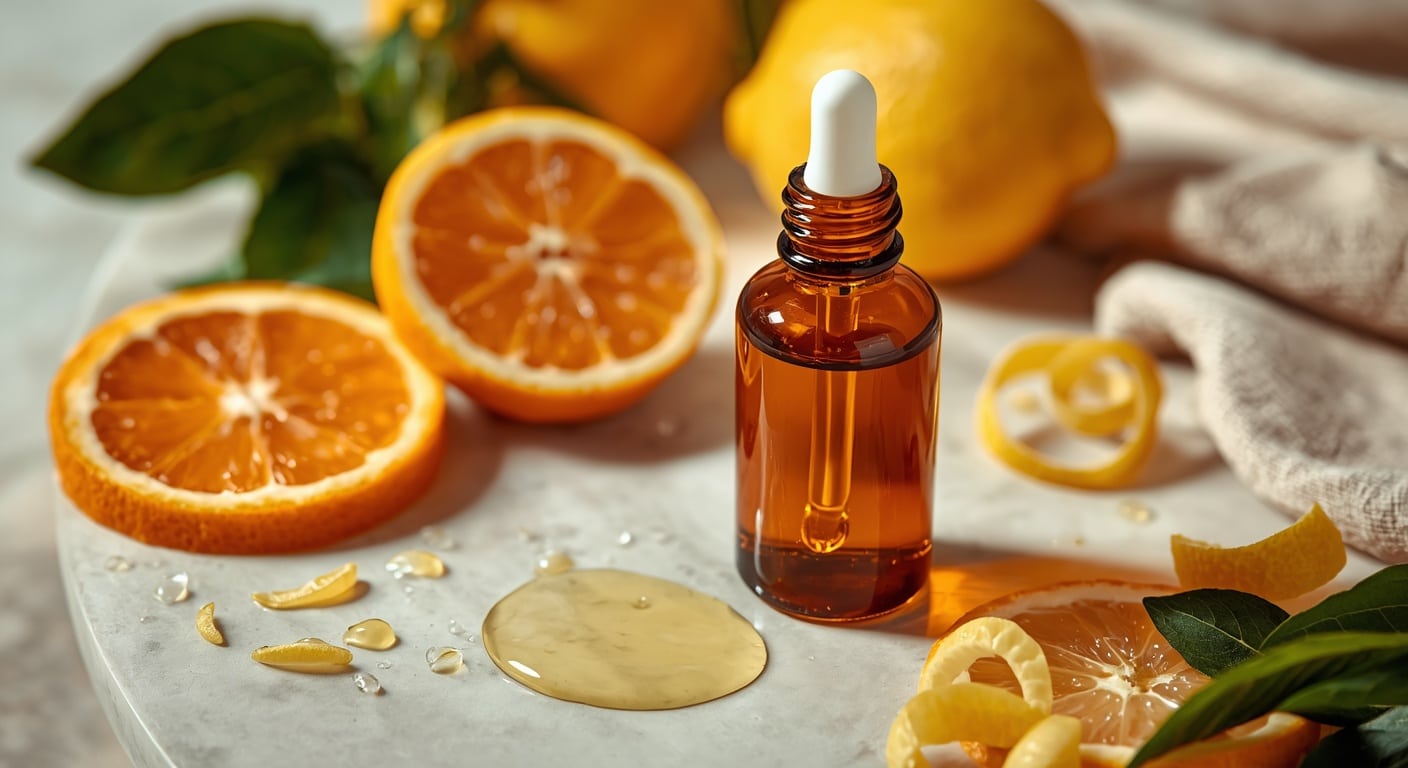
Vitamin C serum is commonly used to brighten dull-looking skin, support a more even-looking tone and add antioxidant protection to a skincare routine. If you are looking into vitamin c serum benefits, the main thing to know is that results usually depend on the type of vitamin C used, how well your skin tolerates it, and whether you use and store it properly.
For many people, it fits best as one step within a simple routine rather than as a standalone fix. If you are refining your overall routine, our skincare guide for Malaysians gives broader context on where serums, moisturiser and sunscreen fit together.
Vitamin C serum is a skincare product mainly used for antioxidant support, brightening and helping skin look more even over time. Different forms of vitamin C vary in strength, stability and texture, so the best choice depends on your skin type, your routine and how carefully the formula is stored.
What is vitamin C serum and what does it do?
Vitamin C serum is a lightweight skincare product formulated with a form of vitamin C, often alongside ingredients that help with hydration, texture or stability. It is usually applied after cleansing and before moisturiser.
In skincare, vitamin C is mainly valued for its antioxidant role. Antioxidants help defend the skin against free radicals, which are unstable molecules generated by daily environmental stressors such as sun exposure and pollution. In Malaysia, year-round UV exposure and heat can make antioxidant skincare especially relevant for people who spend time outdoors or move frequently between sun and air-conditioned spaces.
Vitamin C is also commonly used for brightening. That does not mean instant whitening or overnight fading of marks. It generally means helping dull-looking skin appear fresher and supporting a more even-looking tone with regular use.
Vitamin C serum benefits: what can you realistically expect?
The most talked-about vitamin c serum benefits are usually linked to brightness, uneven tone and antioxidant support. A good formula may help, but it is still normal for progress to be gradual.
Main vitamin C serum benefits
- May help brighten dull-looking skin
- Can support a more even-looking skin tone over time
- Is commonly used to improve the appearance of post-acne marks
- Provides antioxidant support against daily environmental stressors
- May help skin look firmer as part of collagen-related skincare goals
- Often works well in daytime routines when paired with sunscreen
Helps brighten dull-looking skin
One of the main reasons people try vitamin C serum is to make skin look less tired or flat. If your complexion looks a bit lacklustre, especially after sun exposure, stress or dehydration, vitamin C may help bring back a fresher appearance over time.
May improve the appearance of uneven tone and post-acne marks
Vitamin C is often used in routines focused on old blemish marks, general unevenness and patches of dullness. This is why people often look for vitamin C serum for hyperpigmentation or post-acne marks. It may help improve the look of these concerns gradually, but it is not an instant fix and may not replace professional advice for persistent or more complex pigmentation concerns.
Supports antioxidant protection
Vitamin C does not replace sunscreen, but it is often used alongside SPF because of its antioxidant function. In practical terms, that means it can support your daytime routine when your skin is exposed to sunlight, pollution and other daily stressors.
Can support firmer-looking skin
Vitamin C is also associated with collagen-related skincare goals. In cosmetic terms, people may use it because they want skin to look smoother or firmer over time. That does not mean every serum will visibly change skin texture in the same way, and it should not be framed as a guaranteed anti-ageing treatment.
Why results vary
Two vitamin C serums can perform very differently. The form of vitamin C, the overall formula, packaging, your skin type and your consistency all affect the user experience. Some people notice brighter-looking skin fairly quickly, while others need more time or may prefer a gentler derivative.
Common types of vitamin C used in serums
Not all vitamin C serums are the same. Knowing the main types of vitamin C in skincare can make product labels much easier to understand.
L-ascorbic acid
L-ascorbic acid is the pure form of vitamin C and is often considered the most direct option. It is popular because it is well known and widely used in brightening and antioxidant-focused formulas. The trade-off is that it can be less stable and may feel stronger on the skin, especially for beginners or people with sensitive skin.
Vitamin C derivatives
Derivatives are modified forms of vitamin C that are often designed to be gentler or more stable. Common examples include sodium ascorbyl phosphate, magnesium ascorbyl phosphate, ascorbyl glucoside and tetrahexyldecyl ascorbate.
These forms are not all identical. Some may feel lighter, more moisturising or less reactive depending on the formula. For someone who finds pure vitamin C too sharp or irritating, a derivative may be a more comfortable starting point.
Why texture, packaging and formula matter
Serum texture can influence whether you actually enjoy using a product. In hot, humid weather, many people prefer lighter textures that absorb easily and do not feel sticky under sunscreen. Packaging matters too. Vitamin C can degrade when exposed to air, heat and light, so opaque bottles, airless pumps and tightly sealed containers can be helpful.
How to choose a vitamin C serum for your skin type
The best vitamin C serum for you depends less on hype and more on how your skin behaves day to day.
For beginners or sensitive skin
Look for a gentler approach. That may mean a vitamin C derivative rather than a stronger pure form, and a formula that does not combine too many potentially irritating actives at once. A patch test is a sensible first step, especially if your skin reacts easily.
For oily or acne-prone skin
Many people with oily skin prefer lightweight, fast-absorbing serums that sit comfortably in humid weather. A less heavy texture may feel easier to wear in the morning under moisturiser and sunscreen. If you are also using exfoliating acids or acne-focused actives, it helps to introduce vitamin C carefully rather than changing everything at once.
For dry or dehydrated skin
Dry skin often does better with a formula that feels comfortable rather than overly sharp or stripping. A serum paired with a supportive moisturiser can help reduce the feeling of tightness that sometimes comes with active skincare.
For pigmentation-focused routines
If your main goal is to improve the appearance of uneven tone or post-acne marks, consistency matters more than chasing the strongest formula immediately. A product you can use regularly without irritation is often more practical than one that feels too aggressive.
What to look for on the bottle
Look beyond the front label. Packaging that limits air and light exposure is useful, and a product with clear usage and storage guidance is a good sign. If a serum is heavily fragranced and your skin is easily irritated, that may also affect your choice.
How to use vitamin C serum in your skincare routine
If you are wondering how to use vitamin C serum, the goal is simple: apply it in a way your skin can tolerate and be consistent enough to judge results fairly.
Routine order and frequency
- Cleanse your face with a suitable cleanser.
- Apply vitamin C serum to dry or slightly damp skin, depending on the product instructions.
- Follow with moisturiser to support comfort and hydration.
- Finish with sunscreen in the morning, especially if you are using vitamin C for brightening or uneven tone concerns.
Many people use vitamin C in the morning because antioxidant support is most relevant during daytime exposure. Others use it at night, or choose a routine where vitamin C sits in one part of the day and other strong actives are used separately. There is no single rule that suits everyone.
If you are new to active skincare, start slowly rather than applying it multiple times a day straight away. This gives you time to see how your skin responds.
How much should you use?
You usually do not need a large amount. A thin, even layer is generally enough. Using more does not automatically mean better results and may simply increase the chance of discomfort.
Why sunscreen matters
Vitamin C and sunscreen are often paired for a reason. If you are trying to improve the appearance of dullness or uneven tone, daily sun protection matters. Otherwise, ongoing UV exposure can work against the routine you are building.
What not to do when using vitamin C serum
Do not layer too many strong actives at once
Some routines combine vitamin C with ingredients such as niacinamide, exfoliating acids or retinol without any issue. But tolerance varies. If your routine already includes several active ingredients, add one new product at a time so you can judge how your skin responds.
Do not ignore signs of irritation
A mild brief tingle may happen for some people, especially with stronger formulas, but ongoing stinging, redness, peeling or barrier discomfort is a sign to pause and reassess. Irritation is not something you need to push through.
Do not store it carelessly
Leaving a vitamin C serum in direct sunlight, near heat or in a steamy bathroom may shorten its useful life. Stability matters with this ingredient.
Do not expect instant results
Vitamin C is usually a consistency ingredient. It is often used for long-term routine support, not dramatic overnight change.
How to store vitamin C serum so it stays effective longer
Why vitamin C can oxidise
Oxidation happens when the formula is exposed to air, light or heat and begins to degrade. This is one reason vitamin C serums vary so much in real-world performance. Even a well-formulated serum may not hold up as well if it is opened often and stored poorly.
Signs a serum may have degraded
Common warning signs include a noticeable darkening in colour, an unusual smell or a formula that no longer looks or feels as expected. Follow the brand’s own guidance where available, but if a serum has clearly changed significantly, it may no longer be at its best.
Best storage practices in Malaysia’s warm climate
Keep the bottle tightly closed and store it somewhere cool, dry and out of direct light. In Malaysia’s warm weather, avoid leaving it near windows, in the car or in places that trap heat. You do not need to invent elaborate storage habits, but basic care can make a real difference with a vitamin C product.
Possible side effects and when to be cautious
Vitamin C serums are not automatically harsh, but they are not universally suitable in every form either.
Mild tingling versus irritation
Some people notice a slight tingle, especially when using L-ascorbic acid. That is not the same as persistent irritation. If your skin becomes red, sore, flaky or unusually reactive, the formula may be too strong for your skin or your routine may be too crowded.
Who may need a slower introduction
People with sensitive skin, a compromised skin barrier or a routine already packed with strong actives may need to introduce vitamin C gradually. Starting with a gentler derivative can be more manageable than jumping straight into the strongest option.
When to seek advice
If you develop significant irritation, swelling, a suspected allergic reaction or ongoing discomfort, stop using the product and speak to a pharmacist, dermatologist or another appropriately qualified healthcare professional. If pigmentation, acne marks or redness are persistent and difficult to manage, professional assessment may also help you choose a more suitable plan.
Is vitamin C serum worth adding to your routine?
For many people, yes. It can be a useful step if your goals include brighter-looking skin, antioxidant support or a more even-looking tone. It may be especially relevant if your skin sees regular sun exposure and you want a daytime serum that works well alongside SPF.
That said, not every routine needs it straight away. If your skin is easily irritated or your routine is already complicated, a simpler approach may be better first. Cleanser, moisturiser and sunscreen still form the foundation, and vitamin C works best when added with a clear purpose rather than impulse.
The balanced takeaway is this: vitamin C serum can be worthwhile, but only if the formula suits your skin and you can use it consistently without irritation.
Frequently Asked Questions
Can I use vitamin C serum every day?
Many people can use vitamin C serum daily, but that depends on the formula and their skin tolerance. If you are new to it or have sensitive skin, start more slowly and increase only if your skin stays comfortable.
Should I use vitamin C serum in the morning or at night?
Morning use is common because vitamin C is often used for antioxidant support during the day. Some people also use it at night, depending on the rest of their routine and how well their skin tolerates it.
Can vitamin C serum help with acne marks or pigmentation?
It may help improve the appearance of post-acne marks and uneven tone over time. It is not an instant fix, and persistent or more complex pigmentation concerns may need professional assessment.
Can I use vitamin C serum with niacinamide or retinol?
Many routines include these ingredients together, but tolerance varies. It is usually sensible to introduce one active at a time and avoid overly aggressive layering if your skin becomes irritated.
How do I know if my vitamin C serum has gone bad?
Darkening colour, an unusual smell or a noticeable change in the formula can be signs of oxidation. Product-specific guidance still matters, so check the packaging if that information is provided.