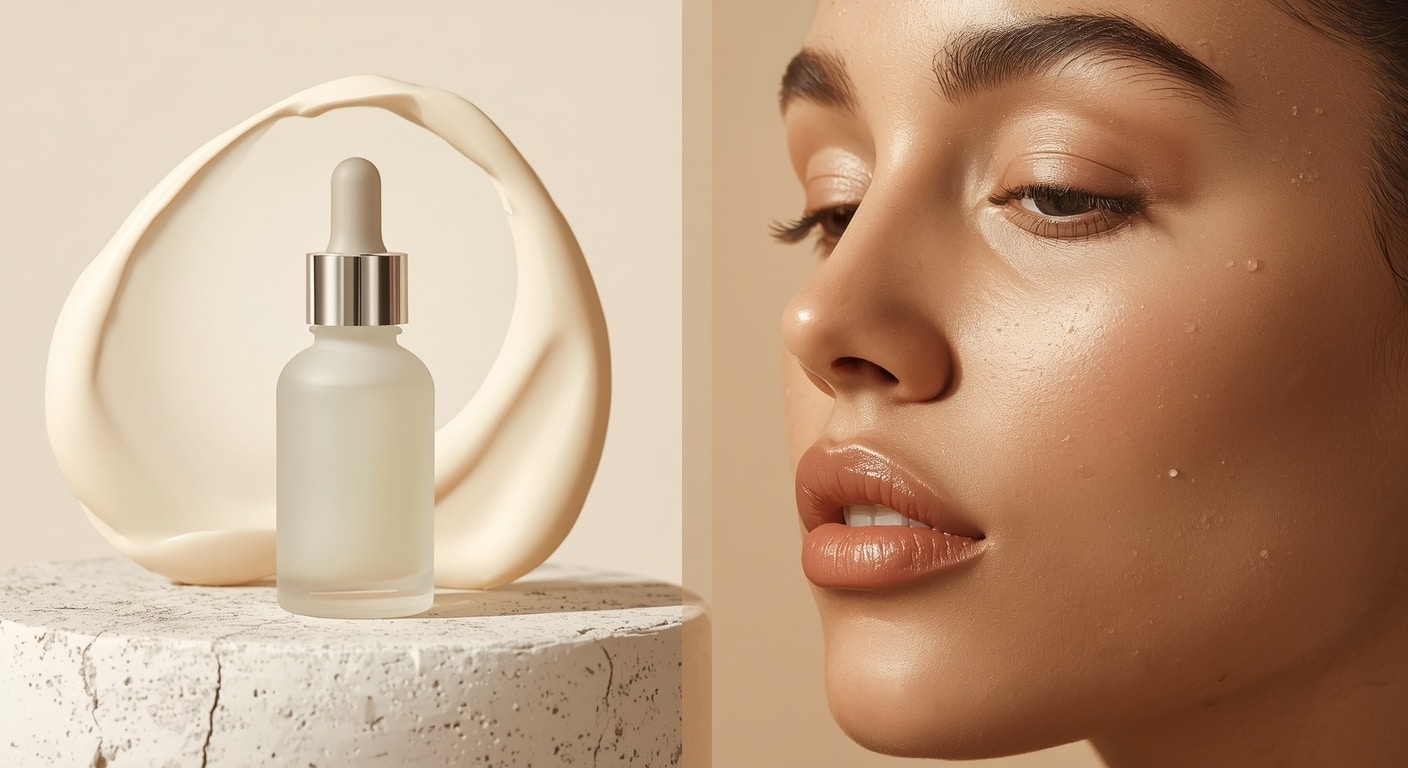
Niacinamide is a form of vitamin B3 used in skincare to help support the skin barrier, improve the look of uneven tone, manage excess oil and reduce the appearance of visible pores over time. It is commonly found in serums and moisturisers, and many people can use it morning or night depending on the formula and how their skin responds.
If you are looking into niacinamide benefits for skin, the main appeal is that it tends to fit easily into a routine without feeling overly complicated. For a broader look at where ingredients and routine steps fit together, see our skincare guide for Malaysians.
What Is Niacinamide and What Does It Do for Skin?
Niacinamide is a skincare form of vitamin B3. It appears in a wide range of products, including serums, moisturisers, toners and some cleansers, because it is commonly used to support overall skin function rather than just one concern.
In simple terms, niacinamide is often chosen because it can help the skin hold onto moisture better, feel less stressed, and look more balanced. That makes it relevant for people dealing with oiliness, dehydration, uneven-looking tone or a routine that already includes stronger active ingredients.
It is also one of those ingredients that can suit many different routines. That does not mean every formula will work for everyone, but compared with stronger acids or retinoids, niacinamide is often seen as a more approachable option.
Niacinamide Benefits for Skin
- Supports the skin barrier and may help reduce moisture loss.
- May help manage excess oil, which can be useful in hot and humid conditions.
- Can improve the appearance of visible pores, especially when skin looks oily or congested.
- May help brighten uneven-looking skin tone and the appearance of post-acne marks over time.
- Can help skin feel calmer and look less visibly irritated, depending on the formula.
- Works well in many routines because it can often be paired with other common skincare ingredients.
Supports the skin barrier and helps reduce moisture loss
One of the main benefits of niacinamide for skin is barrier support. The skin barrier helps keep moisture in and external irritants out. When that barrier feels compromised, skin may feel dry, tight, reactive or generally less comfortable.
Niacinamide is commonly used in products meant to support skin resilience. This can be especially useful if you spend a lot of time in air-conditioning, use exfoliating products, or notice that your skin feels dehydrated even when it also looks oily.
May help balance excess oil
Niacinamide is often used in routines for oily and combination skin because it may help improve the look of excess sebum over time. In Malaysia’s humid weather, lightweight niacinamide formulas can appeal to people who want hydration and barrier support without a heavier feel.
It is not an instant oil-control switch, and results vary by skin type and the rest of your routine. Still, for some people, it can make skin feel more balanced and less greasy through the day.
Can improve the appearance of enlarged pores
Niacinamide does not permanently shrink pores, but it may help reduce how noticeable they look. Pores can appear more obvious when skin is oily, dehydrated or congested, so an ingredient that helps skin feel more balanced can indirectly improve their appearance.
This is why niacinamide serum benefits are often discussed alongside oil control and skin texture rather than dramatic structural change.
May help brighten uneven-looking skin tone and post-acne marks
If you are wondering what does niacinamide do for skin beyond barrier support, it is also often used for uneven-looking tone. Some people include it in a routine to help with the appearance of dullness or post-blemish marks.
That said, niacinamide for acne marks is best understood as supportive rather than curative. It may help improve the appearance of post-acne marks over time, but persistent pigmentation concerns can have different causes and may need more tailored advice.
Can help skin feel calmer and look less visibly irritated
Some niacinamide formulas are marketed toward sensitive or stressed skin because the ingredient is commonly associated with a more balanced, supported barrier. When skin is less irritated overall, it may also look less visibly red.
This does not mean niacinamide treats a medical skin condition. It simply means that, in the right formula, it may be a useful part of a gentle skincare routine.
Who Might Benefit Most from Niacinamide?
Oily and combination skin
Niacinamide for oily skin is one of the most common reasons people start using it. If your skin looks shiny quickly, feels heavy in humid weather or has more visible pores around the T-zone, niacinamide may be worth considering.
Dehydrated or barrier-compromised skin
Skin can be oily and still dehydrated. If your face feels tight after cleansing, reacts easily, or seems uncomfortable after using too many active products, niacinamide may help support a simpler routine focused on barrier care.
Skin with uneven tone or post-blemish marks
If you are left with lingering marks after breakouts or your complexion looks uneven, niacinamide may be a helpful supporting ingredient. It is usually not the only factor that matters, but it can fit well into a routine built around consistency and sun protection.
Sensitive skin that struggles with stronger actives
Some people want an active ingredient in their routine but find stronger exfoliants or retinoids hard to tolerate. Niacinamide may be a gentler place to start, although the full formula still matters. Fragrance, alcohol content, texture and the presence of other actives can all affect comfort.
How to Use Niacinamide in a Skincare Routine
If you are learning how to use niacinamide, keep it simple at first. It usually goes on after cleansing and before a moisturiser, unless the product instructions suggest otherwise.
- Cleanse your skin with a suitable cleanser.
- Apply niacinamide if you are using a serum or lightweight treatment step.
- Follow with moisturiser to help seal in hydration.
- Use sunscreen in the morning as the final step.
How often to use it when starting out
Many people can use niacinamide daily, but starting slowly is still sensible if your skin is reactive or your routine already includes other actives. Begin with once a day or a few times a week, then adjust based on how your skin feels.
If you notice stinging, flushing or ongoing discomfort, do not assume niacinamide itself is always the only cause. The overall formula, layering too many actives, or a compromised barrier may be contributing factors.
Morning vs night use
Niacinamide can often be used in the morning, at night or both, depending on the product and your tolerance. Morning use may suit people who want a lightweight serum under moisturiser and sunscreen. Night use may suit those who prefer fewer daytime layers or who are combining it with a more reparative evening routine.
Why sunscreen still matters
Even if niacinamide helps improve the appearance of uneven tone, sunscreen is still essential. In Malaysia, year-round UV exposure can make marks and dullness harder to manage. Daily sunscreen helps protect the progress your routine is trying to support.
What Can Niacinamide Be Paired With?
Niacinamide with hyaluronic acid and moisturisers
This is one of the easiest pairings. Hyaluronic acid focuses on hydration, while niacinamide is often used to support barrier function and overall balance. A moisturiser can then help reduce moisture loss.
For many people, this combination works well as a straightforward routine that does not feel too heavy.
Niacinamide with vitamin C
Can niacinamide be used with vitamin C? In many modern skincare products and routines, yes. They are generally considered compatible. Some people even like this pairing in a morning routine aimed at brightness and antioxidant support.
If your skin is sensitive, it may still be better to introduce one product at a time rather than starting both together. That makes it easier to work out what your skin actually tolerates.
Niacinamide with retinoids
Can niacinamide be used with retinol or other retinoids? Often, yes. Niacinamide may be a useful companion ingredient in routines that include retinoids because it can support the skin barrier and help offset dryness or discomfort from stronger actives.
If you are new to retinoids, it can still be wise to keep the rest of your routine calm and uncomplicated.
Niacinamide with exfoliating acids
Niacinamide can appear in the same overall routine as AHAs or BHAs, but this is where a bit more care is helpful. The issue is not simply whether these ingredients can exist together. It is whether your skin can tolerate the total routine.
If you are already using exfoliating acids, adding niacinamide may be fine, but avoid introducing multiple new actives at once. Watch for irritation, dryness or a tight, overprocessed feeling.
How to Choose a Niacinamide Product
Serum vs moisturiser
A niacinamide serum usually gives you a more direct treatment step and may suit people who want to build a targeted routine. A niacinamide moisturiser may suit those who prefer fewer layers or want barrier support in a simpler format.
Neither is automatically better. The best option depends on how much your skin tolerates, how many steps you are comfortable using and whether you prefer a minimal routine.
Why texture matters
In humid weather, lighter formulations may feel more comfortable on oily or combination skin. Drier skin may prefer a creamier product, especially at night or in heavily air-conditioned environments.
Texture also affects consistency. A product that feels pleasant and easy to layer is often more realistic to keep using.
Concentration considerations
It is tempting to assume a higher percentage is always more effective, but that is not necessarily true. Beginners often do well with lower to moderate strengths, and tolerance depends on the full formula, not just one number on the packaging.
If your skin is sensitive, choosing a balanced formula may matter more than chasing the highest concentration available.
Look at the full formula
Niacinamide side effects or irritation can sometimes be linked to other parts of a product, such as fragrance, harsh solvents or a combination of too many active ingredients. That is why reading the whole ingredient list and considering the product type can be more useful than focusing on niacinamide alone.
Common Mistakes and Usage Considerations
- Starting niacinamide at the same time as several other new actives
- Assuming a higher percentage will always give better results
- Using it inconsistently and expecting quick changes
- Ignoring signs that the overall routine is too irritating
- Expecting it to replace sunscreen or professional treatment where needed
Patch testing can be helpful, especially if your skin is reactive. Consistency matters more than aggressively layering products, and a simpler routine is often easier to assess and maintain.
When to See a Dermatologist or Qualified Professional
Niacinamide is a cosmetic skincare ingredient, not a diagnosis or treatment plan. If you have persistent acne, significant redness, ongoing irritation, unexplained pigmentation or skin changes that are not improving, professional assessment may be appropriate.
A dermatologist or other appropriately qualified healthcare professional can help work out whether a concern is mainly cosmetic, whether something else is going on, and whether over-the-counter skincare is enough.
Frequently Asked Questions
Can niacinamide be used every day?
Many people can use niacinamide daily, but it depends on the formula, your skin sensitivity and what else is in your routine. If you are new to it, starting once a day or a few times a week can be a sensible approach.
Can niacinamide be used with vitamin C?
Yes, modern formulations are generally compatible. If your skin is sensitive, introduce products gradually rather than changing your whole routine at once.
Is niacinamide good for oily skin?
It may help improve the look of excess oil and visible pores, which is why it is popular in routines for oily or combination skin. Results vary, and the rest of your routine still matters.
Does niacinamide help with acne marks?
Niacinamide may help improve the appearance of post-acne marks and uneven-looking tone over time. It is not a guaranteed fix for every pigmentation concern, especially if marks are persistent or deeper in appearance.
What percentage of niacinamide should beginners use?
Many beginners do well with lower to moderate strengths, but there is no universal best percentage. The full formula, your skin sensitivity and how often you use it all matter.
Making Niacinamide Work in Real Life
For most people, niacinamide works best as part of a steady routine rather than a quick fix. If your goals are calmer-looking skin, a more supported barrier, less obvious oiliness or a more even-looking complexion, choose a formula you are likely to use consistently and pair it with daily sunscreen.
If your skin stays irritated or your main concern is not improving, it is worth stepping back and re-evaluating the whole routine rather than adding more products.