Beauty product expiry matters more than many people realise. In simple terms, you should throw away makeup or skincare when it is past the brand’s labelled expiry date or period after opening, or sooner if the smell, colour, texture or performance has clearly changed. That does not mean every product becomes unsafe overnight, but older products can become less reliable, less pleasant to use, or more easily contaminated.
It also helps to remember that unopened products, opened products and visibly deteriorated products are not the same thing. A sealed cleanser may still be fine within its stated shelf life, while an opened mascara used for months needs stricter caution. In Malaysia, heat and humidity can also make storage habits more important, especially if products sit in a warm bathroom or near sunlight. For broader product basics and care tips, see our complete beauty guide.
Beauty product expiry usually comes down to two labels: a printed expiry date and the PAO symbol, which means period after opening. If a product smells off, changes colour, separates unusually, dries out, clumps, or starts irritating your skin or eyes, it is a good sign to stop using it even if the label date has not passed.
What beauty product expiry really means
Expiry date vs period after opening (PAO)
Beauty product expiry is not always shown in one single way. Some products have a printed date, while others rely more on a PAO symbol. The PAO symbol looks like a small open jar with a number such as 6M, 12M or 24M. That number tells you how long the product is generally intended to be used after you first open it.
A printed expiry date is usually more straightforward. It tells you the product should ideally be used before a specific month or date, whether or not it has been opened. This can matter especially for products where formula stability is particularly important.
Why unopened and opened products have different shelf lives
Once a product is opened, it starts being exposed to air, light, fingers, brushes and the surrounding environment. That exposure can gradually affect preservatives, texture and formula stability. A sealed product in suitable storage conditions is usually more protected than one that is used every day and repeatedly opened.
This is why a moisturiser in a pump bottle may stay in better condition during use than a jar that is opened often and scooped with fingers. The timeline varies by formula and packaging, so the label should always come first.
How to tell if a beauty product has expired
You do not need to rely on the date alone. In many cases, the product itself gives useful warning signs.
- Smell changes: it smells sour, rancid, chemical-heavy or simply different from before.
- Colour changes: darkening, yellowing or unusual discolouration can suggest oxidation or deterioration.
- Texture changes: a cream becomes grainy, runny, unusually thick or difficult to spread.
- Separation: the formula splits into layers and does not return to normal after gentle shaking, if shaking is appropriate for that product.
- Clumping or drying out: common with mascaras, liquid liners and some cream products.
- Performance changes: sunscreen pills strangely, foundation applies unevenly, or skincare no longer behaves as expected.
- Irritation: stinging, redness or discomfort that was not there before can be a warning sign to stop using it.
The PAO symbol means period after opening. If a product shows 12M, it generally means it is intended to be used within 12 months after first opening, provided it has been stored reasonably well and has not shown earlier signs of deterioration.
Changes in smell, colour, or texture
One of the easiest ways to spot expired beauty products is through obvious sensory changes. A moisturiser that smells off, a serum that has turned much darker, or a lipstick that feels waxy and uneven may no longer be in good condition. These changes do not always mean a product is dangerous, but they do suggest it may no longer be stable or pleasant to use.
Separation, clumping, drying out, or oxidation
Liquid and cream formulas are more likely to show visible changes over time. Foundation may separate, concealer may become patchy, and mascara may dry out or turn clumpy. Some active skincare products, including vitamin C serums and retinoid formulas, may also become less stable when exposed to air, heat or light. If a product looks noticeably different from when you first opened it, that is a practical reason to stop using it.
When irritation or unusual performance is a warning sign
If a familiar product suddenly starts stinging, causing watery eyes or making your skin feel unusually irritated, it is worth treating that as a warning sign. Stop using it and monitor your skin. If irritation is persistent, severe or affects the eyes, it is sensible to seek advice from a pharmacist, doctor or another appropriately qualified healthcare professional.
How to read PAO symbols, expiry dates, and batch information
What the open-jar symbol means
The open-jar icon is the PAO symbol. A label such as 6M means six months after opening. A label such as 12M means twelve months after opening. It is a use-after-opening guide, not a manufacturing date.
Where expiry information is usually printed
Expiry details may appear on the outer box, the bottom of the bottle, the crimp of a tube, or the base of a compact. Sometimes the packaging shows only a batch code rather than an easy-to-read date. If the brand provides guidance on its packaging or official product information, that should take priority over generic internet lists.
Why packaging and manufacturer guidance matter
Different formulas age differently. A water-based liquid in a wide-mouth jar does not behave the same way as a powder in a compact or a serum in an opaque pump bottle. Packaging affects how much air, light and repeated contact the formula gets, so it plays a real role in product longevity.
When to throw away common makeup products
Mascara, liquid eyeliner, and other eye products
Eye products deserve the most cautious replacement habits. Mascara and liquid eyeliner are used close to the eyes, opened often and easily exposed to bacteria from the applicator. If mascara smells different, goes dry, becomes clumpy or is well past its PAO guidance, it is better to replace it. The same applies to liquid liners that have changed texture or do not apply cleanly.
If you have had an eye irritation or eye infection, it is sensible not to continue using the same eye product.
Foundation, concealer, cream blush, and liquid products
Liquid complexion products can last reasonably well when stored properly, but they should be discarded if they separate unusually, smell off, oxidise heavily in the container, or become patchy and difficult to blend. Pumps tend to reduce contamination compared with wide-open jars or products that require frequent direct contact.
Lipsticks, glosses, and lip liners
Lip products can also deteriorate over time. Watch for changes in smell, sweating, texture, or a waxy, uneven surface. Glosses that become stringy or separate are also worth replacing. If you have been ill or have visible lip irritation, using extra caution with older lip products makes sense.
Powders such as blush, bronzer, and eyeshadow
Powder products often stay usable longer than liquids because they contain less water, but they do not last forever. Hard pan, unusual smell, visible contamination, a change in performance or a damaged compact can all be reasons to discard them. Eyeshadows near the eye area still deserve careful hygiene, especially if very old or repeatedly shared.
When to replace common skincare products
Cleansers, moisturisers, and sunscreens
Cleansers and moisturisers should be replaced according to the label, PAO guidance and product condition. If they separate, smell wrong, or change texture significantly, it is time to stop using them.
Sunscreen needs particular attention. Check the labelled expiry carefully and do not rely only on how it looks. If the texture, smell or consistency has changed, or if it is expired, replacing it is the safer choice because product stability and performance matter here.
Serums with active ingredients such as vitamin C or retinoids
Some active formulas may become less stable over time, especially when repeatedly exposed to air, light or heat. Vitamin C serums may darken. Retinoid products may become less reliable if stored poorly or kept too long after opening. That does not mean every colour shift or older bottle is automatically harmful, but these are products where paying attention to packaging, storage and PAO guidance is especially useful.
Products in jars vs pumps or tubes
Jar packaging is not necessarily bad, but it usually involves more contact with fingers and air. Pumps and tubes can help reduce contamination and repeated exposure. If you use jar products, using clean hands or a clean spatula can help maintain product quality.
What makes products expire faster
Heat, humidity, sunlight, and bathroom storage
Storage conditions can affect how well beauty products hold up. Heat, direct sunlight and steamy bathrooms are not ideal for many formulas. In Malaysia’s hot and humid climate, it is especially useful to keep products in a cooler, dry area away from windows. That does not mean every product will expire dramatically faster, but poor storage can make deterioration more likely.
Dirty fingers, applicators, and repeated contamination
Every time fingers, brushes or wand applicators touch a product, there is a chance of introducing oils, dirt or microbes. This matters more for jar packaging, cream products and anything used around the eyes. Keeping tools clean and avoiding unnecessary contact can help.
Why product type and packaging affect stability
Water-based products, active serums and liquid eye products generally need more care than dry powders. Opaque, well-sealed packaging can help protect a formula from air and light, while loose lids and damaged containers can shorten how usable a product remains.
How to store beauty products more safely
Simple storage habits that help maintain product quality
- Keep lids tightly closed.
- Store products away from direct sunlight.
- Choose a cool, dry storage spot if possible.
- Wash hands before using jar products.
- Clean brushes and applicators regularly.
- Do not add water or mix in other products to revive drying formulas.
- Avoid keeping products in hot cars or near heat sources.
When refrigeration may or may not be appropriate
Some people like to refrigerate certain skincare products, but it is not automatically necessary. Unless the brand specifically recommends refrigeration, normal cool indoor storage is often enough. Very low temperatures or repeated temperature changes may not suit every formula, so it is best not to assume that colder is always better.
Practical tips for Malaysia’s hot and humid climate
If your bathroom gets very warm and steamy, consider storing everyday products in a bedroom drawer or cabinet instead. Air-conditioned rooms are often a better option than shelves near a shower or sunlit window. Small habits like this can make your routine products more stable over time.
Can you still use a product after its expiry or PAO?
Performance vs safety concerns
Sometimes a product looks fine shortly after its date or PAO window, but appearance alone is not a guarantee of quality. The risk is not always dramatic or immediate. In some cases, the main issue is reduced performance. In others, contamination or instability may be a bigger concern. That is why the safest approach is not to push old products too far, especially if they already show warning signs.
Higher-risk categories that should not be pushed too far
Be stricter with mascara, liquid eyeliner, products used around the eyes, sunscreen, and unstable or easily oxidised formulas. With these categories, it is better to replace them once they are expired, well past PAO, or clearly deteriorating rather than trying to use up every last bit.
A simple checklist for deciding whether to keep or toss a product
Questions to ask before using an older product
- Is it past the printed expiry date or PAO guidance?
- Has the smell changed?
- Has the colour become darker, duller or unusual?
- Has the texture separated, dried out, clumped or become grainy?
- Does it perform differently from before?
- Has it been stored in heat, humidity or direct sunlight?
- Is it an eye product or sunscreen, where caution matters more?
- Has it caused irritation or discomfort?
If you answer yes to several of these, replacing it is usually the better decision.
How to label opening dates to avoid guesswork
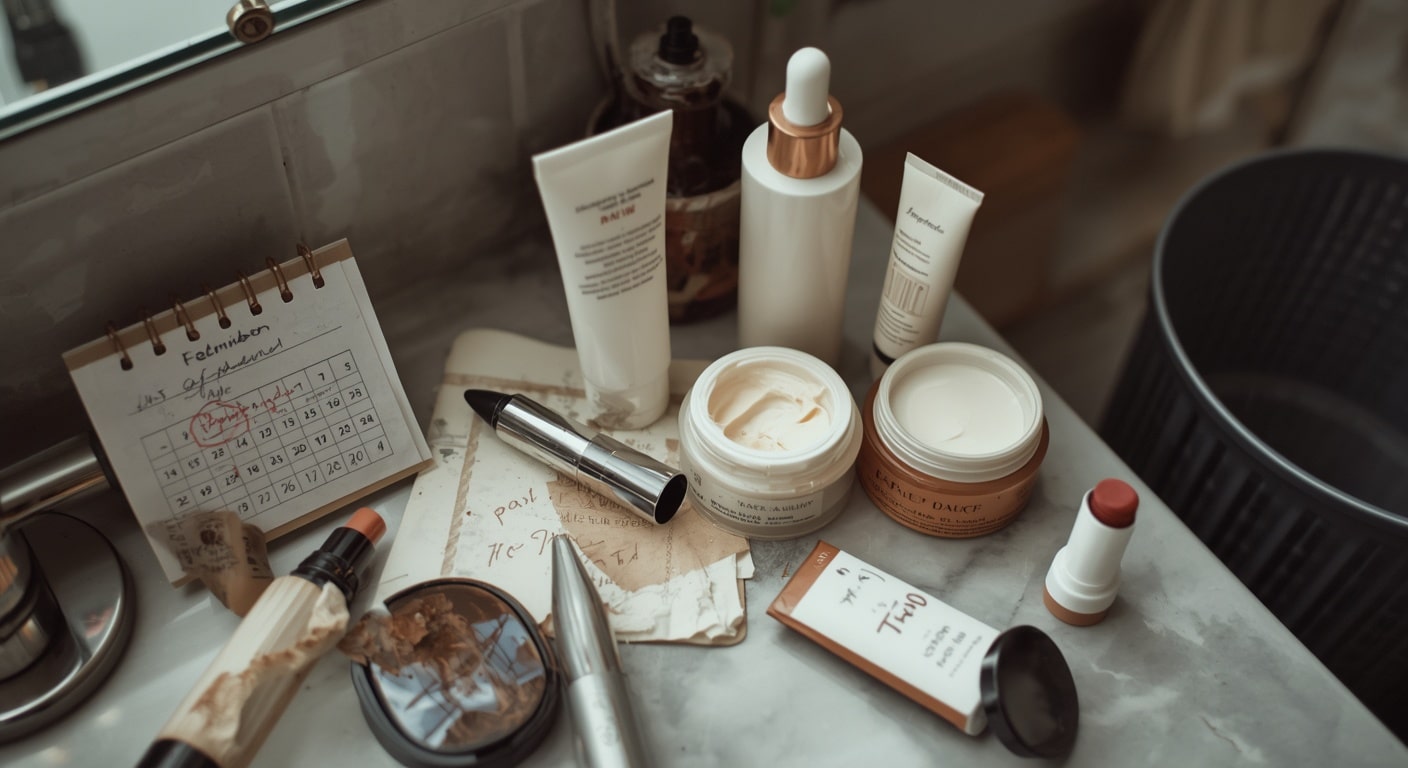
One of the easiest habits is to write the opening month on the packaging with a small marker or sticker. If you prefer, keep a quick note in your phone. This makes the PAO symbol far more useful because you are not trying to remember when you first started using the product.
Frequently Asked Questions
What does the PAO symbol mean on beauty products?
PAO stands for period after opening. It shows how long a product is generally intended to be used after you first open it, such as 6M, 12M or 24M.
Can I use makeup after the expiry date if it still looks fine?
It is better to be cautious. A product may look normal and still be past its best in terms of stability, hygiene or performance. This matters especially for eye products and liquids.
Which beauty products should be replaced most often?
Mascara, liquid eyeliner, some cream or liquid makeup products, and sunscreens usually need closer attention than dry powder products because they are more exposed to contamination or formula changes.
Do beauty products expire faster in Malaysia’s heat and humidity?
Storage conditions can affect product stability, so heat and humidity make cooler, drier storage more important. That does not mean every product follows the same timeline, which is why label guidance still matters.
How can I keep track of when I opened a skincare or makeup product?
Write the opening date on the packaging or keep a simple note in your phone. It is one of the easiest ways to use PAO guidance properly and avoid guessing.
Make replacement decisions before products become questionable
If a product is expired, well past its PAO, or clearly changing in smell, colour, texture or performance, there is usually little benefit in trying to stretch it further. Checking labels, storing products well and tracking opening dates can help you use makeup and skincare more confidently, with less waste and less guesswork.