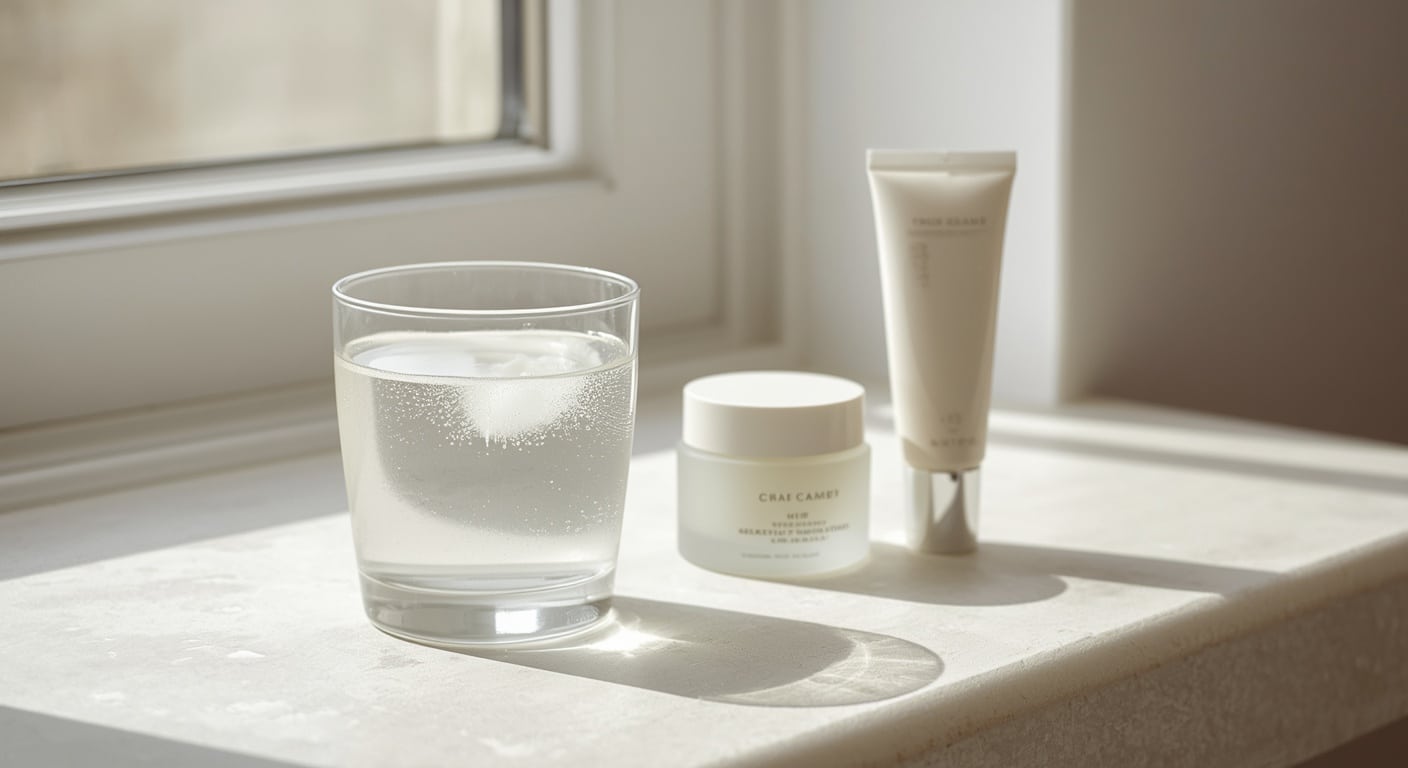
Drinking water for skin can help in one important sense: it supports normal body hydration, and that matters for how your skin functions. But drinking more water than your body needs is unlikely to dramatically change dryness, acne, pigmentation or wrinkles on its own. For most people, healthy-looking skin depends on both general hydration and topical care such as moisturiser and sunscreen.
That is why hydration should be seen as one part of a bigger picture, not a beauty shortcut. If you want a broader view of daily habits that support skin and wellbeing, see our beauty and wellness guide.
The short answer: can drinking water improve your skin?
Yes, but with limits. If you are not drinking enough and become mildly dehydrated, improving your fluid intake may help your skin look and feel better simply because your body is functioning more normally again. Skin may appear less tired or less tight once hydration improves.
What water cannot do on its own is fix every skin concern that gets blamed on “dehydration”. Drinking extra water is not a proven solution for acne, dark spots, fine lines, or chronic dryness caused by skin type or barrier issues.
- Water may help with: supporting normal skin function, reducing the effects of general dehydration, and helping skin feel more comfortable if you have been under-hydrated.
- Water will not reliably fix: acne, wrinkles, pigmentation, sun damage, or every case of dull or flaky skin.
- What still matters: moisturiser, sunscreen, gentle cleansing, sleep, and addressing the real cause of the skin concern.
How hydration affects the skin
Skin as part of overall body hydration
Your skin is an organ, so it is affected by your overall hydration status. When your body does not have enough fluid, different systems can feel the strain, and skin may be one of them. That does not mean a few extra glasses of water will automatically create a glow, but it does mean consistent under-hydration can show up in how skin feels and looks.
Hydration also interacts with the skin barrier, which helps keep moisture in and external irritants out. The skin naturally loses water through a process called transepidermal water loss. This is normal, but factors like harsh cleansing, hot weather, long sun exposure, air conditioning and a damaged barrier can make skin feel less comfortable.
Why dehydrated skin and dry skin are not the same
This distinction matters because it changes what will actually help.
Dehydrated skin means skin is lacking water. It can feel tight, look a bit dull, and sometimes seem more lined or less bouncy. Even oily skin can become dehydrated.
Dry skin is a skin type that lacks enough oil. It may feel rough, flaky or easily irritated, and it usually needs richer moisturising support.
Someone with oily skin can still have dehydrated skin, especially after over-cleansing or spending a lot of time in air-conditioned spaces. On the other hand, someone with naturally dry skin may drink adequate fluids and still need a moisturiser that helps reduce water loss.
When drinking more water may make a noticeable difference
If you are mildly dehydrated
If you have simply not been drinking enough, then improving hydration habits may make a noticeable difference. Skin may feel less tight, and you may feel better overall. The change is usually more about returning to normal rather than unlocking dramatically better skin.
This is why some people feel water “works” for their skin: they were not meeting their fluid needs to begin with. Once they do, their skin can seem more comfortable and less stressed.
Situations that increase fluid loss
Fluid needs can go up in everyday situations, especially in Malaysia’s climate. Hot and humid weather can increase sweating. Outdoor activity, exercise, commuting in the heat, fasting routines, stomach illness, fever, and long hours in the sun may all affect hydration status.
Air-conditioned environments can also be confusing. You may not feel sweaty indoors, but skin can still feel tight or dehydrated-looking while you are spending hours in cold, dry air. In that case, drinking enough water may help overall, but topical skincare is often just as important.
Caffeine does not automatically cancel out your hydration efforts, but if your day is mostly coffee, tea or sweet drinks and very little plain water or other fluids, it may be worth rebalancing your habits.
What drinking more water will not fix
Acne and breakouts
Does drinking water help skin break out less? Not in a direct, reliable way. Acne is influenced by factors such as oil production, clogged pores, hormones, inflammation and product use. Being dehydrated may leave skin looking less comfortable, but drinking extra water is unlikely to clear acne by itself.
If breakouts are persistent, painful or suddenly worsening, hydration is unlikely to be the main answer.
Wrinkles and ageing
Water is not a substitute for sun protection or skincare that supports the skin barrier. Fine lines can sometimes look more noticeable when skin is dehydrated, so improving fluid intake and using a suitable moisturiser may help the skin look less drawn. But drinking more water does not erase wrinkles or reverse sun damage.
Year-round UV exposure is a practical concern in Malaysia, which is one reason sunscreen remains essential. Water supports the body; it does not replace protection from the sun.
Pigmentation and dullness from multiple causes
Dull skin can be linked to dehydration, but it can also be related to lack of sleep, sun exposure, product irritation, buildup of dead skin, or just natural variation in how skin looks day to day. Pigmentation has its own causes and usually needs a more targeted approach than simply increasing water intake.
If you are dealing with stubborn dark marks or sudden uneven tone, it makes more sense to look at the likely cause rather than assuming you only need more water.
Internal hydration vs topical hydration: why skincare still matters
How moisturisers help reduce water loss
Internal hydration and topical hydration are not the same thing. Drinking water supports your body from within, but skincare works directly on the surface layers of the skin.
A moisturiser helps by reducing water loss and supporting the skin barrier. This can be especially useful if your skin feels tight after cleansing, after sun exposure, or after spending time in strong air conditioning. If skin loses water too easily, simply drinking more may not be enough to make it feel comfortable.
This is also why people sometimes report “dry skin” even when they drink plenty of water. The issue may be barrier support, cleanser choice, climate, or skin type rather than fluid intake alone.
Ingredients often used for dehydrated-looking skin
For skin that feels dehydrated, some commonly used ingredients include:
- Humectants such as glycerin and hyaluronic acid, which help attract water to the skin.
- Moisturisers that help seal in hydration and support the barrier.
- Gentle cleansers that do not leave skin feeling stripped.
The goal is not to chase the most complicated routine. Often, a gentle cleanser, a suitable moisturiser and daily sunscreen do more for dehydrated-looking skin than forcing more water intake when you are already adequately hydrated.
Signs you may need better hydration habits
Common general signs of inadequate hydration
Skin is only one piece of the puzzle. General signs that may suggest you need better hydration habits can include feeling thirsty, having a dry mouth, darker urine, headaches, tiredness, or feeling less well during heat or exercise.
Urine colour is often used as a practical everyday clue. Very dark urine may suggest that you need more fluid, while very pale urine all the time can suggest you may be overdoing it. This is not a medical diagnosis tool, but it can be a useful prompt to check your habits.
Why skin alone is not a reliable hydration test
Flaky, tight or dull skin does not automatically mean you are dehydrated. Harsh active ingredients, over-exfoliation, low humidity, long showers, air conditioning and an impaired skin barrier can all create similar signs.
That is why it helps to ask a few simple questions: have you actually been drinking less than usual, or have you changed your skincare, spent more time in cold indoor air, or had more sun exposure than usual? Context matters.
How much water do you actually need?
Why there is no single perfect number for everyone
There is no universal “best” amount of water for skin. Fluid needs vary from person to person. A fixed rule may sound neat, but it ignores activity level, body size, diet, weather, health status and how much you sweat.
Some fluids also come from food, especially meals with high water content such as soups, fruit and many vegetables. So the question is less about chasing an exact number and more about whether your overall intake fits your day.
Factors that affect fluid needs in Malaysia’s climate
In Malaysia, people may need more fluid on days with heavy sweating, outdoor commuting, sports, long sun exposure or fasting followed by delayed rehydration. At the same time, if you spend most of the day indoors in air conditioning, skin may feel dry even when your body is reasonably hydrated.
A practical way to think about it is this: drink regularly across the day, pay attention to thirst and your routine, and increase fluids when heat, sweating or activity call for it.
It is also possible to drink too much water. More is not automatically better, and extreme overconsumption can be risky. If you have a medical condition that affects fluid balance, or you are unsure how much you should drink, personalised advice from a healthcare professional is more appropriate than following a generic beauty tip.
Practical habits that support hydrated-looking skin
Simple daily hydration habits
- Keep water accessible so you drink regularly instead of trying to catch up late in the day.
- Increase fluids during hot weather, exercise and heavy sweating.
- Include hydrating foods as part of your routine.
- Notice patterns such as headaches, thirst or darker urine rather than waiting until you feel very dehydrated.
- If plain water is hard to remember, pair it with habits you already have, such as meals or breaks.
Skincare habits that work alongside water intake
- Use a gentle cleanser if your skin feels stripped after washing.
- Apply moisturiser consistently, especially if you spend hours in air conditioning.
- Wear sunscreen daily, since hydration does not protect against UV exposure.
- Be careful not to over-exfoliate if your skin already feels tight or dehydrated.
- Choose products based on your skin’s needs rather than assuming more active ingredients will solve dullness.
For many people, the best approach is simple: drink enough for your lifestyle, protect the skin barrier, and do not expect water alone to do the job of skincare.
When to speak to a doctor or dermatologist
If you have persistent dryness, irritation, cracking, sudden sensitivity, a rash, or skin changes that do not improve with basic hydration and moisturising, it may be time to get professional advice. These issues can have causes beyond everyday hydration, including irritation, skin conditions or reactions to products.
You should also get medical advice for severe symptoms of dehydration, ongoing vomiting or diarrhoea, or if you have health conditions that affect fluid balance. If you are not sure whether your concern is cosmetic, environmental or medical, a doctor, pharmacist or dermatologist can help you work out the next step.
Frequently Asked Questions
Can drinking more water make your skin glow?
It may help if you were mildly dehydrated, because skin can look less tight and more comfortable once your hydration improves. But “glow” also depends on skincare, sleep, sun exposure, skin type and the overall condition of your skin barrier.
Does drinking water help with acne?
Not as a direct acne treatment. Good hydration supports normal body function, but acne usually has other causes such as oil, clogged pores, hormones and inflammation. Water alone is unlikely to clear breakouts.
How can you tell if your skin is dehydrated or just dry?
Dehydrated skin lacks water and may feel tight or look dull, while dry skin lacks oil and often feels rough or flaky more consistently. Oily skin can still be dehydrated. If you are unsure, look at both your skincare habits and your general fluid intake rather than assuming it is only one issue.
Is there a best time to drink water for better skin?
There is no proven best time that gives special skin benefits. Regular intake across the day is more useful than trying to drink large amounts at once.
Can you drink too much water?
Yes. More is not always better, and excessive water intake can be harmful. Most people do best with steady, appropriate fluid intake based on their climate, activity and individual needs rather than pushing for extreme amounts.
A realistic takeaway
If you are wondering whether drinking more water helps skin, the most balanced answer is this: drinking enough matters, but extra water is not a guaranteed beauty fix. It may help when dehydration is part of the problem, yet visible skin changes usually depend on several factors, especially barrier care, moisturiser, sunscreen and the true cause of the dryness or dullness.