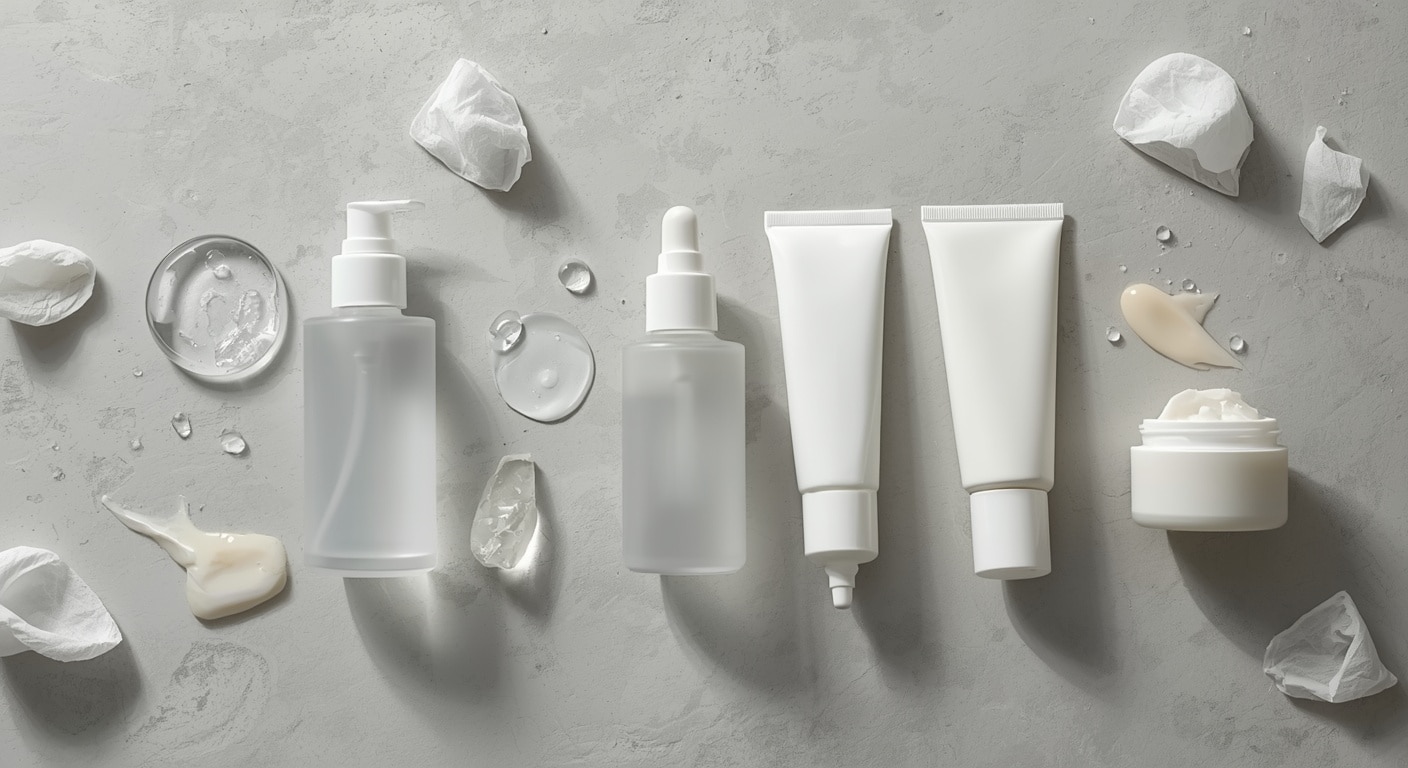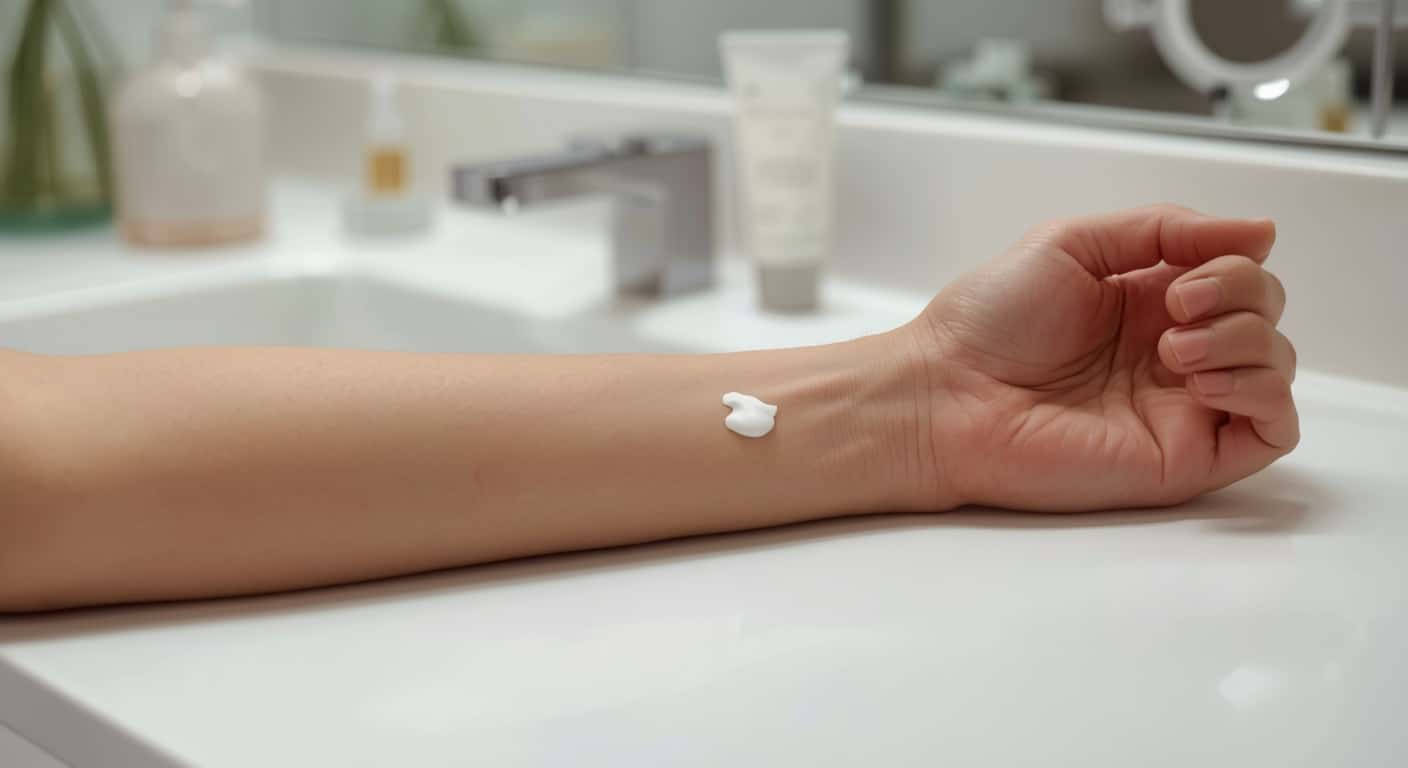
If you are wondering how to patch test skincare, the basic idea is simple: apply a small amount of a new product to a limited area of skin first, then watch for irritation before using it more widely. This cautious step may help you spot problems early, especially with active ingredients, fragranced formulas, or products your skin has never met before.
Patch testing a new skincare product usually means choosing one product at a time, applying it to an area such as the inner forearm or behind the ear, and checking for redness, itching, burning, swelling, or other irritation over time. It can reduce the chance of a bigger reaction, but it does not guarantee that a product will suit your whole face or every part of your routine.
If you are building a safer routine from scratch, our Beauty Guide Malaysia hub offers broader guidance on skincare and beauty basics.
What patch testing skincare means
A patch test is a small trial run for your skin. Instead of putting a new product all over your face straight away, you try it on a small area first. The aim is to see whether your skin reacts badly before you commit to regular use.
How a patch test works in simple terms
You apply the product in a small amount, on clean skin, to one test area. Then you leave it as directed and monitor the area for any reaction. If your skin stays calm, that is a more reassuring sign than using the product blind on your full face.
This is especially useful for serums, moisturisers, sunscreens, exfoliating acids, retinoids, and acne-focused treatments. Even products labelled gentle may still cause irritation for some people.
What patch testing can and cannot tell you
Patch testing at home may help identify obvious irritation or sensitivity. What it cannot do is guarantee that a product will be problem-free everywhere, every time. Facial skin may react differently from the arm, and irritation can also appear after repeated use rather than after a single test.
That is why patch testing is best seen as a sensible first step, not a promise of compatibility.
Why patch testing matters before using a new product
Many skincare reactions are not dramatic, but they are still unpleasant. You may notice stinging, dryness, redness, itching, or a rash-like area. If you had applied the product all over your face first, the reaction could be harder to manage and much more visible.
Common reactions people want to avoid
- Redness that lingers instead of settling quickly
- Itching or burning
- Swelling
- Dry, tight, flaky skin
- Tenderness or discomfort when other products are applied
Not every uncomfortable feeling means a serious allergy, but it is still useful information. Your skin may simply be telling you that a formula is too strong, too fragranced, or not right for you.
Products that deserve extra caution
Patch testing matters most when you are trying products with a higher chance of irritation. Common examples include retinoids, AHAs, BHAs, benzoyl peroxide, strong acne treatments, fragranced skincare, and sunscreens with unfamiliar filters or textures.
If your skin is already sensitive, or your skin barrier feels compromised, patch testing becomes even more worth doing.
How to patch test skincare step by step
- Choose one new product at a time. Do not test several new products together, or you will not know which one caused the reaction.
- Pick a small test area. Common choices are the inner forearm or behind the ear.
- Apply a small amount. Use the product as directed. If it is a leave-on product, leave it on. If it is a wash-off product such as a cleanser, rinse it off according to its normal use.
- Wait and monitor. Check the area over time for redness, itching, stinging, burning, swelling, or a rash-like response.
- Repeat cautiously if needed. For some products, especially leave-on actives, some people prefer to repeat the test carefully over another day or two before applying it to a larger area.
- Introduce it slowly into your routine. A successful patch test is not a signal to use everything at once or use the product too often right away.
Choose one new product at a time
This is one of the biggest differences between a useful patch test and a confusing one. If you start a new serum, exfoliant, moisturiser, and sunscreen all in the same week, you will struggle to identify what caused the problem if your skin becomes irritated.
A slower approach saves time in the long run.
Pick a small test area
Your test area should be small, discreet, and easy to monitor. It should also be free from cuts, rashes, or active irritation. Testing on already compromised skin can make the result harder to interpret.
Apply a small amount exactly as directed
Use only a small amount. More product does not give you a better result. In fact, using too much may increase irritation and tell you less about how the product behaves in normal use.
Follow the product type. A cleanser should be washed off. A serum or moisturiser is usually left on. A sunscreen patch test should reflect how you would normally wear it.
Wait and monitor the area
Look out for visible redness, raised bumps, itching, burning, swelling, or lasting discomfort. Mild brief sensations can happen with some active products, but if the area becomes clearly irritated or increasingly uncomfortable, stop using the product.
Repeat cautiously if needed before full use
Some reactions are delayed, especially with leave-on products used more than once. If the first test is uneventful, you may choose to repeat it before using the product more broadly. Then, when you move to facial use, start with a small area rather than applying it everywhere on night one.
Where to patch test a skincare product
The best patch test area is one you can observe easily and keep relatively undisturbed.
Inner forearm
The inner forearm is a common choice because it is easy to access and monitor. It also gives you enough space to test a small amount without involving the face.
Behind the ear
Behind the ear is another common option, especially for leave-on products. It is fairly discreet and may feel more relevant for products intended for the face, though skin there still is not identical to facial skin.
Why some people also test near the jawline later
If the first patch test goes well, some people cautiously test on a small section near the jawline before full-face use. This can be useful because it is closer to facial skin, but it is usually better as a later step rather than the first test, especially if you are worried about visible irritation.
How long you should wait after a patch test
There is no single wait time that suits every product and every person. In general, you should give your skin enough time to show whether it becomes irritated, rather than deciding too quickly after a few minutes.
Why timing depends on the product type
A wash-off cleanser is different from a leave-on retinol or exfoliating serum. Some reactions appear quickly, while others take longer or show up after repeated use. That is why a cautious approach matters more than rushing to add a product to your whole routine.
Why stronger active ingredients may need more caution
Products with retinoids, AHAs, BHAs, benzoyl peroxide, or other strong actives may cause irritation more easily than a basic moisturiser. Even if the first application seems fine, your skin may become unhappy when the product is used again. Introducing these products slowly often makes more sense than assuming one quiet patch test means unlimited tolerance.
Which skincare products are most important to patch test
In reality, any new skincare product can be patch tested. Some categories simply deserve more caution because they are more likely to irritate sensitive or reactive skin.
Retinoids and exfoliating acids
Retinol and other retinoids, along with chemical exfoliants such as AHAs and BHAs, are high on the list. These ingredients are commonly used to support concerns like texture, breakouts, or uneven tone, but they can also cause dryness, stinging, redness, and peeling if your skin does not tolerate them well.
Acne-focused formulas
Acne products often contain stronger active ingredients, and they are sometimes layered with other treatments. A patch test for a serum or spot treatment can help you see how your skin responds before you apply it across a larger area.
Fragranced products and new sunscreens
Fragrance is another reason many people choose to patch test. Not everyone reacts to fragranced skincare, but if your skin is easily irritated, it is sensible to be careful. New sunscreens are also worth patch testing, especially if they contain filters or textures you have not used before, or if your skin tends to sting around the eyes and cheeks.
Signs you should stop using the product
A patch test should not become an endurance challenge. If your skin is clearly reacting, stop.
Mild temporary sensations versus concerning reactions
Some active products may cause a brief tingling sensation for some users, but persistent burning, increasing redness, obvious itching, swelling, or a rash-like area are more concerning. If the skin looks or feels progressively worse, that is a sign not to push through.
When to rinse off immediately
If the product causes strong burning, marked discomfort, or visible irritation that develops quickly, rinse it off promptly if appropriate for the product and stop using it. Avoid applying more in the hope that your skin will adjust.
When to seek advice from a pharmacist or dermatologist
If you develop significant swelling, a severe burning sensation, a persistent rash, or a reaction that does not settle, it is sensible to seek advice from a pharmacist, dermatologist, or another appropriately qualified healthcare professional. The same applies if you are unsure whether what you are seeing is irritation, sensitivity, or something else.
Common patch testing mistakes to avoid
Trying several new products at once
This is the fastest way to make the result unclear. Start one product, observe, then move on.
Testing on already irritated skin
If your skin is already sunburnt, over-exfoliated, broken, or inflamed, hold off. Testing at that point may tell you more about your damaged skin barrier than about the product itself.
Applying too much product
A large blob is unnecessary. Use a normal small amount and keep the test area limited.
Confusing purging with irritation
These are not the same thing. Purging usually refers to breakouts that can happen with certain actives affecting skin turnover, while irritation is more about redness, burning, dryness, or tenderness. During a patch test, obvious irritation is a clearer warning sign than trying to guess whether your skin is purging.
How to add the product to your routine after a successful patch test
If your patch test seems fine, the next step is still to introduce the product gradually rather than using it enthusiastically every day.
Start slowly
For stronger leave-on products, begin with occasional use instead of daily use unless the product instructions clearly support otherwise and your skin is known to be resilient. This gives you a better chance of spotting delayed irritation.
Watch for delayed reactions
Some products behave well on day one but become irritating after multiple uses, especially if combined with other actives. Pay attention to how your skin feels over the next several uses, not just the first application.
Be extra careful in Malaysia’s hot and humid weather
Heat, sweat, and friction can make some products feel more uncomfortable, particularly richer formulas or stronger actives. In Malaysia’s humid climate, it may help to introduce new products slowly and avoid testing several potentially irritating products at the same time. Skin that is sweaty or rubbed by masks, helmets, or clothing may feel more reactive than usual.
Frequently Asked Questions
Can I patch test skincare on my face?
You can, but many people prefer to start on the inner forearm or behind the ear first to reduce the risk of a visible reaction. If that goes well, a small jawline test may be a cautious next step before full-face use.
How long should I wait before using a new skincare product on my whole face?
Wait long enough to monitor for irritation rather than deciding immediately. Some people also repeat the patch test or start with a small facial area first, especially for retinoids, exfoliating acids, and acne treatments.
Should I patch test cleansers and sunscreens too?
Yes, it can still be useful. Cleansers are washed off, but they can still irritate some skin. Sunscreens are worn more broadly and often around sensitive areas, so patch testing them is sensible if you are trying a new formula.
What should I do if my skin stings or turns red during a patch test?
Stop using the product. If the reaction is strong or worsening, rinse it off if appropriate and monitor the area. If you develop significant swelling, severe burning, or a persistent rash, seek advice from a pharmacist, dermatologist, or another qualified healthcare professional.
Do I need to patch test every new skincare product?
It is especially worthwhile for products with active ingredients, fragrance, acne treatments, exfoliants, retinoids, and any formula you are unsure about. If your skin is sensitive or reactive, patch testing every new product is a sensible habit.
A safer way to try new skincare
Knowing how to patch test a new skincare product can help you avoid unnecessary irritation and make routine changes more manageable. Keep it simple: test one product at a time, use a small area, watch your skin carefully, and introduce anything new slowly. That extra patience is often easier than dealing with a full-face reaction later.