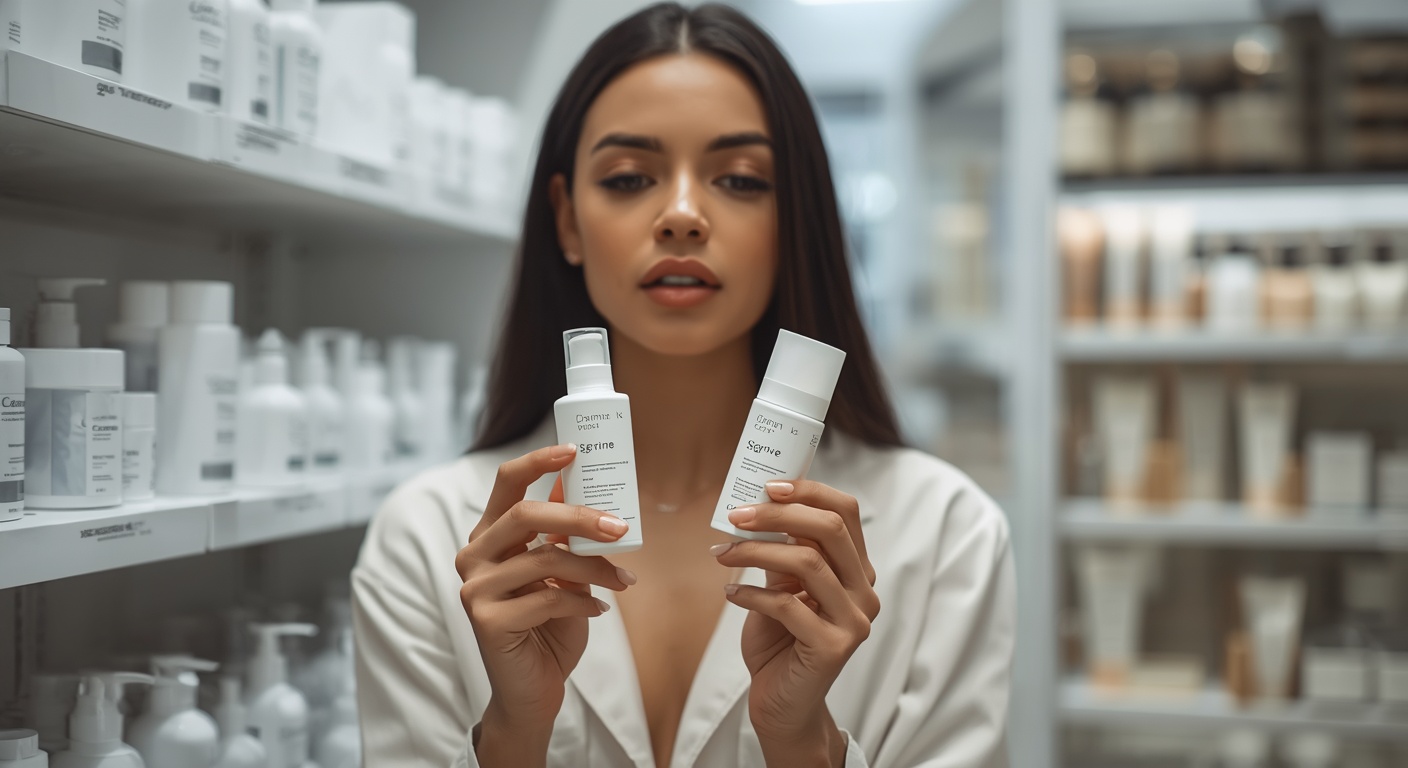
If you are wondering how to choose skincare products without wasting money, start by ignoring the packaging for a moment. The useful questions are simpler: what problem are you trying to address, what step is missing from your routine, and will you realistically use that product often enough for it to matter? Many people spend too much on trendy launches, duplicate products, or strong actives they do not actually need.
Choosing well usually comes down to a small framework: match the product to your main skin concern, buy the essentials first, check whether the formula makes sense for your skin type and daily routine, and compare value beyond the shelf price.
- Identify your main skin concern before shopping.
- Start with basics such as cleanser, moisturiser, and sunscreen.
- Choose the right product type for your goal.
- Check ingredient logic instead of relying on front-label claims.
- Make sure the texture suits your skin type and climate.
- Avoid buying several new actives at the same time.
- Compare value by size, frequency of use, and routine fit.
- Patch test new products and give them time before replacing them.
If you are still building your routine, it helps to keep it grounded in basics rather than trends. You can also browse our beauty guide for Malaysian readers for broader beauty basics and routine planning.
How to choose skincare products without wasting money
- Identify your main skin concern before shopping.
- Start with essentials such as cleanser, moisturiser, and sunscreen.
- Choose the right product type for your goal.
- Check ingredient logic instead of trusting front-label claims.
- Make sure the formula suits your skin type and climate.
- Avoid buying multiple new actives at the same time.
- Compare value based on size, frequency of use, and routine fit.
- Patch test and give products time before deciding whether to replace them.
A simple framework for choosing skincare products wisely
Start with your main skin goal
A product is easier to judge when you know why you are considering it. Maybe your skin feels tight after cleansing. Maybe you want a sunscreen you will actually wear every day. Maybe you are looking for a treatment step for breakouts or uneven texture. A clear goal helps you filter out products that sound exciting but do not solve your actual problem.
Try to narrow it down to one priority at a time. If you shop for brightness, pores, redness, hydration, anti-ageing and acne all at once, almost every label will sound relevant and your cart will fill up quickly.
Buy for routine function, not hype
Every product should have a role. A cleanser removes residue. A moisturiser helps reduce dryness and supports comfort. Sunscreen helps protect skin from daily UV exposure. A treatment product targets a more specific concern. If you cannot explain where the product fits in your routine, you may not need it yet.
This is where many impulse purchases happen. A product can be popular online and still be unnecessary for your routine.
Keep your first routine small and practical
A simple routine is often easier to stick to and easier to troubleshoot. If you are starting from scratch, three core products are usually enough: a cleanser, a moisturiser, and a sunscreen. You can add one treatment product later if you have a clear reason for doing so.
A smaller routine also makes it easier to see what is helping, what feels irritating, and what you would genuinely repurchase.
Know what your skin actually needs before you buy
Skin type versus skin concerns
Skin type and skin concern are related, but they are not the same thing. Skin type usually refers to how your skin behaves overall, such as oily, dry, combination, or sensitive-leaning. Skin concerns are the issues you want to address, such as dehydration, dullness, blemishes, or rough texture.
For example, oily skin can still be dehydrated. Dry skin can still be blemish-prone. Sensitive skin may prefer a simpler formula, but sensitivity alone does not tell you whether you need a richer moisturiser or a lighter gel texture. Ideally, your skin type helps you choose the feel of a product, while your main concern helps you choose its purpose.
Why one product cannot solve everything
Products often promise multiple benefits on the label, but no single item can do every job equally well. A sunscreen is not a moisturiser for everyone. A cleanser is not the best place to look for major treatment results because it is rinsed off. A strong exfoliant will not replace basic barrier support if your skin is already irritated.
Thinking in product roles keeps expectations realistic and spending more controlled.
When persistent irritation, acne or eczema-like symptoms need professional advice
If your skin is persistently stinging, peeling, inflamed, very itchy, or breaking out in a way that is worsening or not improving, it may be worth speaking to a doctor, dermatologist, or pharmacist instead of continuing to experiment on your own. The same applies if you suspect an allergic reaction or have eczema-like symptoms. Skincare can support comfort and maintenance, but it is not a substitute for professional assessment when symptoms are severe or ongoing.
Build around the essentials first
Cleanser: what to look for
A cleanser should clean your skin without leaving it feeling stripped or uncomfortable. If your face feels squeaky, tight, or irritated after washing, that product may be too harsh for your needs.
Good selection points include:
- a texture you do not mind using daily
- a formula that rinses comfortably
- no obvious feeling of dryness after cleansing
- compatibility with the rest of your routine, especially if you already use active ingredients
People with oilier skin may prefer gel textures, while drier or more sensitive skin may find creamier cleansers more comfortable. The right choice is the one your skin tolerates well enough to use consistently.
Moisturiser: how to choose based on texture and barrier support
A moisturiser should help your skin feel more comfortable and reduce dryness without making daily wear unpleasant. Some people prefer lightweight lotions or gels, while others need creams that feel more cushioning.
Ingredients such as ceramides, humectants like hyaluronic acid, and emollients are commonly associated with hydration and barrier support. The exact formula still matters more than any single ingredient callout. A long ingredient list is not automatically better, and a simple moisturiser may be enough if your skin mainly needs comfort and moisture retention.
Sunscreen: why it matters even if you use treatment products
If you are spending money on treatment products but skipping sunscreen, your routine may be working against itself. Sunscreen helps protect skin from daily UV exposure and is especially relevant if you use exfoliating acids, retinoid products, or other ingredients that can make skin feel more reactive.
In Malaysia’s year-round heat and humidity, wearability matters. A lighter texture, less greasy finish, or formula that sits comfortably under makeup may make more difference than a long list of marketing claims, because the best sunscreen is the one you will actually apply consistently.
Choose the right product type for your goal
Serums, creams, gels and lotions: what changes and what does not
Product type affects texture, spread, and how the formula feels on skin. It does not automatically tell you whether the product is effective. A serum may feel lighter and layer more easily, while a cream may feel richer and more occlusive. Gels often appeal to people who dislike heavy textures, especially in humid weather. Lotions sit somewhere in between.
Choose the format that suits your routine and comfort level. If a product pills, feels sticky, or makes you avoid using it, even a good formula may not be the right choice for you.
Spot treatments versus all-over products
Some products are designed for localised use, while others are meant for the whole face. A spot treatment may make sense for occasional blemishes. A full-face product may be more logical if your concern is general dryness, uneven texture, or overall dehydration.
Using a targeted product all over the face just because it seems more efficient can lead to unnecessary irritation or faster product use.
Leave-on versus wash-off products
Leave-on products usually play a larger role when you are looking for ongoing hydration or treatment support, because they stay on the skin longer. Wash-off products can still be useful, but it helps to keep expectations realistic. A cleanser can be a good cleansing step without needing to double as your main treatment step.
How to read ingredient lists without overcomplicating it
Look for ingredients with a clear role
You do not need to memorise every INCI name. Start by asking whether the ingredients support the product’s purpose. For hydration and comfort, people often look at ingredients such as humectants, emollients, and barrier-supportive components. For blemish-prone skin, ingredients like salicylic acid or benzoyl peroxide may be relevant in some routines. For texture or signs of ageing, exfoliating acids or retinoid products may be considered, depending on tolerance and routine needs.
The key is logic, not perfection. Does the formula broadly match the goal?
Do not assume more ingredients means better results
Long ingredient lists can make a product sound advanced, but more is not always better. A formula packed with many actives may be harder to tolerate, more difficult to layer, or simply unnecessary for your needs. Sometimes the product that works best is the straightforward one you can use comfortably and consistently.
What front-label claims can and cannot tell you
Front-label claims can be useful for quick clues, but they are not the whole story. Terms like brightening, soothing, balancing, or non-comedogenic may point you in a direction, but they do not replace looking at the product type, overall formula, and how it fits your skin.
Marketing language is designed to attract attention. It cannot tell you on its own whether the texture will suit you, whether the routine already contains something similar, or whether you are paying extra for branding rather than function.
Check whether the formula suits your skin type and environment
Texture, finish and comfort matter
A product can look ideal on paper and still fail in daily use if it feels unpleasant. Texture matters because it affects consistency. Oily or combination skin may prefer lighter layers. Drier skin may want more cushion. Sensitive-leaning skin may do better with simpler formulas and fewer potentially irritating extras.
Comfort matters just as much as claims. If your sunscreen feels too heavy or your moisturiser sits greasy all day, you may stop using it regardless of how promising it seemed in the shop.
Fragrance, alcohol and essential oils: when they may matter
These ingredients are not automatically bad, but they can matter more for some people than others. If your skin tends to sting easily, becomes red quickly, or reacts to heavily fragranced products, simpler formulas may be easier to manage. If your skin is not particularly reactive, you may be less bothered by these additions.
This is where patch testing and previous experience become useful. The goal is not to fear every ingredient category, but to notice your own patterns.
Malaysia’s heat and humidity: practical considerations for daily wear
Hot, humid weather can change what feels wearable. In Malaysia, many people prefer lighter moisturisers during the day, fast-absorbing sunscreens, and textures that do not feel suffocating when sweating or moving between outdoor heat and air-conditioned spaces. That does not mean everyone needs gel formulas, but everyday comfort can make a big difference to whether a product earns a place in your routine.
Avoid common buying mistakes that waste money
Buying too many actives at once
Trying a new acid, a retinoid, a brightening serum, and a blemish treatment at the same time makes it hard to know what is helping and what is causing problems. It also raises the chance of irritation. If you want to add treatment steps, introduce them gradually and keep the rest of your routine stable where possible.
Replacing products too quickly
Some people stop using a product after only a few days because it does not deliver instant visible change. Unless the product is clearly causing irritation or breakouts, a short trial often does not tell you much. Daily basics such as cleansers and moisturisers are often judged better by comfort, consistency, and routine fit than by dramatic early results.
At the same time, do not force yourself through obvious burning, swelling, or worsening irritation. That is a reason to stop and reassess.
Paying for packaging, trends or influencer pressure
Luxury packaging, social media excitement, and fear of missing out can all make a product feel more necessary than it is. Before buying, ask whether the formula fills a gap you genuinely have. If a cheaper, simpler product would perform the same routine function for you, that may be the better buy.
How to compare value before you spend
Price versus cost per use
A lower shelf price is not always better value, and a higher price is not automatically wasteful. Think about how much product you need per use, how often you will use it, and whether it performs one job well enough to keep in your routine.
A product that is moderately priced but sits unused is poor value. A product you finish consistently because it suits your routine may be worth more to you even if it costs a little extra upfront.
Routine fit versus product popularity
Popularity is not the same as suitability. A bestselling exfoliant is still a poor purchase if your barrier already feels stressed. A famous moisturiser is not ideal if the texture makes you avoid wearing it. Value improves when a product works with your routine instead of competing with it.
When a basic product may be enough
Not every routine needs multiple serums, masks, and treatment layers. If your skin is comfortable, your cleanser is not stripping, your moisturiser suits you, and your sunscreen is wearable enough for daily use, a basic routine may already be doing most of the heavy lifting.
A smart way to test new skincare products
Patch testing basics
When trying a new product, apply a small amount to a limited area first and watch for signs of irritation before using it more broadly. This is especially sensible with active ingredients or if your skin is easily reactive. Patch testing cannot guarantee that a product will suit everyone, but it can reduce the risk of immediately applying a problematic product all over the face.
Introduce one new product at a time
This keeps your routine easier to read. If your skin becomes more comfortable, you can identify what helped. If irritation appears, you have fewer suspects. It also makes your spending more deliberate, because you are less likely to buy a full set before knowing whether any part of it suits you.
Track changes before deciding whether to repurchase
Notice practical signs: Does your skin feel more comfortable? Does the texture layer well with what you already use? Are you reaching for the product regularly, or forcing yourself to use it because you paid for it? Repurchases should be earned by routine performance, not just by marketing promises.
A practical checklist before buying your next skincare product
- What problem am I trying to solve? Be specific.
- Does this product have a clear role in my routine? If it duplicates something you already use, reconsider.
- Is the product type right for my goal? A cleanser, moisturiser, serum and spot treatment do different jobs.
- Does the formula suit my skin type and comfort preferences? Think about texture, finish, and sensitivity.
- Do the ingredients make sense for the product’s purpose? Look for logic, not buzzwords.
- Am I adding too many active products at once? Simpler is usually easier to manage.
- Will I realistically use this consistently? Daily wear matters more than ambition.
- Is this good value for how I will use it? Think beyond the initial price tag.
Frequently Asked Questions
How do I know if a skincare product is right for my skin type?
Look at how your skin feels when you use it. The right product should suit your main concern, fit comfortably into your routine, and have a texture you do not mind using regularly. Packaging claims can help as a starting point, but comfort, consistency, and routine fit are usually more useful.
Is expensive skincare always better?
No. Higher price does not automatically mean better performance. A product can be expensive because of branding, packaging, or positioning. What matters more is whether the formula suits your skin, whether you will use it consistently, and whether the cost makes sense for the benefit and frequency of use.
How many skincare products do I really need to start?
For many people, a cleanser, moisturiser, and sunscreen are enough to start. If you have a specific concern, you can add one treatment product later. Starting small usually saves money and makes it easier to see what your skin responds to.
Should I choose skincare based on ingredients or skin type?
Both matter. Your skin type and main concern help you decide what category of product to buy, while the ingredient list helps you assess whether the formula is logically suited to that purpose. One without the other can lead to poor choices.
How long should I try a skincare product before deciding it does not work?
It depends on the product type and what you expect from it. Cleansers, moisturisers, and sunscreens are often judged first by comfort and routine compatibility. Treatment products may need more time, but you should stop early if you develop significant irritation, swelling, or a reaction. If you are unsure, especially with stronger actives, professional advice may be useful.
Make your routine easier to use, not bigger
The smartest skincare purchase is not always the most advanced or the most talked about. It is the product that fits a real need, works with the rest of your routine, and feels practical enough to use consistently. If you shop with that filter first, you are far less likely to waste money on products that look impressive but do not earn a place on your shelf.